THE ADVENTURE COLLECTIVE® · Independent discovery and booking for outdoor travel

A six-day technical climb to Alpamayo blends glacier travel, steep ice routes and purposeful acclimatization. Expect moraine hikes, high camps above 5,000 m, and a demanding summit push on one of the Andes’ most beautiful faces.
A six-day technical climb to Alpamayo blends glacier travel, steep ice routes and purposeful acclimatization. Expect moraine hikes, high camps above 5,000 m, and a demanding summit push on one of the Andes’ most beautiful faces.
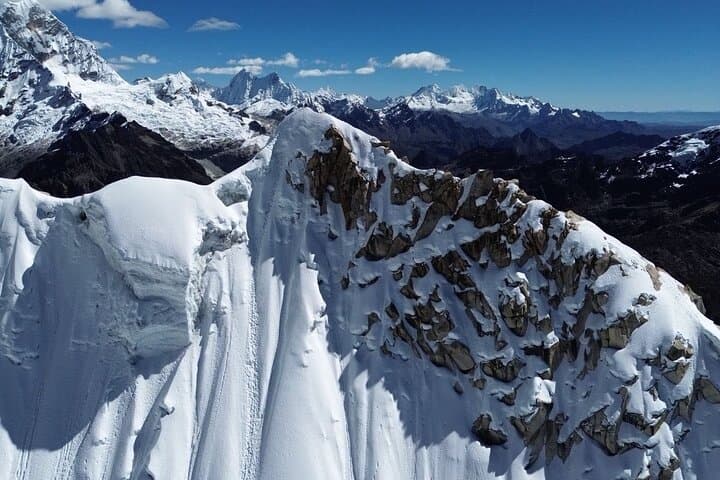
A cold dawn on the high moraine, headlamps blinking like small constellations: that’s where this expedition begins. You move through a skeletal landscape of ice and rock, the Cordillera Blanca rising in hard relief as the Alpamayo face narrows into steep seracs that dare you to climb. Wind cuts; the glacier grinds and pushes shards of blue light toward the sky.
Verified experiences and guided adventures in the surrounding area.
Operated by Peru Expeditions Tours · Huaraz, Ancash
A cold dawn on the high moraine, headlamps blinking like small constellations: that’s where this expedition begins. You move through a skeletal landscape of ice and rock, the Cordillera Blanca rising in hard relief as the Alpamayo face narrows into steep seracs that dare you to climb. Wind cuts; the glacier grinds and pushes shards of blue light toward the sky.
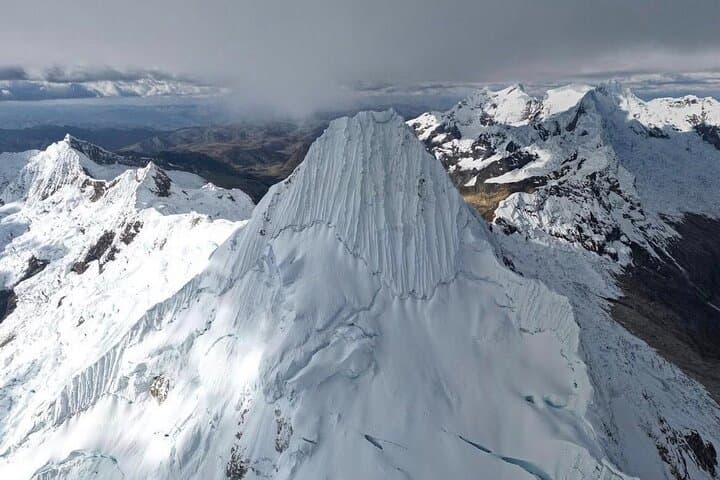
Alpamayo sits within Huascarán National Park, an area carved by Pleistocene glaciers and shaped by tectonic uplift. The peak gained global fame in the 1960s as one of the world’s most aesthetic summits—its near-perfect pyramidal ice faces the product of intense glaciation and cold, dry Andean weather. Local Quechua communities have long regarded the high peaks with reverence; many trails follow old mule and footpaths used for trade and seasonal grazing.
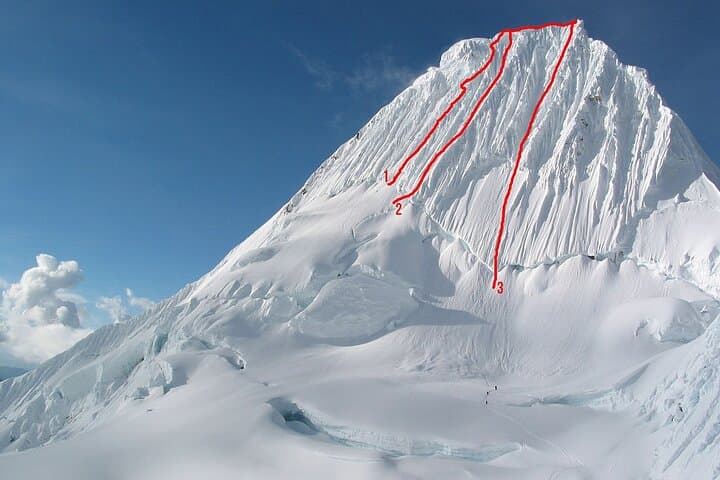
The route here is technical: moraine hiking, glacier travel, steep ice and snow on the classic French route; expect angles up to 80 degrees during the summit push. Acclimatization is built into the itinerary, with progressive camps from 4,250 m to 5,300 m before a pre-dawn summit bid to Alpamayo’s 5,947 m top.
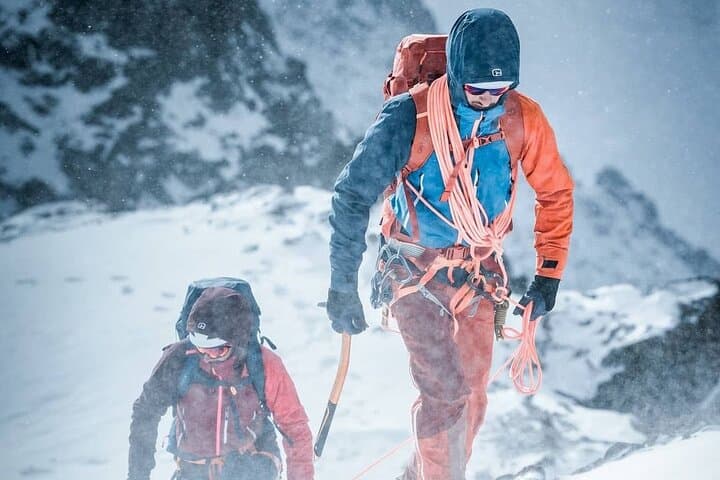
Practical guidance: arrive in Huaraz a few days early to acclimatize, test all crampons and harnesses on easier ice, and plan your summit window within the region’s dry season (June–September). Hydrate, manage calories at altitude, and carry layers for severe cold and wind. The mountain rewards careful preparation with alpine lines and high-Andean panoramas few other climbs can match.
expert.
6 days.
Requires high aerobic fitness, previous multiday alpine or high-altitude experience, and comfort with steep ice and long days.
Yes—participants should have prior ice-climbing and glacier experience; the itinerary includes steep ice pitches and crevasse terrain that require practiced rope skills.
Yes, the operator lists entrance fees to Huascarán National Park among inclusions, and advance payment is required to secure them.
The program notes Peruvian qualified guides and an Andean rescue group are included; participants must still demonstrate competence with provided technical equipment.
The dry season (June–August, into early September) offers the most stable weather and is the typical season for summit attempts.
The Cordillera Blanca has long been home to Quechua communities and was first explored by European climbers in the 20th century; Alpamayo’s fame rose after photographic exposés in the 1960s and 1970s.
Huascarán National Park protects fragile high-Andean ecosystems; stay on trails, pack out waste, and respect local grazing areas to minimize impact.
Peru Expeditions Tours operates guided outdoor trips and adventures with an emphasis on safety, stewardship, and memorable experiences.
A cold dawn on the high moraine, headlamps blinking like small constellations: that’s where this expedition begins. You move through a skeletal landscape of ice and rock, the Cordillera Blanca rising in hard relief as the Alpamayo face narrows into steep seracs that dare you to climb. Wind cuts; the glacier grinds and pushes shards of blue light toward the sky.
A cold dawn on the high moraine, headlamps blinking like small constellations: that’s where this expedition begins. You move through a skeletal landscape of ice and rock, the Cordillera Blanca rising in hard relief as the Alpamayo face narrows into steep seracs that dare you to climb. Wind cuts; the glacier grinds and pushes shards of blue light toward the sky.
Alpamayo sits within Huascarán National Park, an area carved by Pleistocene glaciers and shaped by tectonic uplift. The peak gained global fame in the 1960s as one of the world’s most aesthetic summits—its near-perfect pyramidal ice faces the product of intense glaciation and cold, dry Andean weather. Local Quechua communities have long regarded the high peaks with reverence; many trails follow old mule and footpaths used for trade and seasonal grazing.
The route here is technical: moraine hiking, glacier travel, steep ice and snow on the classic French route; expect angles up to 80 degrees during the summit push. Acclimatization is built into the itinerary, with progressive camps from 4,250 m to 5,300 m before a pre-dawn summit bid to Alpamayo’s 5,947 m top.
Practical guidance: arrive in Huaraz a few days early to acclimatize, test all crampons and harnesses on easier ice, and plan your summit window within the region’s dry season (June–September). Hydrate, manage calories at altitude, and carry layers for severe cold and wind. The mountain rewards careful preparation with alpine lines and high-Andean panoramas few other climbs can match.