THE ADVENTURE COLLECTIVE® · Independent discovery and booking for outdoor travel

A technical, multi-day alpine climb from Huaraz to Alpamayo’s 5,947 m summit. Expect long approach days, steep ice pitches and a predawn summit push—ideal for experienced mountaineers with high-altitude skills.
A technical, multi-day alpine climb from Huaraz to Alpamayo’s 5,947 m summit. Expect long approach days, steep ice pitches and a predawn summit push—ideal for experienced mountaineers with high-altitude skills.
Dawn breaks over the Callejón de Huaylas and the cliffs of the Cordillera Blanca glow cold and blue. You begin in Huaraz, drive through high puna, then cross rocky moraines and glacier-fed streams until Camp Llamacoral, where tents strap down against alpine wind. By the time you reach Alpamayo Base Camp at 4,300 m the mountain’s steep, pyramidal flanks dominate the sky — a 500 m ice wall that has drawn technical alpinists for decades.
Verified experiences and guided adventures in the surrounding area.
Operated by IZI PERU · Huaraz, Ancash
Dawn breaks over the Callejón de Huaylas and the cliffs of the Cordillera Blanca glow cold and blue. You begin in Huaraz, drive through high puna, then cross rocky moraines and glacier-fed streams until Camp Llamacoral, where tents strap down against alpine wind. By the time you reach Alpamayo Base Camp at 4,300 m the mountain’s steep, pyramidal flanks dominate the sky — a 500 m ice wall that has drawn technical alpinists for decades.
Alpamayo’s steep profile was immortalized in a 1966 international photo contest; geologically it’s an eroded granite-and-glacial-ice peak carved during the Pleistocene and reshaped by ongoing accumulation and ablation. The route follows the Santa Cruz and Arhuaycocha valleys—areas shaped by Quechua culture and seasonal herding. Local muleteers and cooks are integral: donkeys carry gear, guides manage pitches and cooks keep parties fueled.
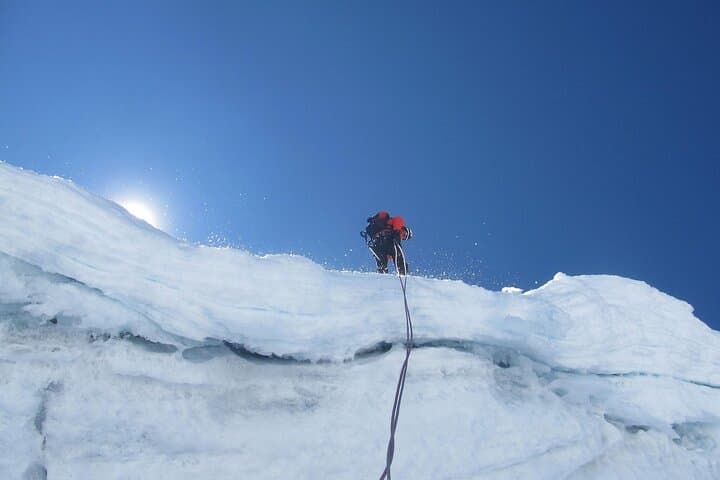
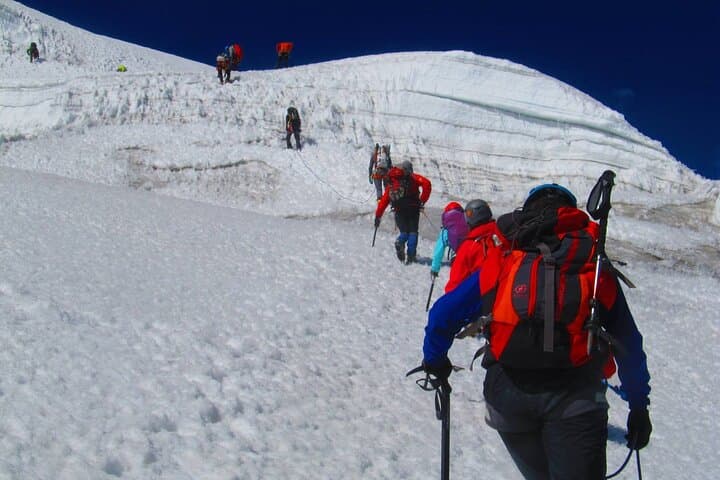
Expect long days of approach and rest at high camps, then a predawn summit push that involves steep ice, 70–80° near the top, fixed rope sections and rappels on descent. Weather windows are narrow; snow and sun can reverse fortunes in hours. Physically, you need prior high-altitude, multi-pitch ice experience and acclimatization days.
Practical guidance: train for sustained aerobic load and heavy packs, bring layered technical clothing, crampons, ice axe, harness and personal climbing rack. Hydrate constantly—altitude saps appetite and judgment—and plan for early starts and long, cold nights in camp. When the summit opens, the payoff is panoramic: glaciers, turquoise lagoons and serried Andean peaks that push at the sky.
expert.
6 days.
High aerobic endurance, previous multi-day high-altitude experience, comfort carrying 8–15 kg packs and technical climbing fitness
Yes — you should have multi-pitch ice climbing experience, competence with crampons and ice tools, and practiced rope rescue skills before attempting Alpamayo.
Expect a 12–16 hour summit day with steep ice up to 80°, fixed ropes, and technical rappels on descent; it’s physically and technically demanding.
The dry season (May–September) offers the most stable conditions and clearer weather windows for summit attempts, though snow and wind remain possible.
Donkeys typically carry group gear; climbers can usually place about 8 kg of personal items on pack animals—confirm with the operator for group allocations.
Alpamayo’s striking pyramidal face became internationally famous after a 1966 photography contest; the mountain sits within the Cordillera Blanca, shaped by glaciation and Andean uplift.
The Cordillera Blanca faces glacial retreat from warming; minimize impact by packing out waste, using established campsites, and supporting local guide services that follow leave-no-trace practices.
IZI PERU operates guided outdoor trips and adventures with an emphasis on safety, stewardship, and memorable experiences.
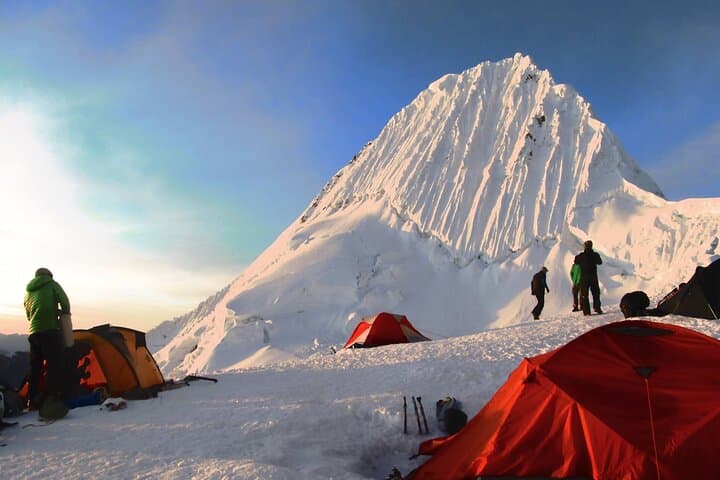
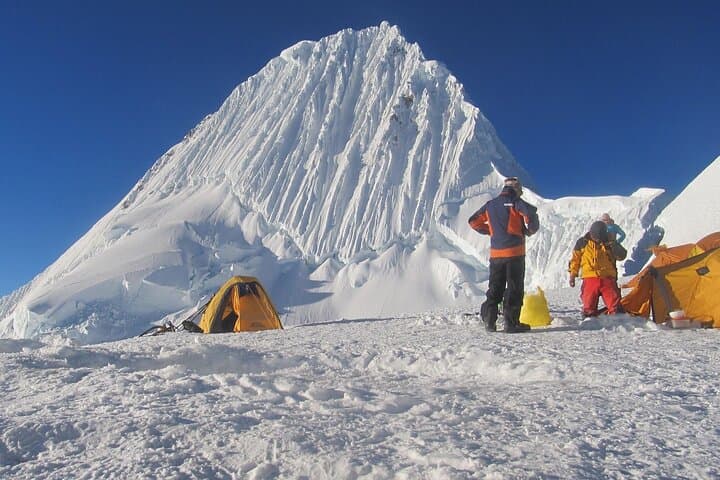
Dawn breaks over the Callejón de Huaylas and the cliffs of the Cordillera Blanca glow cold and blue. You begin in Huaraz, drive through high puna, then cross rocky moraines and glacier-fed streams until Camp Llamacoral, where tents strap down against alpine wind. By the time you reach Alpamayo Base Camp at 4,300 m the mountain’s steep, pyramidal flanks dominate the sky — a 500 m ice wall that has drawn technical alpinists for decades.
Dawn breaks over the Callejón de Huaylas and the cliffs of the Cordillera Blanca glow cold and blue. You begin in Huaraz, drive through high puna, then cross rocky moraines and glacier-fed streams until Camp Llamacoral, where tents strap down against alpine wind. By the time you reach Alpamayo Base Camp at 4,300 m the mountain’s steep, pyramidal flanks dominate the sky — a 500 m ice wall that has drawn technical alpinists for decades.
Alpamayo’s steep profile was immortalized in a 1966 international photo contest; geologically it’s an eroded granite-and-glacial-ice peak carved during the Pleistocene and reshaped by ongoing accumulation and ablation. The route follows the Santa Cruz and Arhuaycocha valleys—areas shaped by Quechua culture and seasonal herding. Local muleteers and cooks are integral: donkeys carry gear, guides manage pitches and cooks keep parties fueled.
Expect long days of approach and rest at high camps, then a predawn summit push that involves steep ice, 70–80° near the top, fixed rope sections and rappels on descent. Weather windows are narrow; snow and sun can reverse fortunes in hours. Physically, you need prior high-altitude, multi-pitch ice experience and acclimatization days.
Practical guidance: train for sustained aerobic load and heavy packs, bring layered technical clothing, crampons, ice axe, harness and personal climbing rack. Hydrate constantly—altitude saps appetite and judgment—and plan for early starts and long, cold nights in camp. When the summit opens, the payoff is panoramic: glaciers, turquoise lagoons and serried Andean peaks that push at the sky.