THE ADVENTURE COLLECTIVE® · Independent discovery and booking for outdoor travel

An 18–20 day guided expedition from Huaraz to Alpamayo and Chopicalqui combining high-camp trekking, glacier travel and technical ice climbing. Includes certified guides, acclimatization and emergency satellite connectivity.
An 18–20 day guided expedition from Huaraz to Alpamayo and Chopicalqui combining high-camp trekking, glacier travel and technical ice climbing. Includes certified guides, acclimatization and emergency satellite connectivity.
You wake before dawn in Huaraz, the town’s lights fizzling out behind a ridge while the Cordillera Blanca sharpens into silhouette. Cold air moves like a living thing through the valley; glaciers above pull and creak as if testing your resolve. This expedition threads high camps, moraine crossings and steep ice walls to two of Peru’s most dramatic summits—Alpamayo (≈5,957 m) and Chopicalqui (≈6,354 m).
Verified experiences and guided adventures in the surrounding area.
Operated by Peru Expeditions Tours · Huaraz, Ancash
You wake before dawn in Huaraz, the town’s lights fizzling out behind a ridge while the Cordillera Blanca sharpens into silhouette. Cold air moves like a living thing through the valley; glaciers above pull and creak as if testing your resolve. This expedition threads high camps, moraine crossings and steep ice walls to two of Peru’s most dramatic summits—Alpamayo (≈5,957 m) and Chopicalqui (≈6,354 m).
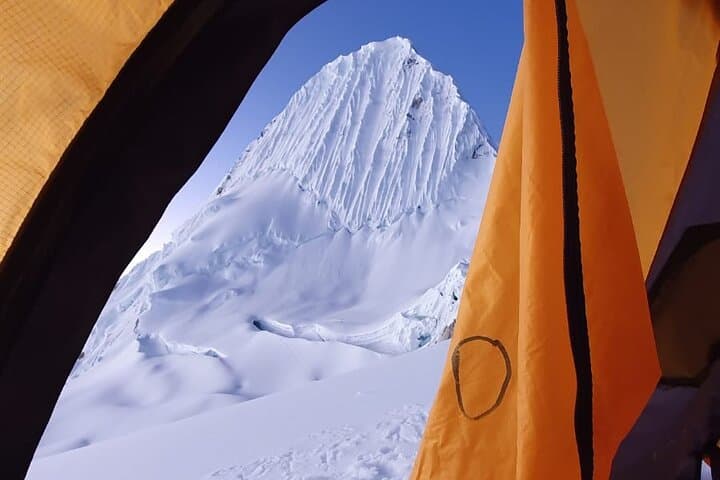
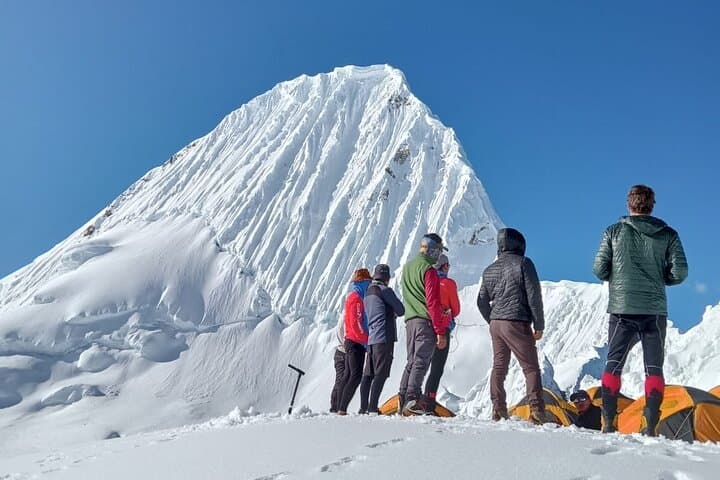
The Cordillera Blanca is one of the world’s highest tropical glaciated ranges, a granite-and-ice spine carved by Pleistocene glaciers and ongoing uplift. Alpamayo’s fluted ice faces won global attention in the 1960s and remain a benchmark for alpine aesthetics; Chopicalqui presents longer, more sustained technical ice and mixed climbing. Local Quechua communities and muleteers have supported highland travel here for centuries — today they still move gear across the valleys, keeping a practical human rhythm in an extreme landscape.
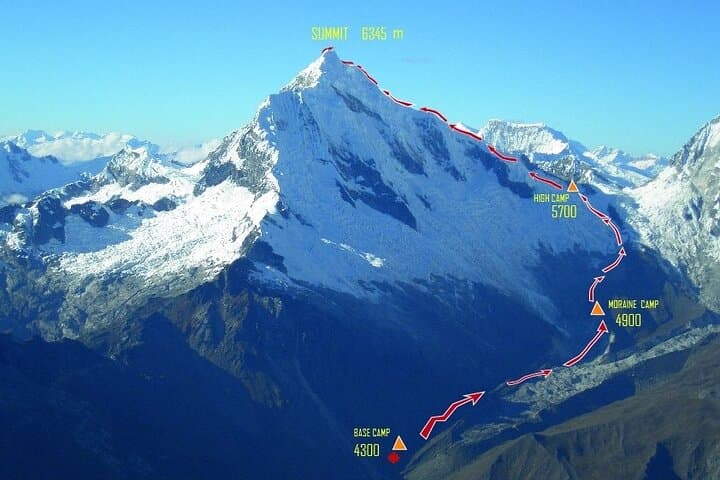
Expect precise acclimatization: progressive hikes to 4,000–5,300 m, a series of base and high camps, and multiple glacier travel days. Technical pitches on Alpamayo can reach steep ice (the classic French route is routinely 60–80°), while Chopicalqui requires crevasse navigation and steep front-pointing. The operator includes UIAGM-certified guides, high-mountain rescue coverage and satellite internet for emergency contact. Practical advice: prioritize gradual altitude gain, practice crampon-and-ice-axe techniques before arrival, and pack layered clothing for sub-zero nights. With good weather and fitness the summit days offer wide, startling views of Huascarán, Huandoy and the rest of the Blanca—reward enough for the long approach and exacting climbing.
expert.
18–20 days.
Requires excellent aerobic fitness, experience with multi-day high-altitude travel, and the ability to operate technically on steep ice for long summit days.
Yes—participants should have previous technical ice or alpine experience; guides assume competence with crampons, ice axes and roped glacier travel.
Several acclimatization days are built into the itinerary, including hikes to 4,200–5,150 m before attempting high camps and summits.
The expedition includes certified high-mountain guides, local rescue coordination (Socorro Andino) and satellite internet connectivity for emergency communications.
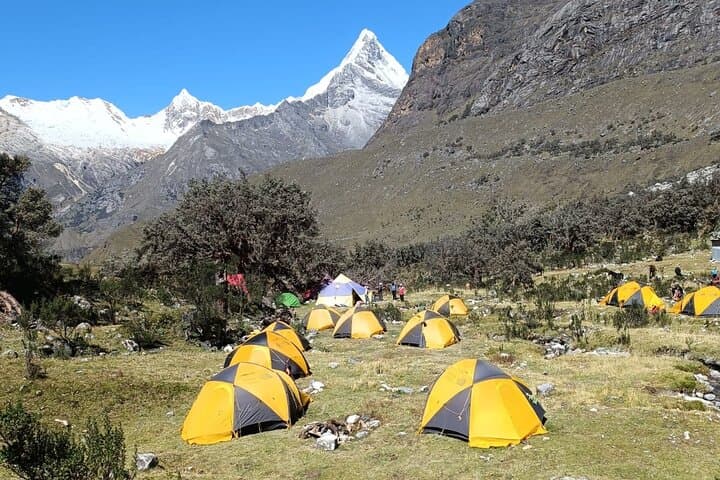
Single tents at base camp are offered on request; group logistics include dining and toilet tents during the trek and expedition phases.
The Cordillera Blanca shaped local highland culture for centuries; modern alpine routes grew prominent in the 20th century as international climbers codified technical lines like Alpamayo’s ice faces.
The range sits inside Huascarán National Park—glacier retreat is visible year-to-year; minimize impact by following leave-no-trace rules and using established camps and toilets.
Peru Expeditions Tours operates guided outdoor trips and adventures with an emphasis on safety, stewardship, and memorable experiences.
You wake before dawn in Huaraz, the town’s lights fizzling out behind a ridge while the Cordillera Blanca sharpens into silhouette. Cold air moves like a living thing through the valley; glaciers above pull and creak as if testing your resolve. This expedition threads high camps, moraine crossings and steep ice walls to two of Peru’s most dramatic summits—Alpamayo (≈5,957 m) and Chopicalqui (≈6,354 m).
You wake before dawn in Huaraz, the town’s lights fizzling out behind a ridge while the Cordillera Blanca sharpens into silhouette. Cold air moves like a living thing through the valley; glaciers above pull and creak as if testing your resolve. This expedition threads high camps, moraine crossings and steep ice walls to two of Peru’s most dramatic summits—Alpamayo (≈5,957 m) and Chopicalqui (≈6,354 m).
The Cordillera Blanca is one of the world’s highest tropical glaciated ranges, a granite-and-ice spine carved by Pleistocene glaciers and ongoing uplift. Alpamayo’s fluted ice faces won global attention in the 1960s and remain a benchmark for alpine aesthetics; Chopicalqui presents longer, more sustained technical ice and mixed climbing. Local Quechua communities and muleteers have supported highland travel here for centuries — today they still move gear across the valleys, keeping a practical human rhythm in an extreme landscape.
Expect precise acclimatization: progressive hikes to 4,000–5,300 m, a series of base and high camps, and multiple glacier travel days. Technical pitches on Alpamayo can reach steep ice (the classic French route is routinely 60–80°), while Chopicalqui requires crevasse navigation and steep front-pointing. The operator includes UIAGM-certified guides, high-mountain rescue coverage and satellite internet for emergency contact. Practical advice: prioritize gradual altitude gain, practice crampon-and-ice-axe techniques before arrival, and pack layered clothing for sub-zero nights. With good weather and fitness the summit days offer wide, startling views of Huascarán, Huandoy and the rest of the Blanca—reward enough for the long approach and exacting climbing.