THE ADVENTURE COLLECTIVE® · Independent discovery and booking for outdoor travel

Spend a day tracing water across Bali: walk the layered slopes of Tegalalang, cool off at jungle waterfalls, and take part in a sacred purification ritual at Tirta Empul. This private, eight-hour circuit pairs scenery with cultural practice—and practical guidance to make the most of your day.
Spend a day tracing water across Bali: walk the layered slopes of Tegalalang, cool off at jungle waterfalls, and take part in a sacred purification ritual at Tirta Empul. This private, eight-hour circuit pairs scenery with cultural practice—and practical guidance to make the most of your day.
You step out of a cooling private van and the air changes—humid, green, threaded with incense and the faint sweet smoke of a warung fire. The day unfurls like a map: first the stepped geometry of Tegalalang’s rice terraces, then a sequence of waterfalls tucked into limestone gullies, and finally the ritual pools of Tirta Empul where locals come to wash more than dirt from their skin.
Verified experiences and guided adventures in the surrounding area.
Operated by bali journey experience · Ubud, Bali
You step out of a cooling private van and the air changes—humid, green, threaded with incense and the faint sweet smoke of a warung fire. The day unfurls like a map: first the stepped geometry of Tegalalang’s rice terraces, then a sequence of waterfalls tucked into limestone gullies, and finally the ritual pools of Tirta Empul where locals come to wash more than dirt from their skin.
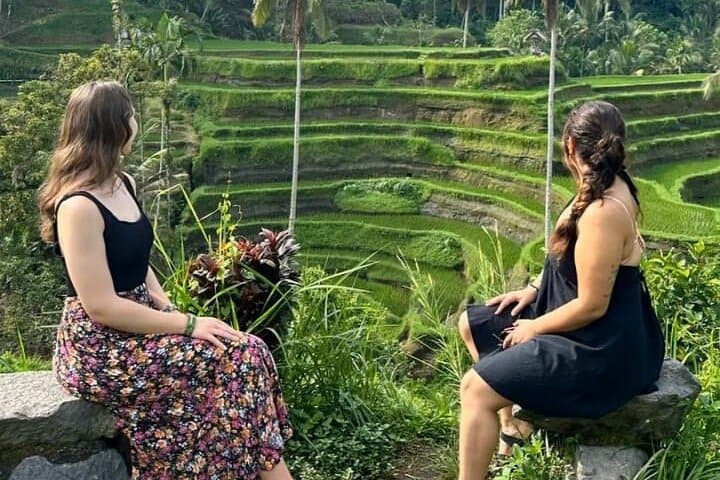
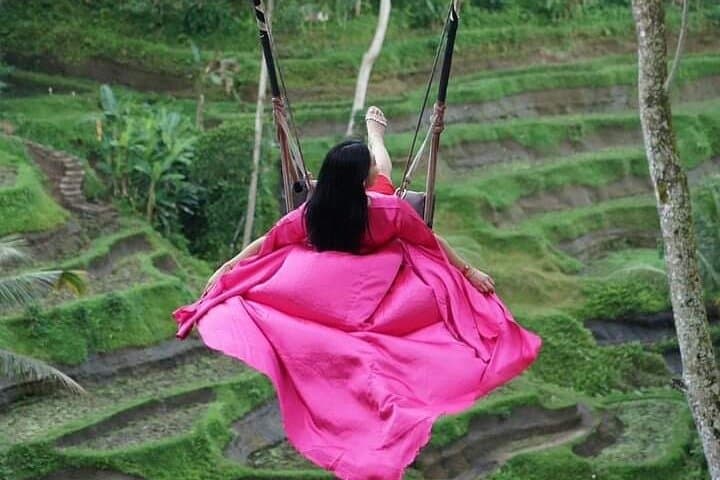
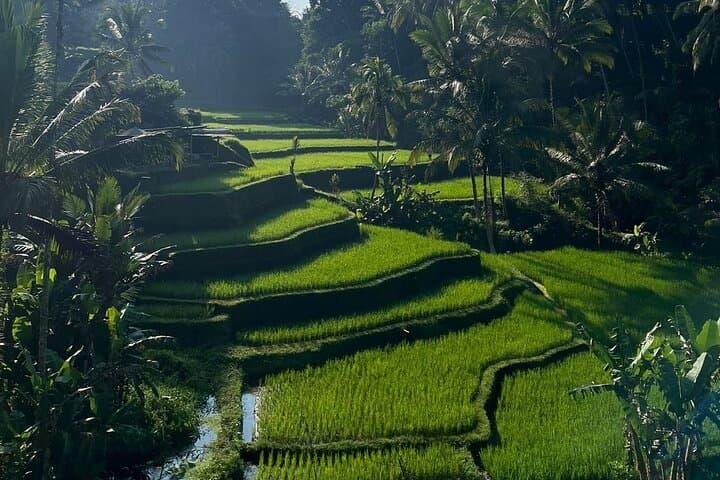
Tegalalang sits a short drive north of central Ubud. The terraces are a working landscape shaped by the subak cooperative irrigation system established centuries ago; the low walls and channels still guide water like careful hands. Walking here is brief but layered: expect 0.5–1 km of uneven stone steps and muddy paths with a vertical swing of roughly 50–150 m as you descend to viewpoints and climb back up. The terraces personify patience—water threading each level, daring you to move slowly enough to see it.
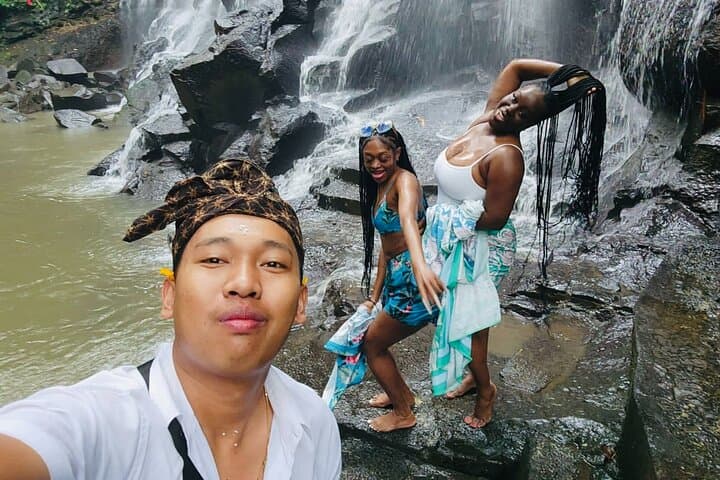
The waterfalls on this circuit—local favorites like Kanto Lampo and smaller falls such as Ulu Petanu—are geological punctuation marks where river water has sculpted limestone and volcanic rock. Trails to the pools are short (500–800 m) but steep in places with natural stairs and slick rocks; currents push and shape the pools, and if you choose to step in the water its coolness snaps you into the present.
Tirta Empul is less landscape than living history: a 10th-century temple built around a spring considered sacred. The purification ritual is both intimate and public—pilgrims line up to duck under spouts of water, guided by priests. Visitors are expected to wear modest clothing; sarongs and sashes are often available to rent at the temple.
Practicalities: the full circuit runs about eight hours in a private vehicle with short walks at each stop; total walking distance on foot averages 3–4 km across the day. Terrain is mixed—paved village roads, packed dirt, steep stone stairs and some slippery sections at waterfalls. Elevation around Ubud varies 300–600 m, so there are gentle climbs but nothing technical.
Bring sturdy, closed-toe shoes for the terraces and falls, and lightweight, quick-dry layers for changing weather. Carry a small daypack with bottled water (the tour provides some), a sarong or plan to rent one for Tirta Empul, and a waterproof phone case for waterfall shots. Start early to avoid the busiest mid-morning window; afternoons can turn humid and the paths slick after brief tropical showers.
This is a cultural and physical day—one that balances short bursts of movement with moments of quiet observation. The landscape will test your pace and request attention; return home with photos, a quieter mind, and the memory of water that both shapes and keeps Bali.
moderate.
8 hours.
Suitable for travelers with moderate fitness; you'll do short but steep walks and stair climbs totaling a few hundred meters of elevation change.
Yes—private transportation with hotel pickup is included; confirm your pickup point and be ready 15 minutes before the scheduled time.
Many pools allow wading and swimming where safe, but currents vary—follow guide instructions and watch for slippery rocks.
Entrance fees and bottled water are listed as included in the tour price, but small on-site purchases like sarong rentals or snacks are extra.
Modest clothing is required; bring or rent a sarong and sash for the purification pools and remove shoes in temple areas.
The tour is described as suitable for all fitness levels, but the terraces and falls involve stairs and uneven ground—those with mobility issues should check with the operator first.
This is a private tour and tickets are booked per group; capacity details should be confirmed at booking.
The subak irrigation system that shapes Tegalalang reflects a communal water-management tradition in Bali dating back to at least the 9th–10th centuries.
Visitors should stick to marked paths to protect terrace walls and avoid using soap in natural pools; local guides help minimize impact by managing group routes and waste.
bali journey experience operates guided outdoor trips and adventures with an emphasis on safety, stewardship, and memorable experiences.
You step out of a cooling private van and the air changes—humid, green, threaded with incense and the faint sweet smoke of a warung fire. The day unfurls like a map: first the stepped geometry of Tegalalang’s rice terraces, then a sequence of waterfalls tucked into limestone gullies, and finally the ritual pools of Tirta Empul where locals come to wash more than dirt from their skin.
You step out of a cooling private van and the air changes—humid, green, threaded with incense and the faint sweet smoke of a warung fire. The day unfurls like a map: first the stepped geometry of Tegalalang’s rice terraces, then a sequence of waterfalls tucked into limestone gullies, and finally the ritual pools of Tirta Empul where locals come to wash more than dirt from their skin.
Tegalalang sits a short drive north of central Ubud. The terraces are a working landscape shaped by the subak cooperative irrigation system established centuries ago; the low walls and channels still guide water like careful hands. Walking here is brief but layered: expect 0.5–1 km of uneven stone steps and muddy paths with a vertical swing of roughly 50–150 m as you descend to viewpoints and climb back up. The terraces personify patience—water threading each level, daring you to move slowly enough to see it.
The waterfalls on this circuit—local favorites like Kanto Lampo and smaller falls such as Ulu Petanu—are geological punctuation marks where river water has sculpted limestone and volcanic rock. Trails to the pools are short (500–800 m) but steep in places with natural stairs and slick rocks; currents push and shape the pools, and if you choose to step in the water its coolness snaps you into the present.
Tirta Empul is less landscape than living history: a 10th-century temple built around a spring considered sacred. The purification ritual is both intimate and public—pilgrims line up to duck under spouts of water, guided by priests. Visitors are expected to wear modest clothing; sarongs and sashes are often available to rent at the temple.
Practicalities: the full circuit runs about eight hours in a private vehicle with short walks at each stop; total walking distance on foot averages 3–4 km across the day. Terrain is mixed—paved village roads, packed dirt, steep stone stairs and some slippery sections at waterfalls. Elevation around Ubud varies 300–600 m, so there are gentle climbs but nothing technical.
Bring sturdy, closed-toe shoes for the terraces and falls, and lightweight, quick-dry layers for changing weather. Carry a small daypack with bottled water (the tour provides some), a sarong or plan to rent one for Tirta Empul, and a waterproof phone case for waterfall shots. Start early to avoid the busiest mid-morning window; afternoons can turn humid and the paths slick after brief tropical showers.
This is a cultural and physical day—one that balances short bursts of movement with moments of quiet observation. The landscape will test your pace and request attention; return home with photos, a quieter mind, and the memory of water that both shapes and keeps Bali.