THE ADVENTURE COLLECTIVE® · Independent discovery and booking for outdoor travel

A private coach from Alice Springs opens the Red Centre: Erldunda roadhouse, Mala, Lungkata and Kuniya walks around Uluru, the Anangu Cultural Centre, and a Walpa Gorge walk at Kata Tjuta. It’s a long day on the road but packed with geology, culture, and close-up desert walking.
A private coach from Alice Springs opens the Red Centre: Erldunda roadhouse, Mala, Lungkata and Kuniya walks around Uluru, the Anangu Cultural Centre, and a Walpa Gorge walk at Kata Tjuta. It’s a long day on the road but packed with geology, culture, and close-up desert walking.
You step onto the coach before dawn and Alice Springs slides away—red scrub flattening into an inland ocean. The driver eases into the highway, the air-con a quiet truce against an incoming desert heat, and the MacDonnell Ranges give way to long, low plains that push the sky wide. By late morning you’ll smell diesel and dust and see Uluru rise from the horizon: a vast, burnt-orange monolith that seems to hold its own weather.
Verified experiences and guided adventures in the surrounding area.
Operated by Alice Holiday Tours · Alice Springs, Northern Territory
You step onto the coach before dawn and Alice Springs slides away—red scrub flattening into an inland ocean. The driver eases into the highway, the air-con a quiet truce against an incoming desert heat, and the MacDonnell Ranges give way to long, low plains that push the sky wide. By late morning you’ll smell diesel and dust and see Uluru rise from the horizon: a vast, burnt-orange monolith that seems to hold its own weather.
This private charter stitches together the Red Centre’s essentials: an Erldunda roadhouse break, guided Mala Walk at Uluru, the Lungkata and Kuniya sections of the base, a stop at the Anangu-run Cultural Centre, and a Walpa Gorge walk through the domes of Kata Tjuta—finishing with a roadside meal at Curtin Springs before the long ride back to Alice Springs.
Geologically Uluru and Kata Tjuta are ancient players. Uluru is arkose sandstone, a tilted slab worn into caves and grooves by wind and water over hundreds of millions of years; Kata Tjuta’s domes are conglomerate—coarser rock compressed and folded into the rounded forms you’ll walk between on Walpa Gorge (about a 2.6 km return). Culturally the land belongs to the Anangu and Pitjantjatjara people; the Cultural Centre—built using some 90,000 mud bricks—offers language, art, and explanations of Tjukurpa (law/story) that frame every path you’ll take.
On the Mala Walk expect roughly 2 km round-trip, 45–60 minutes of close-up views and rock art explanations. Lungkata and Kuniya walks are similarly short, with boardwalk sections and the Mutitjulu Waterhole offering quiet reflections and birdlife. Walpa Gorge is a 2.6 km return, rugged underfoot in places but rewarding with steep-walled views and seasonal wildflowers.
Practical notes: the drive from Alice Springs to Uluru is long—plan for roughly 4.5–5 hours one way with stops—so this is a full 18-hour day on a private coach. National park entry is required; check current fees and hours in advance. Bring at least 2–3 liters of water, sun protection, and sturdy walking shoes for uneven rock and gravel. Mobile coverage is patchy; use the Cultural Centre’s information and listen to your guide—many sites are culturally sensitive and access is regulated (climbing Uluru is closed).
This tour is ideal if you want curated, private transport with time to walk key sections rather than a drive-by. It balances long stretches on the road with short, interpretive walks that let the landscape—and the stories it holds—set the pace.
moderate.
18 hours.
Suitable for most fitness levels for short walks (1–3 km) but expect a long day with extended coach time; basic stamina recommended
Expect roughly 4.5–5 hours one way by coach, depending on stops and road conditions—this is a full-day (about 18-hour) itinerary.
National park entry is required for Uluru-Kata Tjuta; confirm whether your operator includes the entry fee or if you pay on arrival or online.
No—climbing Uluru has been permanently closed; the tour focuses on base walks and cultural interpretation instead.
Walks like the Mala Walk are family-friendly; the operator notes stroller accessibility for some sections, but uneven ground at Walpa Gorge may be unsuitable for strollers.
Bottled water is included; meals are at passengers’ expense—Curtin Springs has a restaurant stop mid-route for food and rest.
Coverage is limited across the Red Centre; rely on the guide for logistics and use the Cultural Centre for information and services.
Uluru and Kata Tjuta are owned by the Anangu people; the Cultural Centre interprets Tjukurpa (creation law) and local art traditions.
Stay on marked paths, carry out rubbish, and respect cultural closures—the park prioritizes both ecological protection and Anangu cultural values.
Alice Holiday Tours operates guided outdoor trips and adventures with an emphasis on safety, stewardship, and memorable experiences.
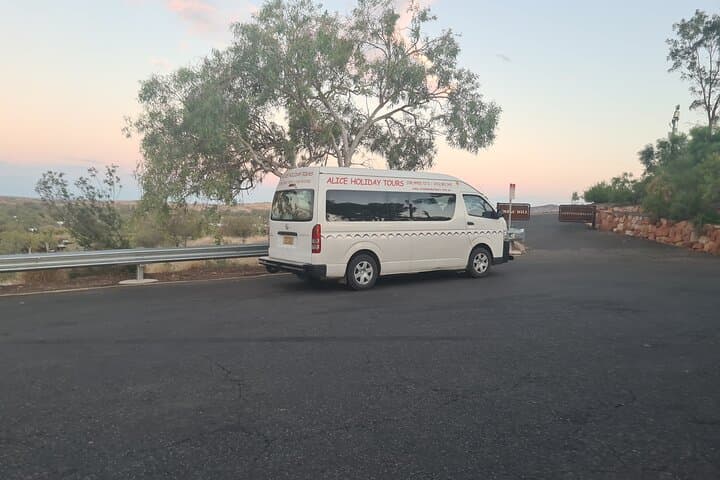
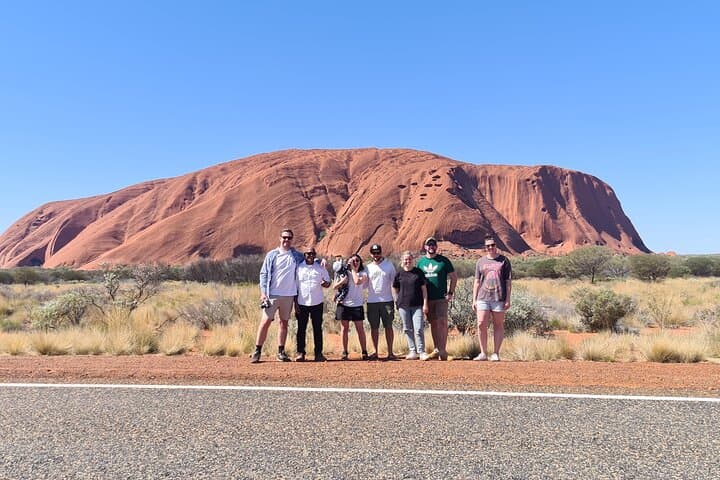
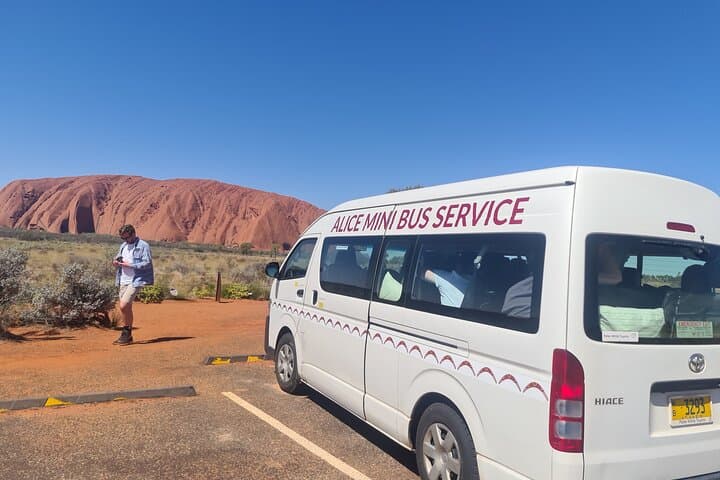
You step onto the coach before dawn and Alice Springs slides away—red scrub flattening into an inland ocean. The driver eases into the highway, the air-con a quiet truce against an incoming desert heat, and the MacDonnell Ranges give way to long, low plains that push the sky wide. By late morning you’ll smell diesel and dust and see Uluru rise from the horizon: a vast, burnt-orange monolith that seems to hold its own weather.
You step onto the coach before dawn and Alice Springs slides away—red scrub flattening into an inland ocean. The driver eases into the highway, the air-con a quiet truce against an incoming desert heat, and the MacDonnell Ranges give way to long, low plains that push the sky wide. By late morning you’ll smell diesel and dust and see Uluru rise from the horizon: a vast, burnt-orange monolith that seems to hold its own weather.
This private charter stitches together the Red Centre’s essentials: an Erldunda roadhouse break, guided Mala Walk at Uluru, the Lungkata and Kuniya sections of the base, a stop at the Anangu-run Cultural Centre, and a Walpa Gorge walk through the domes of Kata Tjuta—finishing with a roadside meal at Curtin Springs before the long ride back to Alice Springs.
Geologically Uluru and Kata Tjuta are ancient players. Uluru is arkose sandstone, a tilted slab worn into caves and grooves by wind and water over hundreds of millions of years; Kata Tjuta’s domes are conglomerate—coarser rock compressed and folded into the rounded forms you’ll walk between on Walpa Gorge (about a 2.6 km return). Culturally the land belongs to the Anangu and Pitjantjatjara people; the Cultural Centre—built using some 90,000 mud bricks—offers language, art, and explanations of Tjukurpa (law/story) that frame every path you’ll take.
On the Mala Walk expect roughly 2 km round-trip, 45–60 minutes of close-up views and rock art explanations. Lungkata and Kuniya walks are similarly short, with boardwalk sections and the Mutitjulu Waterhole offering quiet reflections and birdlife. Walpa Gorge is a 2.6 km return, rugged underfoot in places but rewarding with steep-walled views and seasonal wildflowers.
Practical notes: the drive from Alice Springs to Uluru is long—plan for roughly 4.5–5 hours one way with stops—so this is a full 18-hour day on a private coach. National park entry is required; check current fees and hours in advance. Bring at least 2–3 liters of water, sun protection, and sturdy walking shoes for uneven rock and gravel. Mobile coverage is patchy; use the Cultural Centre’s information and listen to your guide—many sites are culturally sensitive and access is regulated (climbing Uluru is closed).
This tour is ideal if you want curated, private transport with time to walk key sections rather than a drive-by. It balances long stretches on the road with short, interpretive walks that let the landscape—and the stories it holds—set the pace.