THE ADVENTURE COLLECTIVE® · Independent discovery and booking for outdoor travel

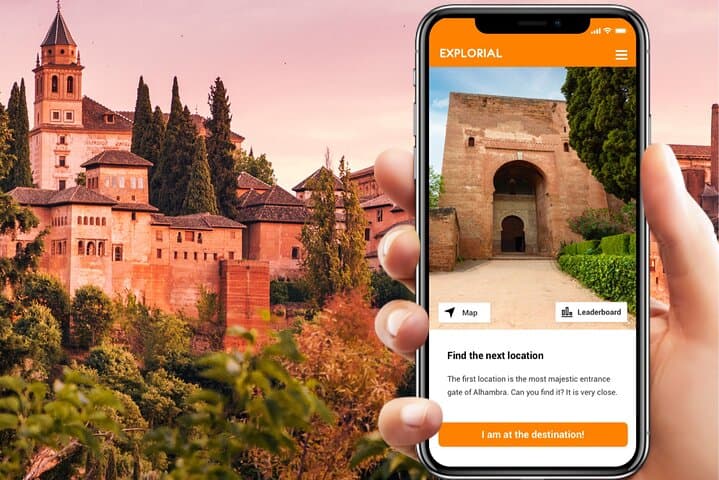
Turn the Alhambra into a puzzle: this self-guided scavenger hunt leads you through free-access gates, viewpoints and courtyards using an app of clues and photo tasks. It’s a history-rich, self-paced walking game that averages 1–2 hours and works in multiple languages.
Turn the Alhambra into a puzzle: this self-guided scavenger hunt leads you through free-access gates, viewpoints and courtyards using an app of clues and photo tasks. It’s a history-rich, self-paced walking game that averages 1–2 hours and works in multiple languages.
Morning light slices between cypress trunks as a narrow street from the Albaicín spills toward the gates of the Alhambra. A smartphone in hand, participants follow map pins and clues through courtyards where fountains insist on attention and stone stairways hold generations of footsteps.
Verified experiences and guided adventures in the surrounding area.
Operated by Explorial · Granada, Andalusia
Morning light slices between cypress trunks as a narrow street from the Albaicín spills toward the gates of the Alhambra. A smartphone in hand, participants follow map pins and clues through courtyards where fountains insist on attention and stone stairways hold generations of footsteps.
The Alhambra began as a fortress and rose into a Nasrid palace in the 13th–14th centuries; its red walls and ornamented facades reflect Andalusia’s layered history—Islamic artistry later threaded with Renaissance inserts like the Palace of Charles V. Geologically, the complex sits on a ridge above the Darro River, its masonry anchored to limestone and clay soils that shaped how gardens and terraces were built.
Culturally, the site is a meeting point: Muslim, Christian and Jewish histories overlap in names, gates and inscriptions. Local life hovers nearby—teahouses and narrow alleys of the Albaicín make for good detours before or after the game.
Practically, the scavenger-hunt format guides you through the free-access areas—Gate of Justice, Plaza de los Aljibes and the outer reaches—using hints, photo tasks and interpretive questions. The experience averages 1–2 hours but is self-paced; bring water, wear grippy shoes for uneven cobbles, and download the app before you arrive. Because some major palaces require separate tickets, this scavenger route focuses on discoverable views, gates and lesser-known corners where history is visible in stone rather than behind velvet ropes. Ideal for curious walkers who want history and a playful challenge without a guide.
easy.
1–2 hours.
Basic walking fitness; able to manage uneven cobbles and short stair sections for up to two hours.
No—this scavenger hunt uses the Alhambra’s free-access areas; entry to the Nasrid Palaces or Generalife requires separate, timed tickets purchased from official channels.
Most groups complete the scavenger hunt in 1–2 hours; it’s self-paced so you can take breaks or extend your visit to explore nearby neighborhoods.
The app and clues are offered in English, Spanish, German and French according to the tour description.
The free-access area includes uneven surfaces and stairs; it may be challenging for travelers with significant mobility limits—check paths beforehand and consider a guided option with accessibility accommodations.
The Alhambra was developed into a royal palace complex under the Nasrid dynasty in the 13th–14th centuries and later adapted by Christian rulers—layers of rule are visible in architecture and inscriptions.
High visitor pressure makes staying on marked paths and avoiding touching inscriptions important; support conservation by following site rules and using official ticketing channels.
Explorial operates guided outdoor trips and adventures with an emphasis on safety, stewardship, and memorable experiences.

Morning light slices between cypress trunks as a narrow street from the Albaicín spills toward the gates of the Alhambra. A smartphone in hand, participants follow map pins and clues through courtyards where fountains insist on attention and stone stairways hold generations of footsteps.
Morning light slices between cypress trunks as a narrow street from the Albaicín spills toward the gates of the Alhambra. A smartphone in hand, participants follow map pins and clues through courtyards where fountains insist on attention and stone stairways hold generations of footsteps.
The Alhambra began as a fortress and rose into a Nasrid palace in the 13th–14th centuries; its red walls and ornamented facades reflect Andalusia’s layered history—Islamic artistry later threaded with Renaissance inserts like the Palace of Charles V. Geologically, the complex sits on a ridge above the Darro River, its masonry anchored to limestone and clay soils that shaped how gardens and terraces were built.
Culturally, the site is a meeting point: Muslim, Christian and Jewish histories overlap in names, gates and inscriptions. Local life hovers nearby—teahouses and narrow alleys of the Albaicín make for good detours before or after the game.
Practically, the scavenger-hunt format guides you through the free-access areas—Gate of Justice, Plaza de los Aljibes and the outer reaches—using hints, photo tasks and interpretive questions. The experience averages 1–2 hours but is self-paced; bring water, wear grippy shoes for uneven cobbles, and download the app before you arrive. Because some major palaces require separate tickets, this scavenger route focuses on discoverable views, gates and lesser-known corners where history is visible in stone rather than behind velvet ropes. Ideal for curious walkers who want history and a playful challenge without a guide.