THE ADVENTURE COLLECTIVE® · Independent discovery and booking for outdoor travel

Drive from the Algarve to Porto with curated stops that let you stretch legs and stories in Évora, Coimbra, Óbidos and Aveiro. This private transfer combines efficient travel with flexible sightseeing—ideal for travelers who want a moving introduction to Portugal’s heart.
Drive from the Algarve to Porto with curated stops that let you stretch legs and stories in Évora, Coimbra, Óbidos and Aveiro. This private transfer combines efficient travel with flexible sightseeing—ideal for travelers who want a moving introduction to Portugal’s heart.
A road begins to rearrange the day the driver slides out of the Algarve's late-morning heat. Windows frame olive groves, low Alentejo cork oak, and the low limestone scarps where caves like Mira de Aire carve into the earth. The trip is less a straight line than a stitched route of villages, coastal lookouts and university courtyards—each stop an invitation to step down from the vehicle and meet the region on foot.
Verified experiences and guided adventures in the surrounding area.
Operated by Meridian4People - Portugal & Spain · Porto, Porto District
A road begins to rearrange the day the driver slides out of the Algarve's late-morning heat. Windows frame olive groves, low Alentejo cork oak, and the low limestone scarps where caves like Mira de Aire carve into the earth. The trip is less a straight line than a stitched route of villages, coastal lookouts and university courtyards—each stop an invitation to step down from the vehicle and meet the region on foot.
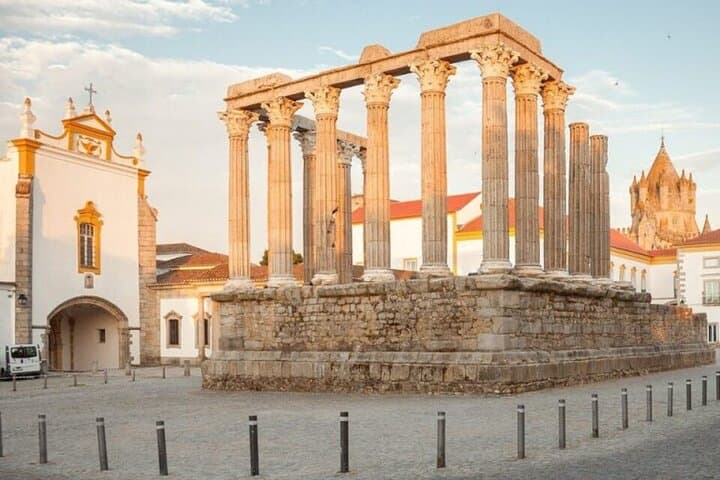
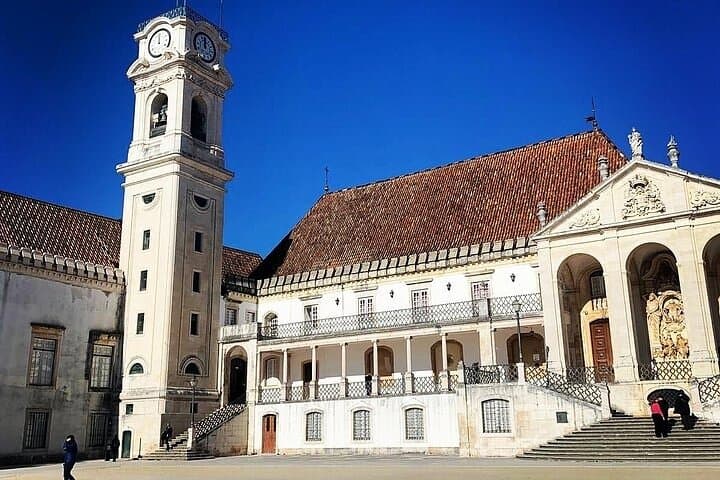
History hangs on these towns: Évora's Roman temple and the Chapel of Bones recall a millennia of settlement; Coimbra's university terraces speak of scholarship and baroque libraries; Óbidos' medieval wall still rewards slow, deliberate climbs; Aveiro's canals and striped moliceiro boats reflect a fishing and salt-making past. Geology dictates the scenery—granite highlands and schist soils inland, limestone in the cave country, and wide sandy beaches where the Atlantic dares the shore.
Practical guidance is simple. Allow 5–10 hours for the transfer depending on stops; expect long stretches on the A2 and A1 motorways and short urban walks at each site. Pack layers for coastal wind and sun protection for open plazas. Bring cash for small museums and local cafés—many accept cards, but smaller vendors sometimes do not. If you want a particular stop added, confirm in advance: the private driver-guide can adapt the route but timing is finite. Timed well, this transfer becomes more than logistics—it’s a moving sampler of Portugal’s central spine, with room for short hikes, seafood lunches, and a quiet canal-side coffee in Aveiro before the final descent into Porto.
easy.
5–10 hours.
Low to moderate—suitable for travelers who can do short walks and climb stairs intermittently
Yes—on booking select your preferred stops; the private driver can adapt the itinerary if you notify them in advance, though total time limits the number of long visits.
Pickup is offered from major towns like Lagos, Albufeira, Quarteira and Faro; confirm your exact address during booking for scheduling.
Typical stops range from 30 minutes to 2.5 hours depending on the place—Évora and Coimbra often merit longer visits while coastal lookouts may be shorter.
The transfer is suitable for many, but historic sites have uneven ground and stairs; contact the operator ahead to discuss accessibility and request assistance.
The route threads Roman, medieval and maritime histories—Évora retains Roman and medieval monuments while Coimbra grew as Portugal’s medieval seat of learning.
Historic centers are sensitive to visitor pressure—stick to marked paths, respect quiet hours and support small local businesses to help maintain these places.
Meridian4People - Portugal & Spain operates guided outdoor trips and adventures with an emphasis on safety, stewardship, and memorable experiences.
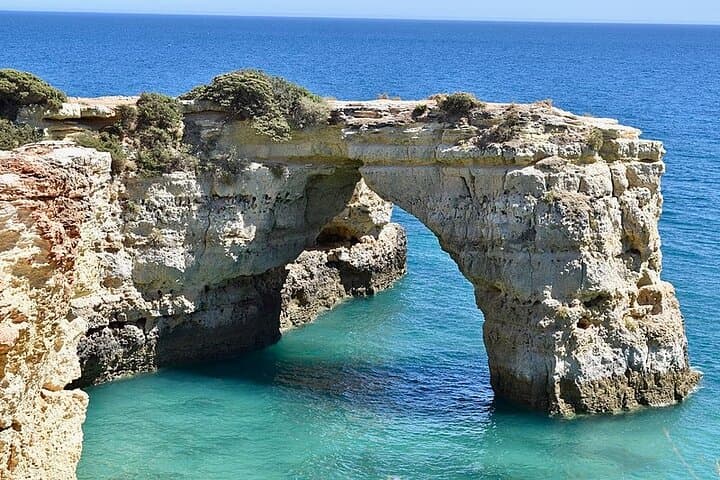
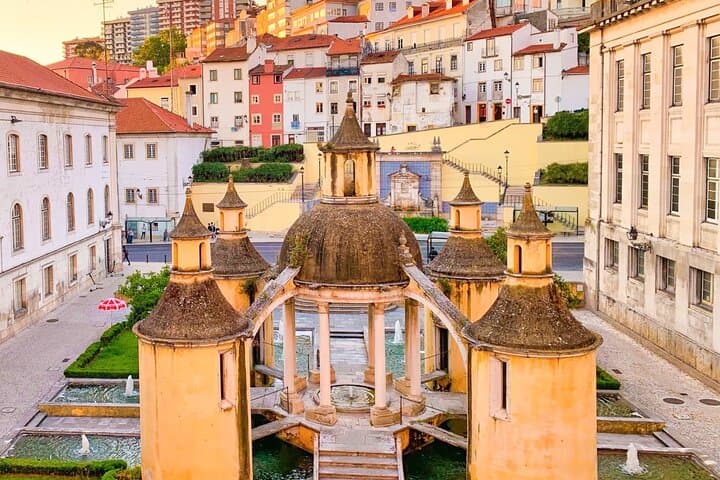
A road begins to rearrange the day the driver slides out of the Algarve's late-morning heat. Windows frame olive groves, low Alentejo cork oak, and the low limestone scarps where caves like Mira de Aire carve into the earth. The trip is less a straight line than a stitched route of villages, coastal lookouts and university courtyards—each stop an invitation to step down from the vehicle and meet the region on foot.
A road begins to rearrange the day the driver slides out of the Algarve's late-morning heat. Windows frame olive groves, low Alentejo cork oak, and the low limestone scarps where caves like Mira de Aire carve into the earth. The trip is less a straight line than a stitched route of villages, coastal lookouts and university courtyards—each stop an invitation to step down from the vehicle and meet the region on foot.
History hangs on these towns: Évora's Roman temple and the Chapel of Bones recall a millennia of settlement; Coimbra's university terraces speak of scholarship and baroque libraries; Óbidos' medieval wall still rewards slow, deliberate climbs; Aveiro's canals and striped moliceiro boats reflect a fishing and salt-making past. Geology dictates the scenery—granite highlands and schist soils inland, limestone in the cave country, and wide sandy beaches where the Atlantic dares the shore.
Practical guidance is simple. Allow 5–10 hours for the transfer depending on stops; expect long stretches on the A2 and A1 motorways and short urban walks at each site. Pack layers for coastal wind and sun protection for open plazas. Bring cash for small museums and local cafés—many accept cards, but smaller vendors sometimes do not. If you want a particular stop added, confirm in advance: the private driver-guide can adapt the route but timing is finite. Timed well, this transfer becomes more than logistics—it’s a moving sampler of Portugal’s central spine, with room for short hikes, seafood lunches, and a quiet canal-side coffee in Aveiro before the final descent into Porto.