THE ADVENTURE COLLECTIVE® · Independent discovery and booking for outdoor travel

A full-day trip from Cairo that hits Alexandria’s Roman amphitheater, Kom El Shoqafa catacombs, Bibliotheca Alexandrina and Qaitbay Citadel. Expect a 10-hour itinerary with walking, stairs and guided history.
A full-day trip from Cairo that hits Alexandria’s Roman amphitheater, Kom El Shoqafa catacombs, Bibliotheca Alexandrina and Qaitbay Citadel. Expect a 10-hour itinerary with walking, stairs and guided history.
You arrive as the Mediterranean opens up to the west, sea air carrying a salt-bright sharpness that cuts through Cairo’s dust. The road to Alexandria unfurls in wide, flat plains; skyscrapers give way to low concrete and the city’s pale stone edges the water. From the Roman amphitheater’s mosaic floors to the vaulted passageways of the Kom El Shoqafa catacombs, the day stitches together layers of Alexandrian life.
Verified experiences and guided adventures in the surrounding area.
Operated by Love Egypt holiday · Alexandria, Alexandria Governorate
You arrive as the Mediterranean opens up to the west, sea air carrying a salt-bright sharpness that cuts through Cairo’s dust. The road to Alexandria unfurls in wide, flat plains; skyscrapers give way to low concrete and the city’s pale stone edges the water. From the Roman amphitheater’s mosaic floors to the vaulted passageways of the Kom El Shoqafa catacombs, the day stitches together layers of Alexandrian life.
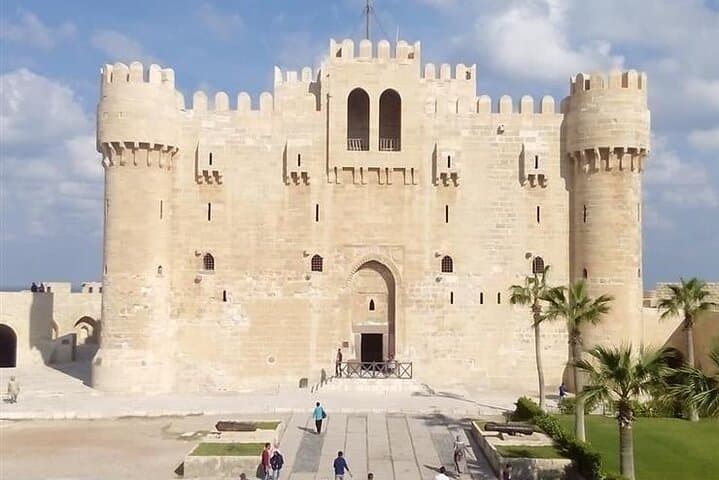
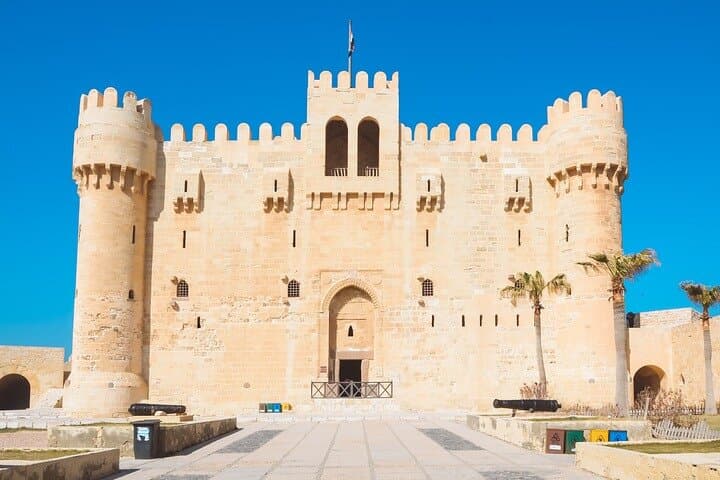
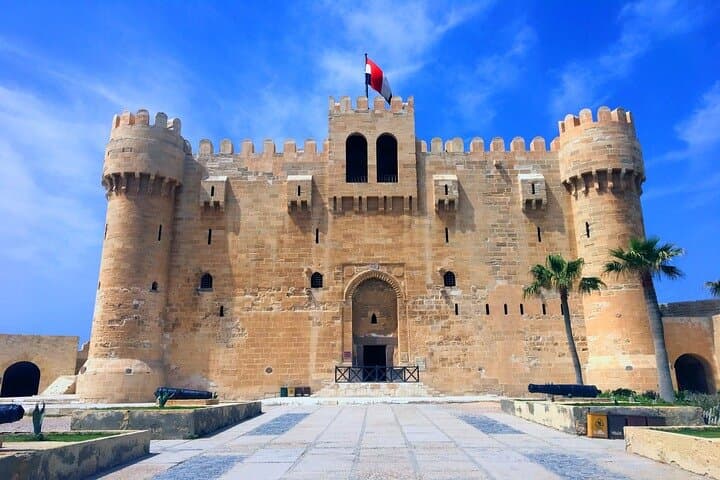
Founded by Alexander the Great and long a crossroads of Greek, Roman and Egyptian influence, Alexandria’s shoreline holds visible history: Hellenistic grid plans, Ottoman fortifications, and modern libraries. Geologically this coast is a gentle limestone shelf; the beaches are modest but the harbor and rocky headlands around the Citadel of Qaitbay give clear views across blue water that seems to dare you to look farther.
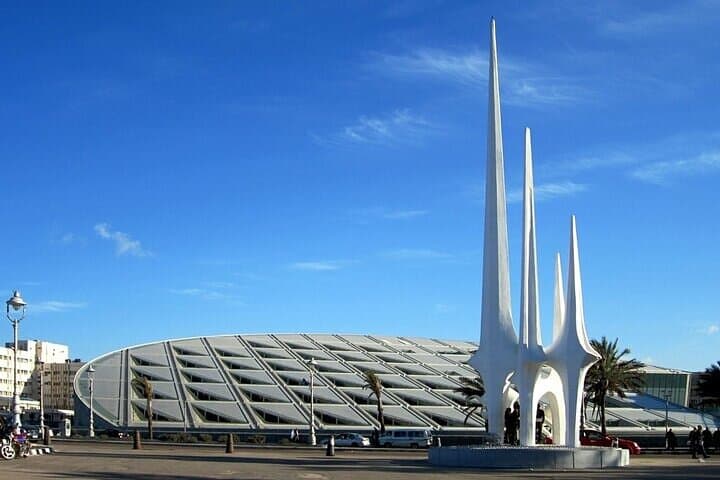
Culturally the city is pragmatic — markets trade seafood and spices, cafes fill with men playing backgammon, and the Bibliotheca Alexandrina stands as a self-aware modern answer to the ancient library’s legacy.
Practical guidance: expect an early pickup from Cairo and a full 10-hour day with several short walking segments — terraces, stairs and narrow museum rooms. Carry sun protection and a bottle of water, wear comfortable shoes with grip for uneven stone floors, and bring photocopies of travel documents for checkpoints. Entry fees may be separate; a local guide will handle logistics but tip modestly for good commentary.
This is a travel day that favors curiosity and steady pacing: history in measured doses, a Mediterranean breeze that keeps the rhythm of the visit moving forward.
easy.
8–10 hours.
Suitable for most fitness levels; involves repeated short walks, staircases, and standing during commentary.
Expect about 2.5–3 hours each way depending on traffic; the tour schedules restroom and coffee stops en route.
Some packages include entrance fees; this tour lists entrance fees as included in the itinerary’s other inclusions—confirm at booking to avoid surprises.
The itinerary is labeled physically easy, but the catacombs and some historic sites have stairs and tight spaces; travelers with mobility concerns should check specific accessibility before booking.
Yes — the itinerary includes a one-hour lunch at a local restaurant and short opportunities to browse markets near main sites.
Alexandria was founded in 331 BCE by Alexander the Great and became a major Hellenistic center; layers of Greek, Roman and Egyptian influence remain visible across archaeological sites.
Coastal development and tourism pressure impact shorelines and historic stonework; stick to marked paths, avoid touching mosaics, and use local guides who support site preservation.
Love Egypt holiday operates guided outdoor trips and adventures with an emphasis on safety, stewardship, and memorable experiences.
You arrive as the Mediterranean opens up to the west, sea air carrying a salt-bright sharpness that cuts through Cairo’s dust. The road to Alexandria unfurls in wide, flat plains; skyscrapers give way to low concrete and the city’s pale stone edges the water. From the Roman amphitheater’s mosaic floors to the vaulted passageways of the Kom El Shoqafa catacombs, the day stitches together layers of Alexandrian life.
You arrive as the Mediterranean opens up to the west, sea air carrying a salt-bright sharpness that cuts through Cairo’s dust. The road to Alexandria unfurls in wide, flat plains; skyscrapers give way to low concrete and the city’s pale stone edges the water. From the Roman amphitheater’s mosaic floors to the vaulted passageways of the Kom El Shoqafa catacombs, the day stitches together layers of Alexandrian life.
Founded by Alexander the Great and long a crossroads of Greek, Roman and Egyptian influence, Alexandria’s shoreline holds visible history: Hellenistic grid plans, Ottoman fortifications, and modern libraries. Geologically this coast is a gentle limestone shelf; the beaches are modest but the harbor and rocky headlands around the Citadel of Qaitbay give clear views across blue water that seems to dare you to look farther.
Culturally the city is pragmatic — markets trade seafood and spices, cafes fill with men playing backgammon, and the Bibliotheca Alexandrina stands as a self-aware modern answer to the ancient library’s legacy.
Practical guidance: expect an early pickup from Cairo and a full 10-hour day with several short walking segments — terraces, stairs and narrow museum rooms. Carry sun protection and a bottle of water, wear comfortable shoes with grip for uneven stone floors, and bring photocopies of travel documents for checkpoints. Entry fees may be separate; a local guide will handle logistics but tip modestly for good commentary.
This is a travel day that favors curiosity and steady pacing: history in measured doses, a Mediterranean breeze that keeps the rhythm of the visit moving forward.