THE ADVENTURE COLLECTIVE® · Independent discovery and booking for outdoor travel

Step into a fortress-palace that served Castilian monarchs and later an artillery academy. This entry ticket covers the palace, museum and tower—plan two hours, sturdy shoes and an early start to beat crowds.
Step into a fortress-palace that served Castilian monarchs and later an artillery academy. This entry ticket covers the palace, museum and tower—plan two hours, sturdy shoes and an early start to beat crowds.
A wind from the Eresma pushes cool air across the stone as you approach the Alcázar's high prow, its silhouette a hard-edged interruption above Segovia's old roofs. You cross a cobbled square, the castle's buttressed walls drawing closer until carved stonework and a tight gateway frame the first glimpse inside.
Verified experiences and guided adventures in the surrounding area.
Operated by ParisRiverCruise · Segovia, Castile and León
A wind from the Eresma pushes cool air across the stone as you approach the Alcázar's high prow, its silhouette a hard-edged interruption above Segovia's old roofs. You cross a cobbled square, the castle's buttressed walls drawing closer until carved stonework and a tight gateway frame the first glimpse inside.
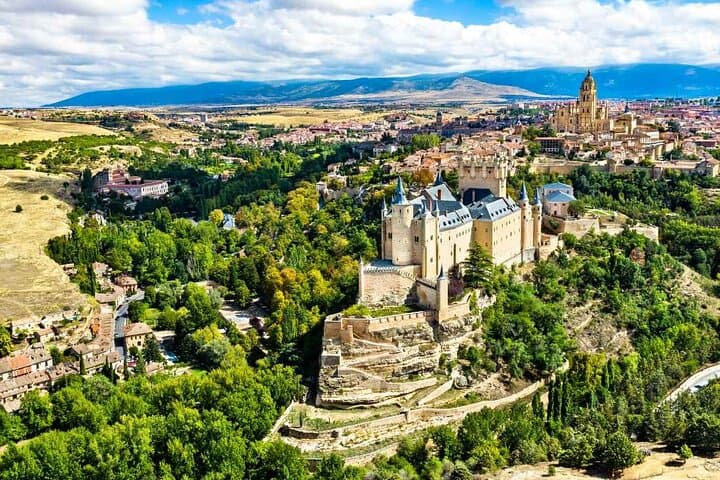
The Alcázar blends layers of history: Roman foundations, medieval fortifications and Renaissance halls repurposed over centuries as a royal residence and later an artillery academy. Its geology—granite bedrock and quarried blocks—gives the fortress its compact, fortress-like mass and the tower a raw, weathered profile that echoes the nearby Guadarrama ridgeline.
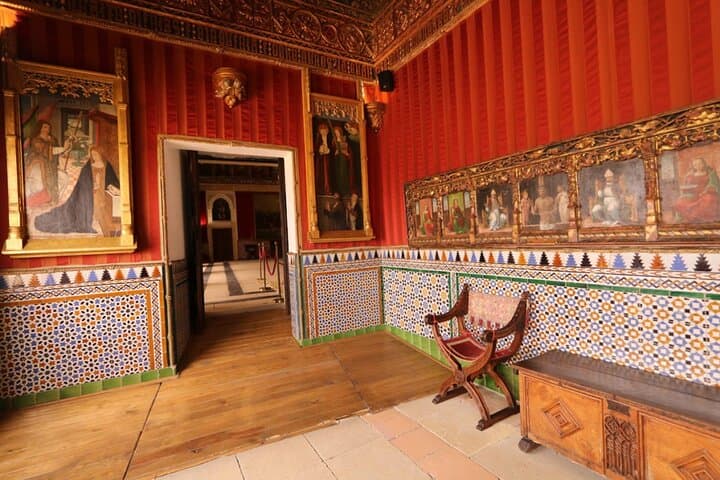
Inside, rooms hold carved coffered ceilings, armored displays and stained glass that narrate Castilian court life while the narrow spiral up the tower tests balance and breath. Local culture is visible in the modest museums and in the way Segovians use the castle as a landmark for neighborhood walks.
Practical guidance: allow about two hours to see palace rooms, the museum and climb the tower if you're fit; stairs are steep and not suitable for those with serious back issues. Tickets are mobile-friendly—save them offline—and public transport stops are within walking distance. Visit early or late to avoid peak tour groups, wear sturdy shoes for stone steps and bring a layer for exposed viewpoints. Respect restricted areas, follow signage, and pair the visit with a stroll to the nearby aqueduct and Jewish Quarter for broader context.
easy.
2 hours.
Moderate—comfortable walking ability and the ability to climb steep stairs recommended
This entry ticket provides admission to the Alcázar, but it is not explicitly a guaranteed skip-the-line product—arrive early to minimize waiting.
No—access to the tower is by steep, narrow stairs and is not suitable for those who cannot manage confined staircases.
Plan roughly two hours to explore the palace rooms, museum displays and to climb the tower at a measured pace.
Accessibility is limited due to historic architecture and staircases; parts of the ground-level museum may be accessible, but the tower and many rooms are not.
The Alcázar began as a Roman-era fortification, evolved into a medieval royal palace and later housed an artillery academy—its fabric records military and courtly functions across centuries.
High visitor numbers stress fragile interiors and carved stone; stick to marked paths, avoid touching delicate artifacts and support local conservation efforts by following site rules.
ParisRiverCruise operates guided outdoor trips and adventures with an emphasis on safety, stewardship, and memorable experiences.
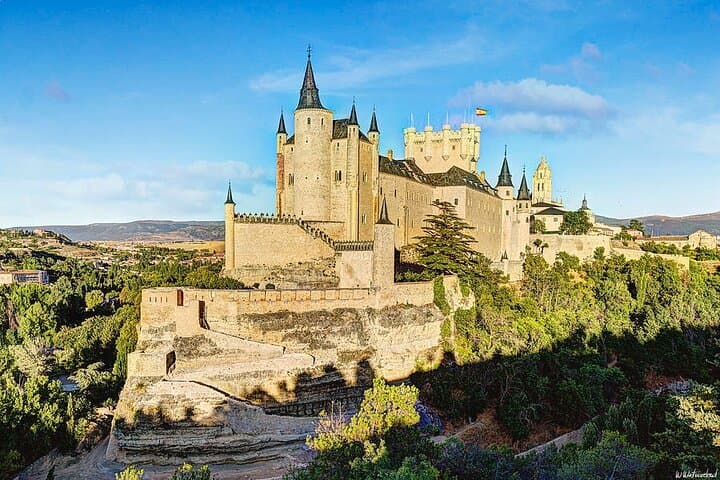
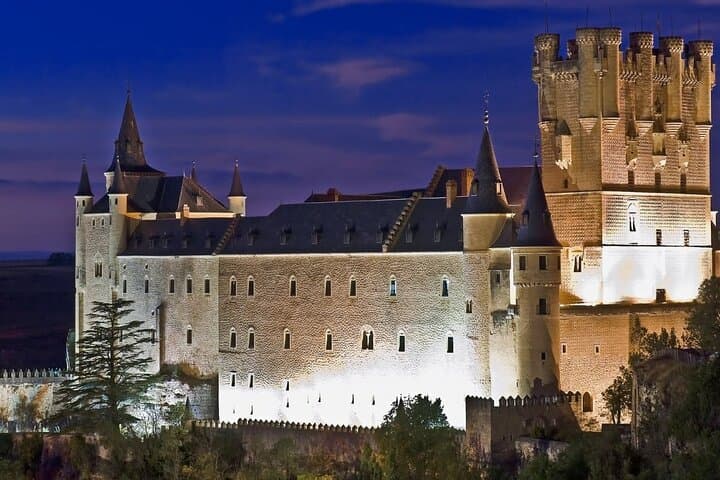
A wind from the Eresma pushes cool air across the stone as you approach the Alcázar's high prow, its silhouette a hard-edged interruption above Segovia's old roofs. You cross a cobbled square, the castle's buttressed walls drawing closer until carved stonework and a tight gateway frame the first glimpse inside.
A wind from the Eresma pushes cool air across the stone as you approach the Alcázar's high prow, its silhouette a hard-edged interruption above Segovia's old roofs. You cross a cobbled square, the castle's buttressed walls drawing closer until carved stonework and a tight gateway frame the first glimpse inside.
The Alcázar blends layers of history: Roman foundations, medieval fortifications and Renaissance halls repurposed over centuries as a royal residence and later an artillery academy. Its geology—granite bedrock and quarried blocks—gives the fortress its compact, fortress-like mass and the tower a raw, weathered profile that echoes the nearby Guadarrama ridgeline.
Inside, rooms hold carved coffered ceilings, armored displays and stained glass that narrate Castilian court life while the narrow spiral up the tower tests balance and breath. Local culture is visible in the modest museums and in the way Segovians use the castle as a landmark for neighborhood walks.
Practical guidance: allow about two hours to see palace rooms, the museum and climb the tower if you're fit; stairs are steep and not suitable for those with serious back issues. Tickets are mobile-friendly—save them offline—and public transport stops are within walking distance. Visit early or late to avoid peak tour groups, wear sturdy shoes for stone steps and bring a layer for exposed viewpoints. Respect restricted areas, follow signage, and pair the visit with a stroll to the nearby aqueduct and Jewish Quarter for broader context.