THE ADVENTURE COLLECTIVE® · Independent discovery and booking for outdoor travel

Wander among Alberobello’s iconic trulli, learn why these dry‑stone cones are UNESCO‑listed, and finish with a tasting of authentic Apulian aperitifs. This 2–3 hour small‑group walk pairs cultural context with practical tips for comfortable exploration.
Wander among Alberobello’s iconic trulli, learn why these dry‑stone cones are UNESCO‑listed, and finish with a tasting of authentic Apulian aperitifs. This 2–3 hour small‑group walk pairs cultural context with practical tips for comfortable exploration.
You step off the narrow street and the town changes shape: whitewashed cones rise like small, deliberate mountains against a blue Apulian sky. The guide leads you through alleys where cobbles slope and the air smells faintly of olive oil and warm stone. Conversation drifts between trulli rooftops as a late-afternoon light highlights lime-washed walls and low wooden doors.
Verified experiences and guided adventures in the surrounding area.
Operated by Yuniqly · Alberobello, Puglia
You step off the narrow street and the town changes shape: whitewashed cones rise like small, deliberate mountains against a blue Apulian sky. The guide leads you through alleys where cobbles slope and the air smells faintly of olive oil and warm stone. Conversation drifts between trulli rooftops as a late-afternoon light highlights lime-washed walls and low wooden doors.
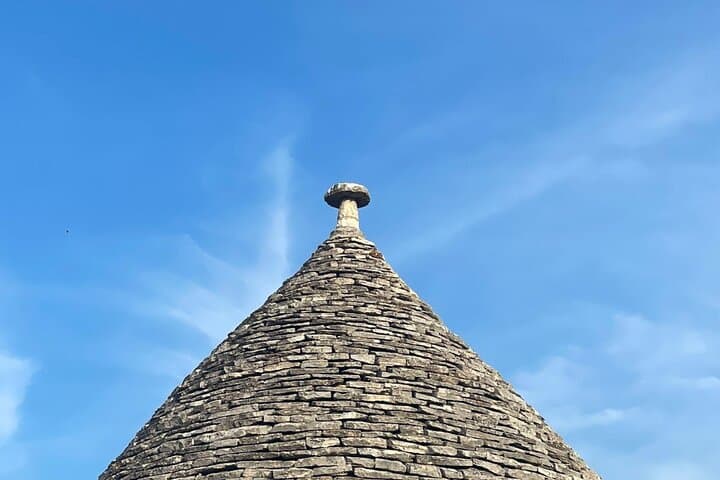
Alberobello’s conical trulli are a product of the Itria Valley’s karst limestone—dry-stone huts built without mortar and adapted over centuries to local law and livelihoods. The town’s compact historic center, split into the Monti and Aia Piccola districts, is a UNESCO World Heritage site and a living example of vernacular architecture tied to pastoral and agricultural life.
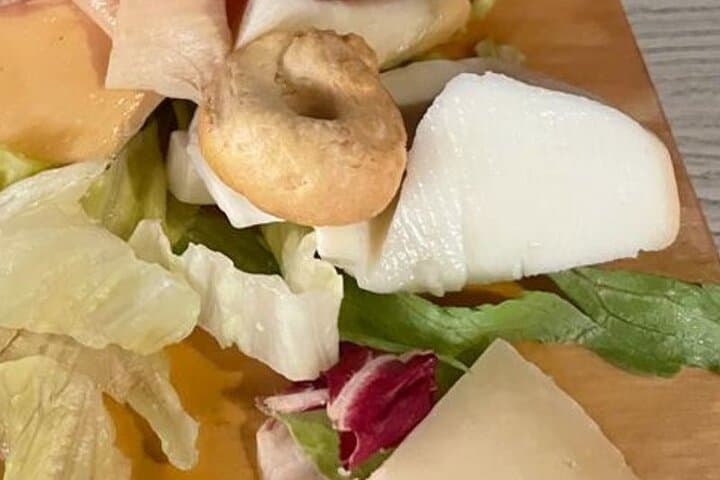
Culture here is tactile: small family shops, cheeses rubbed in olive oil, and a regional aperitivo that pairs crisp local white wines with taralli, cured meats, and seasonal vegetables. The tour typically lasts 2–3 hours, runs in small groups (up to 10), and includes a guided tasting of Apulian aperitifs and snacks in a traditional setting.
Practical guidance: wear supportive walking shoes for uneven cobbles, bring sun protection and a reusable water bottle, and aim for morning or late afternoon in summer to avoid the heat. Mobile tickets and instant confirmation simplify logistics; allow extra time to explore Aia Piccola or visit a trullo museum. Note the tour advises moderate fitness and is not recommended for pregnant travelers or those with serious spinal or cardiovascular conditions. Respect private property: don’t climb on trulli roofs and support local vendors when possible.
moderate.
2–3 hours.
Suitable for travelers with a moderate fitness level able to walk up to a few miles on uneven cobbles and short inclines.
Guided 2–3 hour walk of Alberobello’s historic trulli districts with an Apulian aperitif tasting and commentary on local history and architecture.
The tour requires moderate mobility; it’s not recommended for pregnant travelers or those with serious spinal or cardiovascular conditions.
Shared tours are small‑group (up to 10). Mobile tickets and instant confirmation are used; cancel at least 24 hours before to receive a full refund.
Historic trulli areas have narrow, uneven streets and steps; accessibility is limited—contact the operator to discuss specific needs.
Alberobello’s dry‑stone trulli evolved from local limestone and historic tax and land practices; the town’s center is a UNESCO World Heritage site for its unique construction.
Trulli are fragile vernacular structures—visit responsibly by staying on public paths, avoiding climbing, supporting local shops, and carrying out any waste.
Yuniqly operates guided outdoor trips and adventures with an emphasis on safety, stewardship, and memorable experiences.

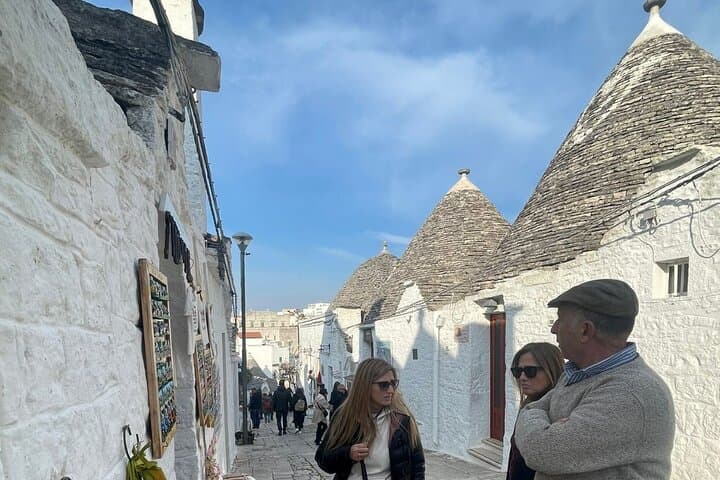
You step off the narrow street and the town changes shape: whitewashed cones rise like small, deliberate mountains against a blue Apulian sky. The guide leads you through alleys where cobbles slope and the air smells faintly of olive oil and warm stone. Conversation drifts between trulli rooftops as a late-afternoon light highlights lime-washed walls and low wooden doors.
You step off the narrow street and the town changes shape: whitewashed cones rise like small, deliberate mountains against a blue Apulian sky. The guide leads you through alleys where cobbles slope and the air smells faintly of olive oil and warm stone. Conversation drifts between trulli rooftops as a late-afternoon light highlights lime-washed walls and low wooden doors.
Alberobello’s conical trulli are a product of the Itria Valley’s karst limestone—dry-stone huts built without mortar and adapted over centuries to local law and livelihoods. The town’s compact historic center, split into the Monti and Aia Piccola districts, is a UNESCO World Heritage site and a living example of vernacular architecture tied to pastoral and agricultural life.
Culture here is tactile: small family shops, cheeses rubbed in olive oil, and a regional aperitivo that pairs crisp local white wines with taralli, cured meats, and seasonal vegetables. The tour typically lasts 2–3 hours, runs in small groups (up to 10), and includes a guided tasting of Apulian aperitifs and snacks in a traditional setting.
Practical guidance: wear supportive walking shoes for uneven cobbles, bring sun protection and a reusable water bottle, and aim for morning or late afternoon in summer to avoid the heat. Mobile tickets and instant confirmation simplify logistics; allow extra time to explore Aia Piccola or visit a trullo museum. Note the tour advises moderate fitness and is not recommended for pregnant travelers or those with serious spinal or cardiovascular conditions. Respect private property: don’t climb on trulli roofs and support local vendors when possible.