THE ADVENTURE COLLECTIVE® · Independent discovery and booking for outdoor travel

Spend a full day journeying from Bari to two of southern Italy’s most singular places: the conical trulli of Alberobello and the ancient cave dwellings of Matera. This guided tour blends local tastings, expert history, and manageable walking on cobbled streets.
Spend a full day journeying from Bari to two of southern Italy’s most singular places: the conical trulli of Alberobello and the ancient cave dwellings of Matera. This guided tour blends local tastings, expert history, and manageable walking on cobbled streets.
You step off an air-conditioned coach into a cluster of whitewashed cones—Alberobello’s trulli rise like geometric huts with their stone caps crowned by painted symbols that once marked families and superstitions.
Verified experiences and guided adventures in the surrounding area.
Operated by ApuliaSmarttour · Alberobello, Puglia
You step off an air-conditioned coach into a cluster of whitewashed cones—Alberobello’s trulli rise like geometric huts with their stone caps crowned by painted symbols that once marked families and superstitions.
The day moves with a clear rhythm: a 90‑minute guided walk through the trulli quarter, a tasting of Apulian taralli, olive oil and local wine, then a drive into the karst plateaus toward Matera’s Sassi. Matera’s rock-cut dwellings open like rooms carved over millennia; the guide points out rupestrian churches and niche windows while limestone terraces frame broad, cinematic views of ravines below.
Geology here is obvious: soft calcarenite and tuff were carved into homes and chapels, producing the Sassi’s cave architecture and the dry-stone technique used for trulli roofs. Culturally, both towns are living workshops—artisan pottery, olive presses and family-run osterie where Apulian food culture is tactile and unpretentious.
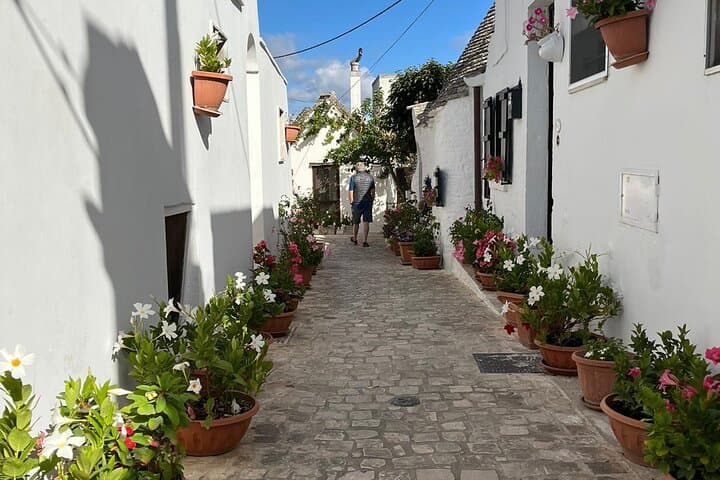
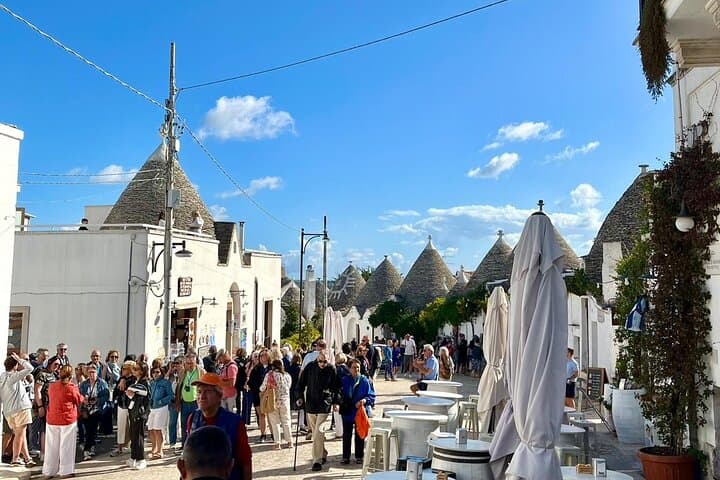
Practically, expect about 10 hours total: guided walks of ~1.5 hours in each town, plus travel and relaxed free time. Surfaces are cobbled and uneven; staircases and narrow alleys are common. The operator provides transport and a guide, and tastings are included. Bring comfortable soles, a reusable water bottle and a compact jacket for coastal winds. If you want photos without crowds, plan to photograph early in each free period; midafternoon brings tour groups. The itinerary is historically rich but physically easy—made for travelers who want cultural depth without a steep hike.
easy.
10 hours.
Suitable for most fitness levels; expect walking on uneven, cobbled surfaces and short stair climbs.
Most departures meet at a central Bari pickup point and the full excursion runs about 10 hours, including travel time and two guided 90‑minute walks.
The operator lists the tour as physically easy, but both towns have uneven cobbles and steps; travelers with mobility concerns should contact the provider in advance about accessibility and pickup options.
Tastings typically feature taralli, local sweets, olive oil and regional wines; notify the operator at booking for allergies or non‑alcoholic alternatives.
Drone regulations in Italy require permissions and are often restricted in heritage zones; photography for personal use is fine, but check local rules before any commercial shoots.
Alberobello’s trulli are traditional dry‑stone constructions with conical roofs developed from local limestone techniques; Matera’s Sassi are millennia‑old cave dwellings recognized as a UNESCO World Heritage Site.
Both sites are fragile: stay on marked paths, avoid touching delicate stonework, support local artisans and limit single‑use plastics to reduce tourism impact.
ApuliaSmarttour operates guided outdoor trips and adventures with an emphasis on safety, stewardship, and memorable experiences.
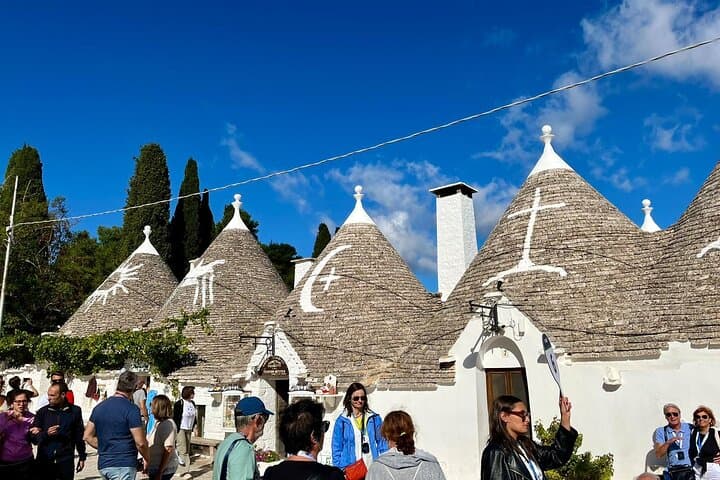
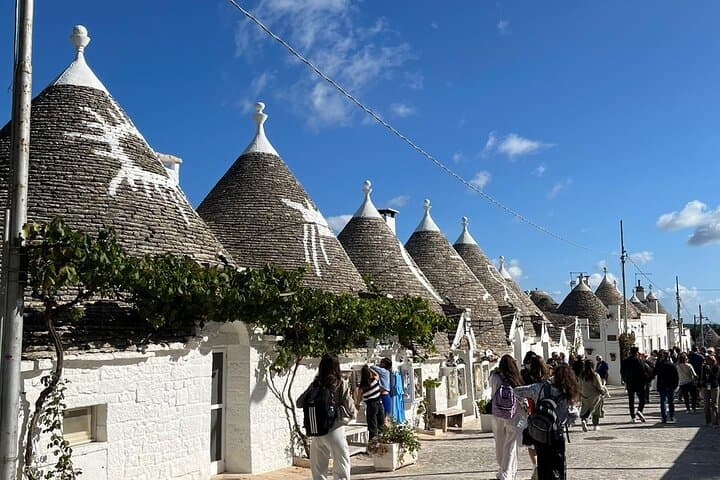
You step off an air-conditioned coach into a cluster of whitewashed cones—Alberobello’s trulli rise like geometric huts with their stone caps crowned by painted symbols that once marked families and superstitions.
You step off an air-conditioned coach into a cluster of whitewashed cones—Alberobello’s trulli rise like geometric huts with their stone caps crowned by painted symbols that once marked families and superstitions.
The day moves with a clear rhythm: a 90‑minute guided walk through the trulli quarter, a tasting of Apulian taralli, olive oil and local wine, then a drive into the karst plateaus toward Matera’s Sassi. Matera’s rock-cut dwellings open like rooms carved over millennia; the guide points out rupestrian churches and niche windows while limestone terraces frame broad, cinematic views of ravines below.
Geology here is obvious: soft calcarenite and tuff were carved into homes and chapels, producing the Sassi’s cave architecture and the dry-stone technique used for trulli roofs. Culturally, both towns are living workshops—artisan pottery, olive presses and family-run osterie where Apulian food culture is tactile and unpretentious.
Practically, expect about 10 hours total: guided walks of ~1.5 hours in each town, plus travel and relaxed free time. Surfaces are cobbled and uneven; staircases and narrow alleys are common. The operator provides transport and a guide, and tastings are included. Bring comfortable soles, a reusable water bottle and a compact jacket for coastal winds. If you want photos without crowds, plan to photograph early in each free period; midafternoon brings tour groups. The itinerary is historically rich but physically easy—made for travelers who want cultural depth without a steep hike.