THE ADVENTURE COLLECTIVE® · Independent discovery and booking for outdoor travel

Travel from Alanya to Pamukkale for a full-day encounter with white travertine terraces, the ruins of Hierapolis, and optional thermal swims. This guided tour combines geology, archaeology and local cuisine into one long but rewarding day.
Travel from Alanya to Pamukkale for a full-day encounter with white travertine terraces, the ruins of Hierapolis, and optional thermal swims. This guided tour combines geology, archaeology and local cuisine into one long but rewarding day.
You step off the coach onto bright white terraces that catch the sun like a field of salt — Pamukkale’s travertines cut a clean, otherworldly line down the hillside while the ruins of Hierapolis sit watch above.
Verified experiences and guided adventures in the surrounding area.
Operated by Payless · Pamukkale, Denizli Province
You step off the coach onto bright white terraces that catch the sun like a field of salt — Pamukkale’s travertines cut a clean, otherworldly line down the hillside while the ruins of Hierapolis sit watch above.
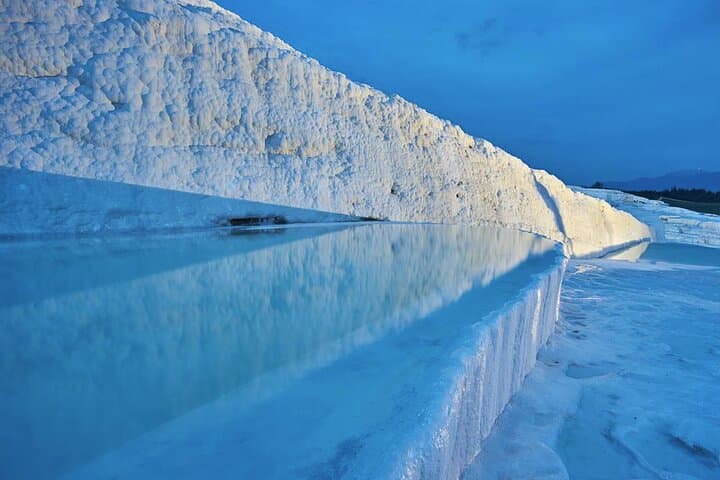
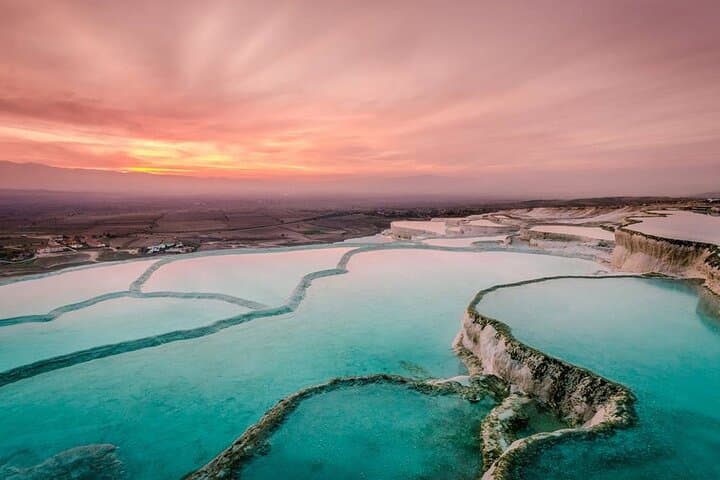
This full-day outing begins with a morning pickup in Alanya and a long, scenic transfer across Anatolia’s interior (expect roughly four hours by A/C coach with comfort stops). Geology here is obvious: mineral-rich thermal waters deposit calcium carbonate as they cool, building stepped pools that have been forming for millennia.
Hierapolis adds human history to the landscape. Founded in the Hellenistic period and later a Roman spa town, the site offers a theatre, colonnaded streets and a necropolis whose stones speak to the town’s past as a healing center. Local culture centers on simple hospitality — a buffet lunch in Denizli will likely include regional breads, meze and seasonal salads.
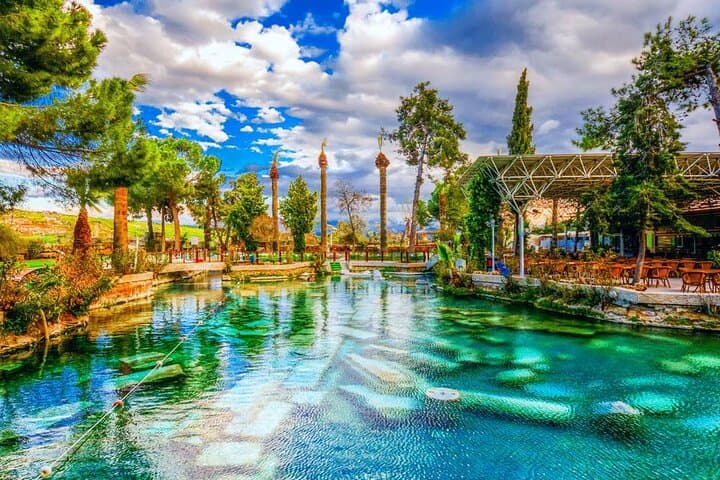
Practical side: you’ll have about three hours of free time to walk the terraces (plan on 2–3 km of walking on calcified, often wet surfaces and paved ruins), visit the open-air museum, and optionally pay for Cleopatra’s Pool (around €10). Bring a towel and swimsuit if you want the thermal swim; footwear is restricted on the travertines, so lightweight shoes you can carry or quick-dry sandals work best. Sunscreen and a hat are essential — the white rock reflects sun intensely.
The excursion is long but efficient: it pairs geology, archaeology and a thermal experience into a single, accessible day for travelers based in Alanya.
moderate.
14–15 hours.
Moderate endurance for several hours of walking plus a long bus transfer; comfortable on uneven and wet surfaces.
Expect about four hours each way by coach with scheduled comfort stops; the full activity runs roughly 14–15 hours.
No — entry is optional and typically costs around €10 per person; towels and swimsuits are recommended.
Many travertine sections require bare feet or soft-soled footwear to protect the formations; bring sandals you can easily remove and carry.
Entrance fees are not included in the tour price; check with the guide on arrival for current ticketing and any child discount requirements.
Hierapolis grew around thermal baths in the Hellenistic and Roman eras and became a major center for healing and pilgrimage; its necropolis is one of the largest ancient cemeteries in Anatolia.
Pamukkale’s travertines are sensitive to foot traffic and water diversion; visitor rules limit where you can walk and encourage minimal-impact behavior to preserve mineral deposition.
Payless operates guided outdoor trips and adventures with an emphasis on safety, stewardship, and memorable experiences.
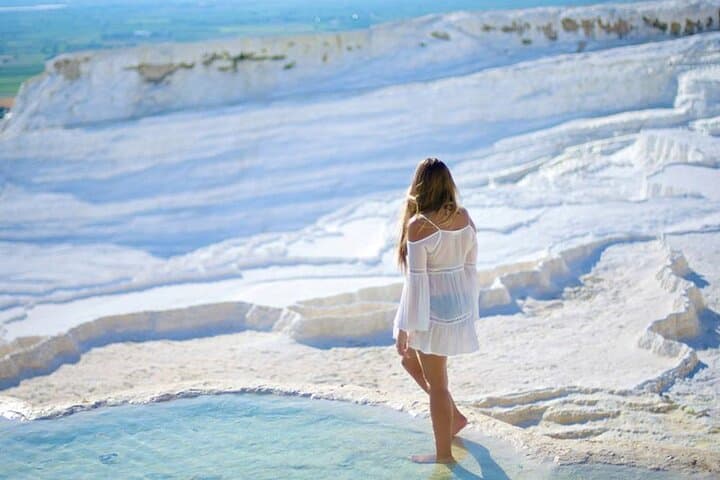
You step off the coach onto bright white terraces that catch the sun like a field of salt — Pamukkale’s travertines cut a clean, otherworldly line down the hillside while the ruins of Hierapolis sit watch above.
You step off the coach onto bright white terraces that catch the sun like a field of salt — Pamukkale’s travertines cut a clean, otherworldly line down the hillside while the ruins of Hierapolis sit watch above.
This full-day outing begins with a morning pickup in Alanya and a long, scenic transfer across Anatolia’s interior (expect roughly four hours by A/C coach with comfort stops). Geology here is obvious: mineral-rich thermal waters deposit calcium carbonate as they cool, building stepped pools that have been forming for millennia.
Hierapolis adds human history to the landscape. Founded in the Hellenistic period and later a Roman spa town, the site offers a theatre, colonnaded streets and a necropolis whose stones speak to the town’s past as a healing center. Local culture centers on simple hospitality — a buffet lunch in Denizli will likely include regional breads, meze and seasonal salads.
Practical side: you’ll have about three hours of free time to walk the terraces (plan on 2–3 km of walking on calcified, often wet surfaces and paved ruins), visit the open-air museum, and optionally pay for Cleopatra’s Pool (around €10). Bring a towel and swimsuit if you want the thermal swim; footwear is restricted on the travertines, so lightweight shoes you can carry or quick-dry sandals work best. Sunscreen and a hat are essential — the white rock reflects sun intensely.
The excursion is long but efficient: it pairs geology, archaeology and a thermal experience into a single, accessible day for travelers based in Alanya.