THE ADVENTURE COLLECTIVE® · Independent discovery and booking for outdoor travel

A full-day road trip from Alanya brings you to Pamukkale’s surreal white travertines and the ruins of Hierapolis. Expect a mix of geology, Roman-era ruins, thermal pools and practical tips for a long but rewarding day.
A full-day road trip from Alanya brings you to Pamukkale’s surreal white travertines and the ruins of Hierapolis. Expect a mix of geology, Roman-era ruins, thermal pools and practical tips for a long but rewarding day.
The bus eases out of Alanya before dawn and the highway opens like a ribbon of light through cedar and olive groves. By midmorning the landscape flattens into the Denizli plain and the limestone terraces of Pamukkale appear white against the scrub—staggered, almost unnatural, as if a glacier decided to stop and cool the ground.
Verified experiences and guided adventures in the surrounding area.
Operated by Payless · Denizli, Denizli
The bus eases out of Alanya before dawn and the highway opens like a ribbon of light through cedar and olive groves. By midmorning the landscape flattens into the Denizli plain and the limestone terraces of Pamukkale appear white against the scrub—staggered, almost unnatural, as if a glacier decided to stop and cool the ground.
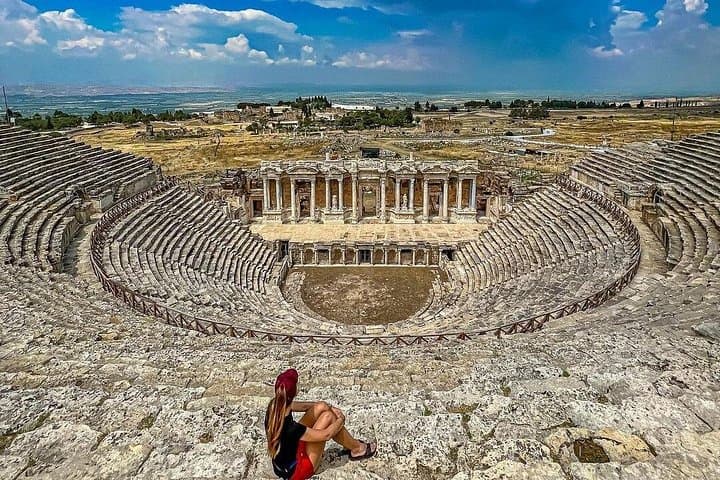
Hierapolis sits above those travertine cliffs: a Roman spa city founded on thermal springs and carved into the limestone by mineral-rich water over millennia. Walk the theatre and necropolis and you’ll feel the city’s purpose—pilgrimage, healing and trade—traceable in stone, inscriptions and the layout of baths and colonnades.
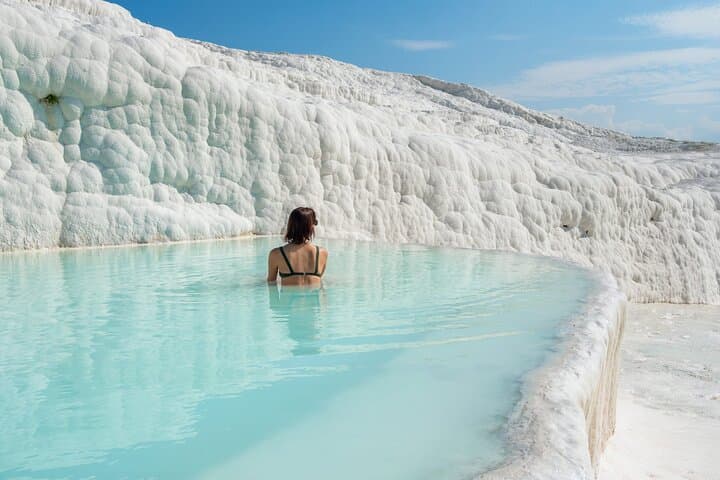
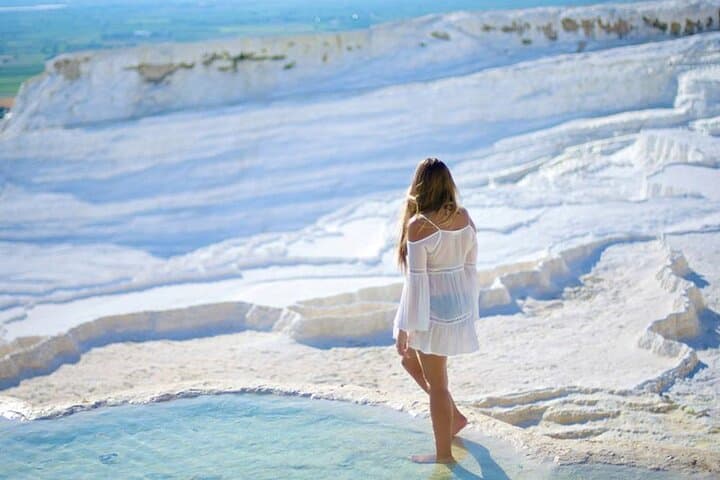
Geology does the show here: hot spring water deposits calcium carbonate as it cools, building the stepped pools called the “Cotton Castle.” Locals in nearby Denizli still make and sell marble and stonework; a short stop at a stonemason demonstrates that craft lineage.
Plan practically: terraces are protected—you’ll remove shoes to walk on designated paths and pool access is regulated. Bring a swimsuit if you want the paid Cleopatra Pool experience, and schedule your visit early or late to avoid midday crowds and glare.
Expect a long day—this is a road-trip rhythm of slow miles, historical immersion, and thermal relief. Hydrate, use sun protection, and leave time to stand on the rim and watch steam rise where hot water meets cool air—nature asserting itself in quiet, mineral-white gestures.
easy.
14–16 hours.
Suitable for general fitness—mostly bus travel with moderate walking on uneven ancient ruins and terraces
Walking on the white travertines is free in designated areas but swimming in the historic Cleopatra’s Pool requires an extra ticket; other thermal pools are managed and access varies.
The tour includes roughly a 4-hour bus ride each way—expect a full 14–16 hour day including stops and time at the sites.
Much of the travertine area involves uneven surfaces and barefoot walking; accessibility is limited though there are viewpoints and museum access in Denizli that are easier for mobility aids.
Yes—this tour lists hotel pickup and drop-off from Alanya; confirm your pickup point and time when booking.
Hierapolis developed as a Roman and Byzantine spa town atop hot springs; its theatre, baths and necropolis reflect centuries of healing and pilgrimage.
The travertines are managed to control water flow and foot traffic—follow marked paths, avoid soaps or lotions in springs, and respect restricted areas.
Payless operates guided outdoor trips and adventures with an emphasis on safety, stewardship, and memorable experiences.

The bus eases out of Alanya before dawn and the highway opens like a ribbon of light through cedar and olive groves. By midmorning the landscape flattens into the Denizli plain and the limestone terraces of Pamukkale appear white against the scrub—staggered, almost unnatural, as if a glacier decided to stop and cool the ground.
The bus eases out of Alanya before dawn and the highway opens like a ribbon of light through cedar and olive groves. By midmorning the landscape flattens into the Denizli plain and the limestone terraces of Pamukkale appear white against the scrub—staggered, almost unnatural, as if a glacier decided to stop and cool the ground.
Hierapolis sits above those travertine cliffs: a Roman spa city founded on thermal springs and carved into the limestone by mineral-rich water over millennia. Walk the theatre and necropolis and you’ll feel the city’s purpose—pilgrimage, healing and trade—traceable in stone, inscriptions and the layout of baths and colonnades.
Geology does the show here: hot spring water deposits calcium carbonate as it cools, building the stepped pools called the “Cotton Castle.” Locals in nearby Denizli still make and sell marble and stonework; a short stop at a stonemason demonstrates that craft lineage.
Plan practically: terraces are protected—you’ll remove shoes to walk on designated paths and pool access is regulated. Bring a swimsuit if you want the paid Cleopatra Pool experience, and schedule your visit early or late to avoid midday crowds and glare.
Expect a long day—this is a road-trip rhythm of slow miles, historical immersion, and thermal relief. Hydrate, use sun protection, and leave time to stand on the rim and watch steam rise where hot water meets cool air—nature asserting itself in quiet, mineral-white gestures.