THE ADVENTURE COLLECTIVE® · Independent discovery and booking for outdoor travel

Ala Archa’s gorge offers a compact mountain escape from Bishkek: rushing rivers, glacial valleys, and route options from gentle strolls to waterfall hikes. This half-day guided outing balances dramatic scenery with practical access for hikers of varying experience.
Ala Archa’s gorge offers a compact mountain escape from Bishkek: rushing rivers, glacial valleys, and route options from gentle strolls to waterfall hikes. This half-day guided outing balances dramatic scenery with practical access for hikers of varying experience.
You step out of the vehicle where the road narrows and the Ala-Archa River begins to rush more angrily — cold water flashing between boulders, juniper clinging to steep slopes, and peaks still dusted with snow. The valley opens like a page of hardened rock and green; air smells of stone and pollen, and every switchback exposes a new view toward the Kyrgyz Ala-Too range.
Verified experiences and guided adventures in the surrounding area.
Operated by Nur travel · Ala Archa (park), Chuy Region
You step out of the vehicle where the road narrows and the Ala-Archa River begins to rush more angrily — cold water flashing between boulders, juniper clinging to steep slopes, and peaks still dusted with snow. The valley opens like a page of hardened rock and green; air smells of stone and pollen, and every switchback exposes a new view toward the Kyrgyz Ala-Too range.
Geology here is recent and dramatic: glacially carved gorges, moraines, and steep granite faces that rise from the valley floor. The park, created in the 1970s to protect these high-altitude landscapes, has long been a training ground for Central Asian mountaineers and a cultural touchstone for nomadic Kyrgyz traditions — shepherds, seasonal pastures, and yurt stories are part of local lore.
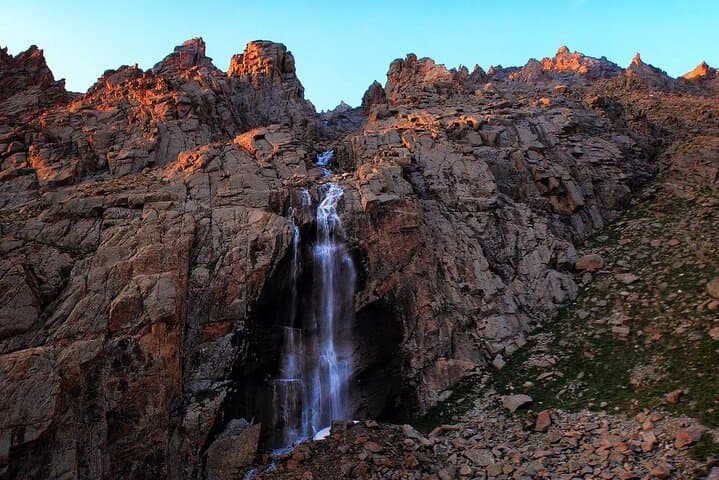
On a half-day itinerary you’ll follow marked tracks along the Ala-Archa River, with options to push to an alpine plateau or the Ak-Sai waterfall. Expect mixed terrain: packed dirt, scree sections, and occasional river crossings; elevation gains are moderate but can feel sharp at higher altitude. Wildlife is shy but present — ibex and golden eagles patrol high ribs while marmots whistle from meadows.
Practical edge: start early for stable weather and parking ease, carry insulated layers for wind and afternoon chill, and bring 1–2 liters of water; cell service is intermittent. Entry is managed at the park gate with modest fees; guides make steep or route-choice sections accessible and provide cultural context. This is a day of obvious contrasts — raw rock, quick rivers, and human stories — delivered in steady, walkable stages.
moderate.
5–6 hours.
Appropriate for hikers with regular aerobic activity; expect sustained walking on uneven ground and short steeper pitches.
The guided half-day options range from easy valley walks to moderate hikes toward the Ak-Sai waterfall; most participants with normal fitness find the routes manageable.
Yes—Ala Archa charges a modest park entry fee at the gate; guides usually handle payment and any parking arrangements.
The park is about 40 kilometers south of Bishkek with roughly a 45–60 minute drive depending on traffic and road conditions.
Wildlife sightings are possible but not guaranteed; golden eagles, ibex on higher ridges, and marmots in meadows are the most commonly observed animals.
Ala Archa was established as a protected area in the 1970s and has long served as a mountaineering training ground and recreational escape for Bishkek residents.
Visitor pressure is concentrated along a few trails—stick to paths, avoid fires, and pack out waste; park fees support management and habitat protection.
Nur travel operates guided outdoor trips and adventures with an emphasis on safety, stewardship, and memorable experiences.
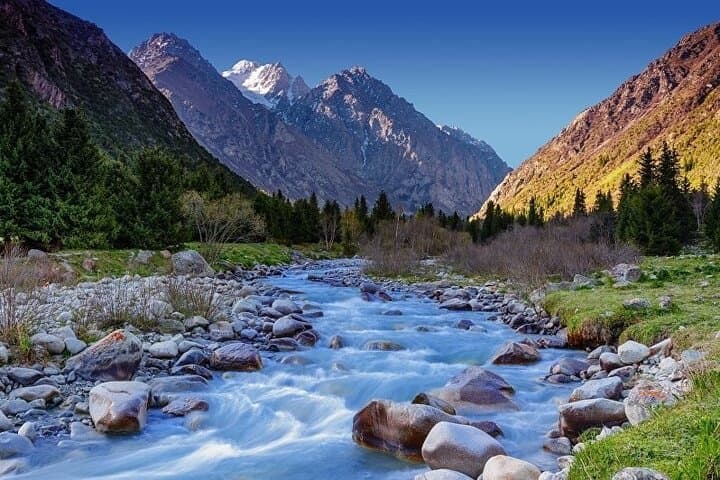
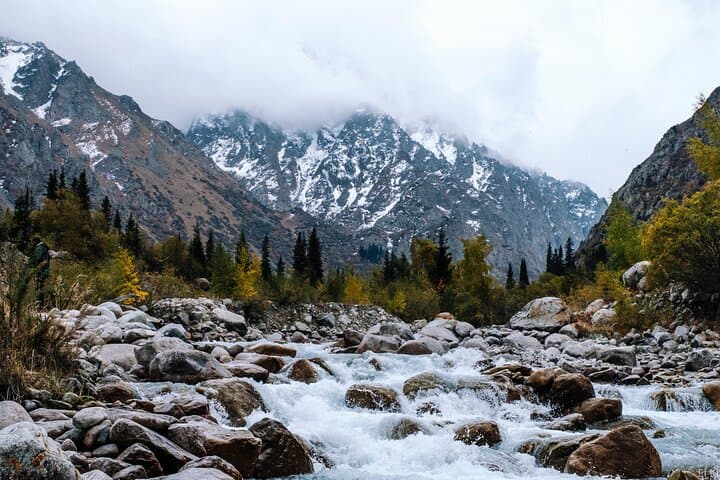
You step out of the vehicle where the road narrows and the Ala-Archa River begins to rush more angrily — cold water flashing between boulders, juniper clinging to steep slopes, and peaks still dusted with snow. The valley opens like a page of hardened rock and green; air smells of stone and pollen, and every switchback exposes a new view toward the Kyrgyz Ala-Too range.
You step out of the vehicle where the road narrows and the Ala-Archa River begins to rush more angrily — cold water flashing between boulders, juniper clinging to steep slopes, and peaks still dusted with snow. The valley opens like a page of hardened rock and green; air smells of stone and pollen, and every switchback exposes a new view toward the Kyrgyz Ala-Too range.
Geology here is recent and dramatic: glacially carved gorges, moraines, and steep granite faces that rise from the valley floor. The park, created in the 1970s to protect these high-altitude landscapes, has long been a training ground for Central Asian mountaineers and a cultural touchstone for nomadic Kyrgyz traditions — shepherds, seasonal pastures, and yurt stories are part of local lore.
On a half-day itinerary you’ll follow marked tracks along the Ala-Archa River, with options to push to an alpine plateau or the Ak-Sai waterfall. Expect mixed terrain: packed dirt, scree sections, and occasional river crossings; elevation gains are moderate but can feel sharp at higher altitude. Wildlife is shy but present — ibex and golden eagles patrol high ribs while marmots whistle from meadows.
Practical edge: start early for stable weather and parking ease, carry insulated layers for wind and afternoon chill, and bring 1–2 liters of water; cell service is intermittent. Entry is managed at the park gate with modest fees; guides make steep or route-choice sections accessible and provide cultural context. This is a day of obvious contrasts — raw rock, quick rivers, and human stories — delivered in steady, walkable stages.