THE ADVENTURE COLLECTIVE® · Independent discovery and booking for outdoor travel

Explore Najran’s ancient voice: two days among Hima’s petroglyphs and the ruined town of Al‑Ukhdood. This guided trip layers desert geology, Himyarite history and practical on‑the‑ground advice for first‑time visitors.
Explore Najran’s ancient voice: two days among Hima’s petroglyphs and the ruined town of Al‑Ukhdood. This guided trip layers desert geology, Himyarite history and practical on‑the‑ground advice for first‑time visitors.
Morning light breaks across ochre cliffs as your van rolls out of Abha toward Najran, the road cutting through highland scrub before sinking into wide desert valleys. By mid-morning you arrive at the Hima Wells — a spread of ancient springs and petroglyph fields where carved animals, riders and inscriptions crowd weathered rock faces. The place feels like a slow conversation between travelers across millennia.
Verified experiences and guided adventures in the surrounding area.
Operated by Abha Trips · Najran, Najran Province
Morning light breaks across ochre cliffs as your van rolls out of Abha toward Najran, the road cutting through highland scrub before sinking into wide desert valleys. By mid-morning you arrive at the Hima Wells — a spread of ancient springs and petroglyph fields where carved animals, riders and inscriptions crowd weathered rock faces. The place feels like a slow conversation between travelers across millennia.
This two-day loop pairs the Hima Cultural Area (557 km² with over 550 rock-art panels) and the ruins of Al-Ukhdood, a South Arabian town active from at least the 1st millennium BCE and tied to Himyarite history. You’ll pass Wadi Najran — a major valley draining the Sarat range into the Empty Quarter — and visit Emarah Palace, built in 1944 and now a local history museum with regional artifacts.
Expect dry heat by day, cooler evenings, and lots of walking on compact sand, gravel and flat rock slabs. Local guides explain stone inscriptions in Arabic and South Arabian scripts and point out motifs tied to trade routes that once crossed this corridor.
Practical details: bring 2–3 liters of water per day, strong sun protection, and closed-toe shoes with good grip for uneven petroglyph surfaces. Respect signage — rock art is fragile; avoid touching panels. If you’re overnighting in Najran, plan for basic hotels and fuel stops; cell coverage is intermittent in remote Hima sectors. The reward is quiet, expansive landscape and some of the Arabian Peninsula’s most concentrated rock art and archaeological context — a patient, tangible history written in stone.
easy.
2 days.
Suitable for travellers of average fitness; involves several short walks (15–60 minutes) over uneven ground and standing while viewing panels.
Most visitors go with a licensed tour; specific archaeological sites may have controlled access, so book guided visits to ensure entry and interpretation.
Yes — the itinerary is rated physically easy with short walks, but bring shade, ample water, and plan for slower pacing if needed.
Facilities are limited at remote Hima locations; snacks are provided on the tour but expect basic services in Najran city only.
The route is a multi‑hour drive across highland roads; exact time varies by traffic and stops—tours typically plan an early departure to maximize daylight at sites.
Al‑Ukhdood is associated with the Himyarite kingdom and later events recorded in regional sources, including a well‑known episode involving King Dhu Nuwas that appears in early texts.
The Hima Cultural Area is UNESCO‑recognized; rock art is vulnerable to erosion and human impact, so follow marked paths and avoid touching surfaces.
Abha Trips operates guided outdoor trips and adventures with an emphasis on safety, stewardship, and memorable experiences.
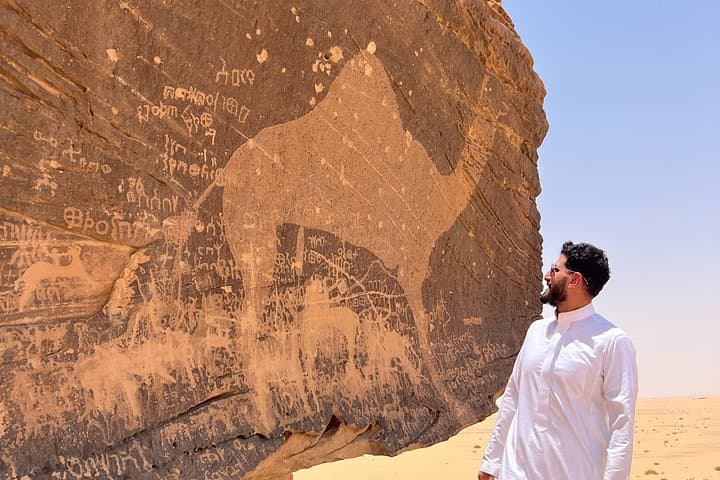
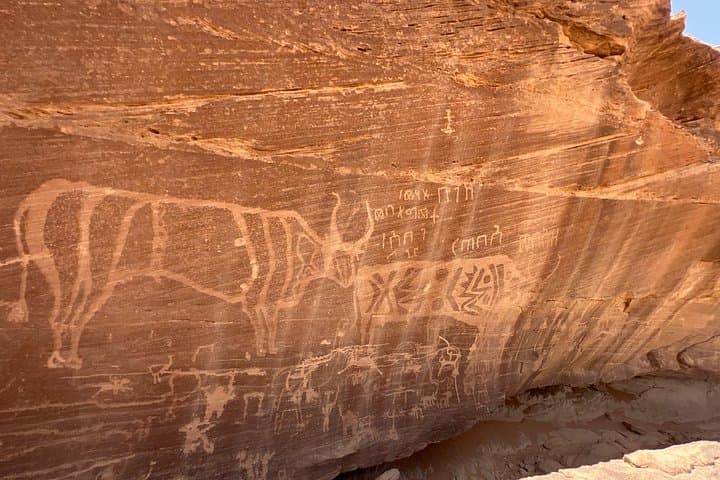
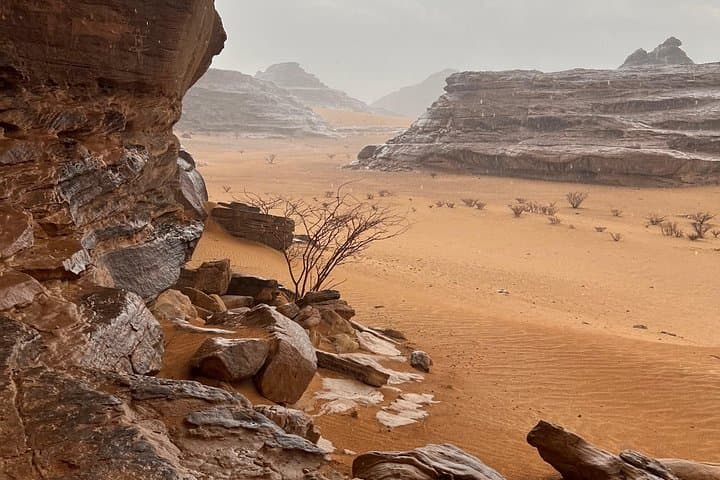
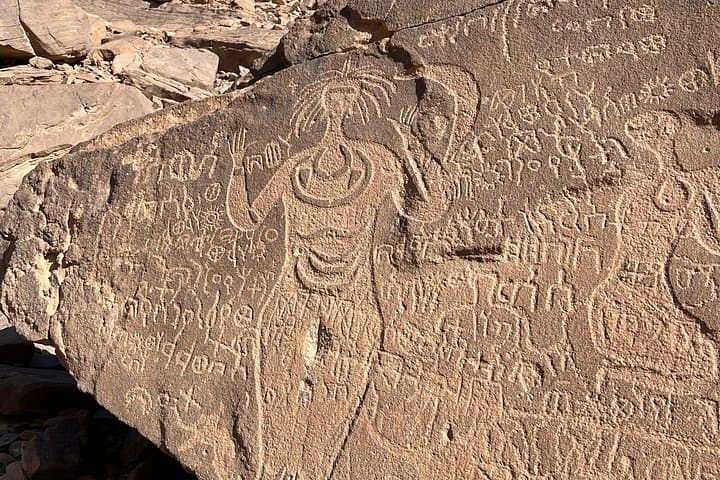
Morning light breaks across ochre cliffs as your van rolls out of Abha toward Najran, the road cutting through highland scrub before sinking into wide desert valleys. By mid-morning you arrive at the Hima Wells — a spread of ancient springs and petroglyph fields where carved animals, riders and inscriptions crowd weathered rock faces. The place feels like a slow conversation between travelers across millennia.
Morning light breaks across ochre cliffs as your van rolls out of Abha toward Najran, the road cutting through highland scrub before sinking into wide desert valleys. By mid-morning you arrive at the Hima Wells — a spread of ancient springs and petroglyph fields where carved animals, riders and inscriptions crowd weathered rock faces. The place feels like a slow conversation between travelers across millennia.
This two-day loop pairs the Hima Cultural Area (557 km² with over 550 rock-art panels) and the ruins of Al-Ukhdood, a South Arabian town active from at least the 1st millennium BCE and tied to Himyarite history. You’ll pass Wadi Najran — a major valley draining the Sarat range into the Empty Quarter — and visit Emarah Palace, built in 1944 and now a local history museum with regional artifacts.
Expect dry heat by day, cooler evenings, and lots of walking on compact sand, gravel and flat rock slabs. Local guides explain stone inscriptions in Arabic and South Arabian scripts and point out motifs tied to trade routes that once crossed this corridor.
Practical details: bring 2–3 liters of water per day, strong sun protection, and closed-toe shoes with good grip for uneven petroglyph surfaces. Respect signage — rock art is fragile; avoid touching panels. If you’re overnighting in Najran, plan for basic hotels and fuel stops; cell coverage is intermittent in remote Hima sectors. The reward is quiet, expansive landscape and some of the Arabian Peninsula’s most concentrated rock art and archaeological context — a patient, tangible history written in stone.