THE ADVENTURE COLLECTIVE® · Independent discovery and booking for outdoor travel

Drive into the red dunes to visit Al Madam’s Ghost Village, ride camels, try sandboarding and end the day with a Bedouin BBQ and live performances. This 7–8 hour safari blends desert geology, hands-on culture and adrenaline-packed dune bashing.
Drive into the red dunes to visit Al Madam’s Ghost Village, ride camels, try sandboarding and end the day with a Bedouin BBQ and live performances. This 7–8 hour safari blends desert geology, hands-on culture and adrenaline-packed dune bashing.
The sun tilts low over blood-red dunes as a convoy threads a narrow ribbon of tire tracks toward a half-buried village. Sand lifts and falls like breathing; the dunes seem to dare you to climb them. On this late-afternoon safari from Dubai or Sharjah the landscape moves — a living, shifting place where modern roads end and wind-written history begins.
Verified experiences and guided adventures in the surrounding area.
Operated by High Adventure Tourism · Al Madam, Sharjah
The sun tilts low over blood-red dunes as a convoy threads a narrow ribbon of tire tracks toward a half-buried village. Sand lifts and falls like breathing; the dunes seem to dare you to climb them. On this late-afternoon safari from Dubai or Sharjah the landscape moves — a living, shifting place where modern roads end and wind-written history begins.
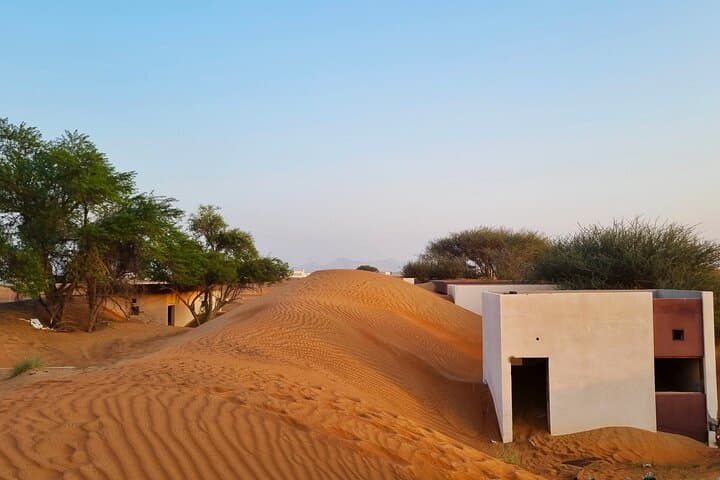
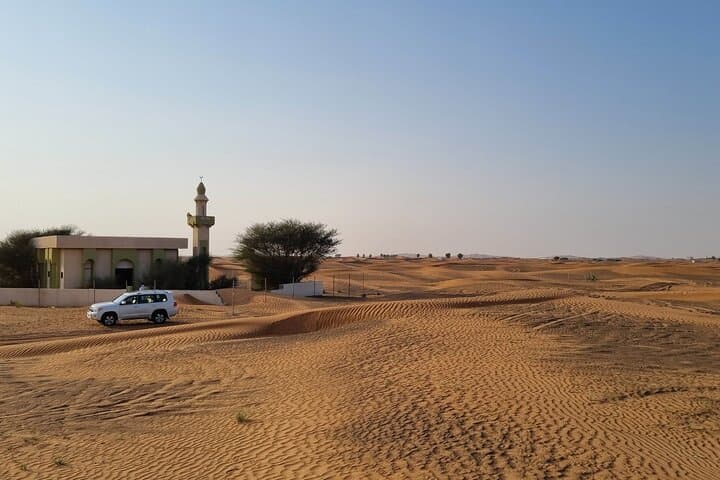
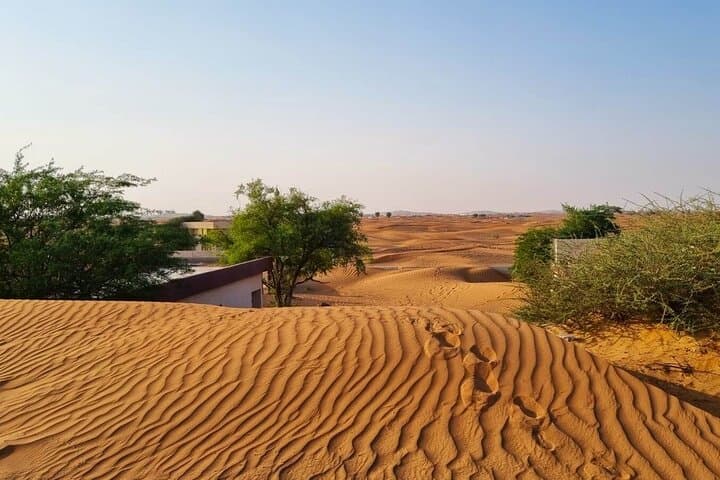
Al Madam’s “Ghost Village” dates to the 1970s, a small settlement slowly overwhelmed by encroaching sands. Buildings, an old mosque and fragments of domestic life sit half-buried, offering a raw glimpse into how quickly desert processes can reclaim human constructions. The dunes here are part of the greater Arabian sand sea — sand sheets and crescentic ridges formed by prevailing northerly winds — and the intense red color comes from iron staining and the region’s mineral composition.
Culturally, the evening slows into the Bedouin rhythm: a short camel ride, henna painting, and a communal BBQ where local sweets, Arabic coffee and live tanoura and belly-dance performances provide atmosphere. Guides explain traditional practices and point out features of the desert environment.
Practical guidance: expect 7–8 hours total with roughly 1½ hours transfer each way from Dubai, limited walking on loose sand, and a high likelihood of sand and dust during dune bashing. Bring sun protection, closed-toe shoes, and a small daypack with water; consider motion-sickness remedies for bumpy rides. Quad-biking and dune-buggies are available for an extra fee. Respect the site: avoid climbing fragile ruins and follow your guide to minimize impact.
moderate.
7–8 hours.
Light to moderate fitness; must be able to climb sandy slopes and tolerate bumpy vehicle rides.
Yes—most operators include hotel or centrally located pick-up and drop-off; confirm your pickup point when booking.
Yes—quad bikes and dune buggies are offered at an extra cost at the bike area after dune activities; book on site or arrange with your guide.
The experience is family-friendly and infant seats are available, but dune bashing may be too rough for very young children or those with back issues.
BBQ menus typically include meats, rice and salads; operators can often accommodate simple vegetarian requests—notify them when booking.
The Ghost Village is a small 1970s settlement partially reclaimed by wind-blown sands; its exposed structures illustrate recent human settlement patterns in the UAE’s desert fringe.
Dune ecosystems are fragile—stay on vehicle tracks, avoid disturbing ruins and take all litter with you; choose operators who follow designated routes to reduce erosion.
High Adventure Tourism operates guided outdoor trips and adventures with an emphasis on safety, stewardship, and memorable experiences.

The sun tilts low over blood-red dunes as a convoy threads a narrow ribbon of tire tracks toward a half-buried village. Sand lifts and falls like breathing; the dunes seem to dare you to climb them. On this late-afternoon safari from Dubai or Sharjah the landscape moves — a living, shifting place where modern roads end and wind-written history begins.
The sun tilts low over blood-red dunes as a convoy threads a narrow ribbon of tire tracks toward a half-buried village. Sand lifts and falls like breathing; the dunes seem to dare you to climb them. On this late-afternoon safari from Dubai or Sharjah the landscape moves — a living, shifting place where modern roads end and wind-written history begins.
Al Madam’s “Ghost Village” dates to the 1970s, a small settlement slowly overwhelmed by encroaching sands. Buildings, an old mosque and fragments of domestic life sit half-buried, offering a raw glimpse into how quickly desert processes can reclaim human constructions. The dunes here are part of the greater Arabian sand sea — sand sheets and crescentic ridges formed by prevailing northerly winds — and the intense red color comes from iron staining and the region’s mineral composition.
Culturally, the evening slows into the Bedouin rhythm: a short camel ride, henna painting, and a communal BBQ where local sweets, Arabic coffee and live tanoura and belly-dance performances provide atmosphere. Guides explain traditional practices and point out features of the desert environment.
Practical guidance: expect 7–8 hours total with roughly 1½ hours transfer each way from Dubai, limited walking on loose sand, and a high likelihood of sand and dust during dune bashing. Bring sun protection, closed-toe shoes, and a small daypack with water; consider motion-sickness remedies for bumpy rides. Quad-biking and dune-buggies are available for an extra fee. Respect the site: avoid climbing fragile ruins and follow your guide to minimize impact.