THE ADVENTURE COLLECTIVE® · Independent discovery and booking for outdoor travel

Climb 600 carved steps to a rare high view of Petra’s Treasury on the Al Khubtha Trail. This guided loop blends Nabatean architecture, sandstone geology, and panoramic overlooks with practical pacing and route tips for the ascent.
Climb 600 carved steps to a rare high view of Petra’s Treasury on the Al Khubtha Trail. This guided loop blends Nabatean architecture, sandstone geology, and panoramic overlooks with practical pacing and route tips for the ascent.
The morning light hits the red sandstone and the canyon exhales cool air as you step off the colonnaded street and begin climbing Al Khubtha. The trail threads a narrow gorge before unfurling into switchbacks and a stepped ascent — 600 carved stone steps that lift you above the site’s busiest corridors to a vantage where the Treasury sits like a carved face catching the sun.
Verified experiences and guided adventures in the surrounding area.
Operated by Jordan Horizon Tours · Wadi Musa, Ma'an
The morning light hits the red sandstone and the canyon exhales cool air as you step off the colonnaded street and begin climbing Al Khubtha. The trail threads a narrow gorge before unfurling into switchbacks and a stepped ascent — 600 carved stone steps that lift you above the site’s busiest corridors to a vantage where the Treasury sits like a carved face catching the sun.
This route traces the city the Nabateans shaped into rock: tomb facades, obelisks, and Djinn blocks hewn from the same rose-hued lithology. Geologically, Petra’s sandstone layers are soft and weathered, producing the striated cliffs and rounded basins that frame the walk. Culturally, Al Khubtha offers context — a high viewpoint that Nabatean planners would have used to watch traffic through Bab al-Siq and into the city.
Expect varied footing: carved steps, packed sand, and narrow ledges. The climb is sustained but punctuated by wide outlooks over the Theatre and the Royal Tombs. Light changes the stone quickly; mid-morning and late afternoon bring the strongest contrasts. Guides point out masonry marks, water channeling niches and the way Roman and Nabatean elements overlap.
Practicalities: bring at least 1–1.5 liters of water, sturdy shoes with good grip, sun protection and a light layer for wind. Allow 4–5 hours for a guided loop that climbs, views, then returns through the colonnaded street; pace yourself on the 600 steps. Respect fragile surfaces and follow your guide to minimize erosion and preserve the route for others.
challenging.
4–5 hours.
Requires good aerobic fitness and comfort on sustained stair climbs and uneven terrain; expect repeated elevation gain.
No — this guided trail operates inside Petra, but admission to the Petra archaeological site is separate and must be purchased at the visitor center.
The steps are carved stone and can be steep and uneven; it’s strenuous but not technical—no climbing gear required.
It depends on fitness; travelers should be comfortable on prolonged stair climbs and uneven terrain—consult the operator if mobility is limited.
Guides are not legally mandatory inside Petra but this offering is a guided private tour; a guide improves navigation, safety, and historical interpretation.
Al Khubtha served as a natural lookout in Nabatean Petra; the route connects sightlines toward the Siq and the city’s main facades, reflecting ancient urban planning.
Petra’s sandstone is highly erodible—stay on marked paths, avoid touching carvings, and follow guide instructions to reduce wear on fragile features.
Jordan Horizon Tours operates guided outdoor trips and adventures with an emphasis on safety, stewardship, and memorable experiences.
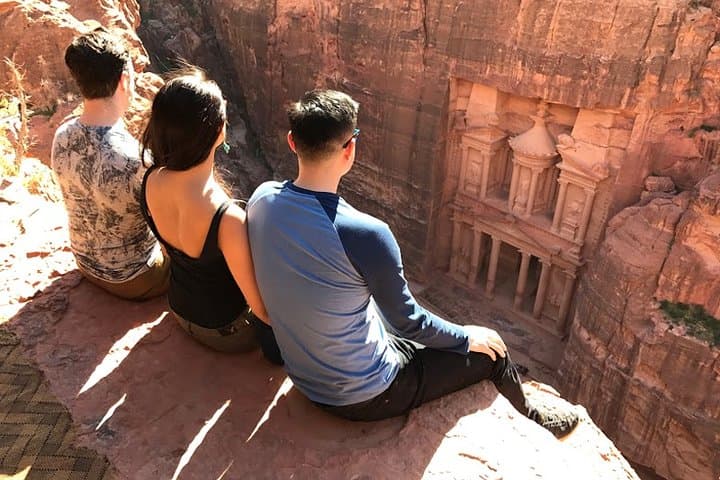
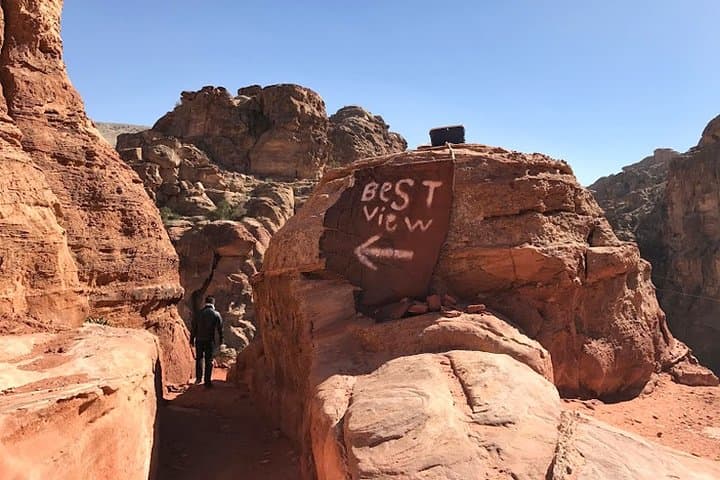
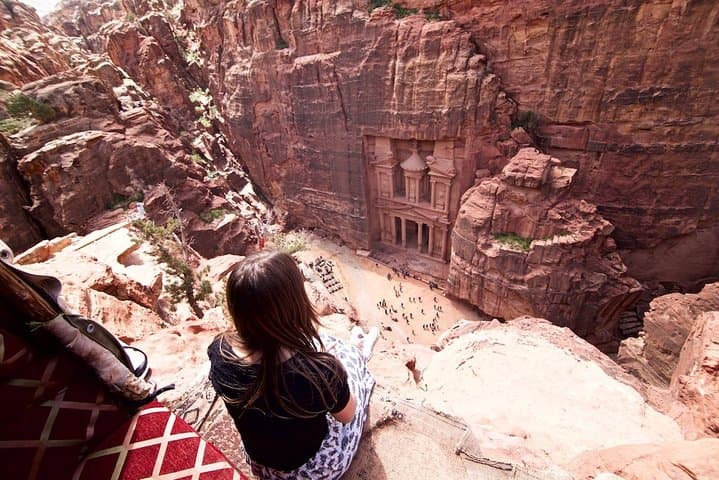
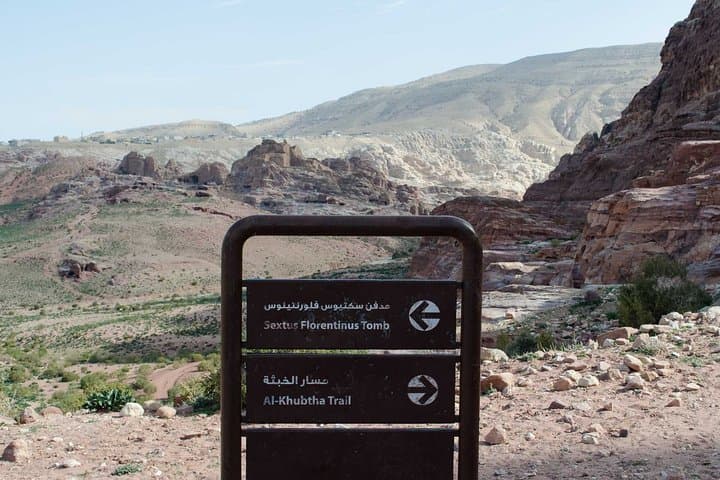
The morning light hits the red sandstone and the canyon exhales cool air as you step off the colonnaded street and begin climbing Al Khubtha. The trail threads a narrow gorge before unfurling into switchbacks and a stepped ascent — 600 carved stone steps that lift you above the site’s busiest corridors to a vantage where the Treasury sits like a carved face catching the sun.
The morning light hits the red sandstone and the canyon exhales cool air as you step off the colonnaded street and begin climbing Al Khubtha. The trail threads a narrow gorge before unfurling into switchbacks and a stepped ascent — 600 carved stone steps that lift you above the site’s busiest corridors to a vantage where the Treasury sits like a carved face catching the sun.
This route traces the city the Nabateans shaped into rock: tomb facades, obelisks, and Djinn blocks hewn from the same rose-hued lithology. Geologically, Petra’s sandstone layers are soft and weathered, producing the striated cliffs and rounded basins that frame the walk. Culturally, Al Khubtha offers context — a high viewpoint that Nabatean planners would have used to watch traffic through Bab al-Siq and into the city.
Expect varied footing: carved steps, packed sand, and narrow ledges. The climb is sustained but punctuated by wide outlooks over the Theatre and the Royal Tombs. Light changes the stone quickly; mid-morning and late afternoon bring the strongest contrasts. Guides point out masonry marks, water channeling niches and the way Roman and Nabatean elements overlap.
Practicalities: bring at least 1–1.5 liters of water, sturdy shoes with good grip, sun protection and a light layer for wind. Allow 4–5 hours for a guided loop that climbs, views, then returns through the colonnaded street; pace yourself on the 600 steps. Respect fragile surfaces and follow your guide to minimize erosion and preserve the route for others.