THE ADVENTURE COLLECTIVE® · Independent discovery and booking for outdoor travel

Walk between carved red and white cliffs that read like pages of Earth’s history. This private day tour to Aktau offers close-up geology, dramatic canyons and clear guidance for visiting a fragile, Mars-like landscape.
Walk between carved red and white cliffs that read like pages of Earth’s history. This private day tour to Aktau offers close-up geology, dramatic canyons and clear guidance for visiting a fragile, Mars-like landscape.
You step out of the vehicle onto cracked clay and the air feels thin and dry — the Aktau massif ahead looks like a carved planet. Bands of red, pink, white and ochre stack across steep gullies; wind and time have turned sandstone into towers and ribs that dare you to walk the narrow corridors between them.
Verified experiences and guided adventures in the surrounding area.
Operated by Travel Kazakhstan · Almaty, Almaty Region
You step out of the vehicle onto cracked clay and the air feels thin and dry — the Aktau massif ahead looks like a carved planet. Bands of red, pink, white and ochre stack across steep gullies; wind and time have turned sandstone into towers and ribs that dare you to walk the narrow corridors between them.
Geologically the Aktau ridge is the exposed floor of an ancient sea. Layers of sandstone, carnelian, jasper and quartz record some 60 million years of deposition and erosion. Locals call it the "Museum of the Earth's Past"; its name, Aktau, marks the pale and colorful cliffs that rise from the steppe. Cultural traces in the wider Almaty region include Kazakh nomad routes and modern conservation efforts that protect the fragile badlands.
On a private day tour you'll drive from Almaty across steppe, pass dried river valleys — Kokterek and Bokabaidyn-Ashasy — and skirt the Aigaikum sands. Expect uneven, eroded terrain: short steep ascents, narrow canyon bottoms and loose scree. The landscape is sculptural rather than forested; shade is sparse and exposure is high, so plan for sun, wind and dust.
Practical tips: start early to avoid midday heat, carry at least 2–3 liters of water, wear sturdy treaded boots and sun protection, and stick to visible paths to limit erosion. A guide will point out geological strata and safe viewpoints; photography is excellent in the low morning or late afternoon light. For anyone curious about deep time and stark landscapes, Aktau delivers an otherworldly, walkable lesson in erosion and Earth's memory.
easy.
9 hours.
Suitable for most fitness levels; involves short hikes on uneven terrain and minimal steep sections so basic mobility and balance are required.
The private tour is roughly 9 hours from Almaty with several short walks (10–60 minutes) into canyons and viewpoints; it’s mostly vehicle-supported with light on-foot exploration.
Yes—paths are short but uneven; children and seniors with basic mobility can usually participate, but notify the operator about mobility needs beforehand.
Guides and transport are included per tour details; confirm whether entry fees to the protected area are covered when booking.
Low morning or late afternoon light emphasizes colors and depth; midday sun flattens contrasts and increases heat and glare.
Aktau is the remnant floor of an ancient sea basin; its exposed sedimentary layers preserve millions of years of geological history and record changing climates in Central Asia.
The badlands are highly susceptible to erosion and foot traffic; follow guides, avoid scrambling on fragile formations and pack out waste to protect the site.
Travel Kazakhstan operates guided outdoor trips and adventures with an emphasis on safety, stewardship, and memorable experiences.
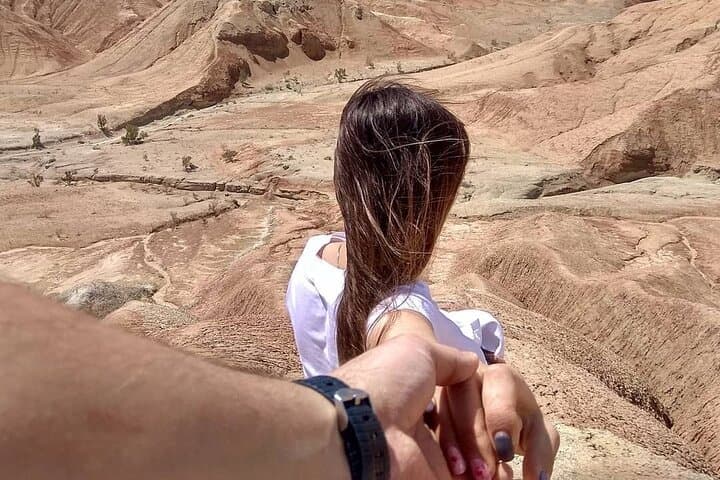
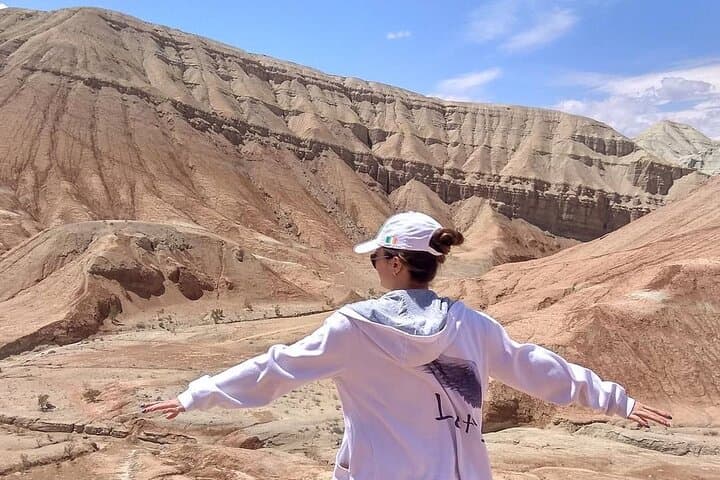
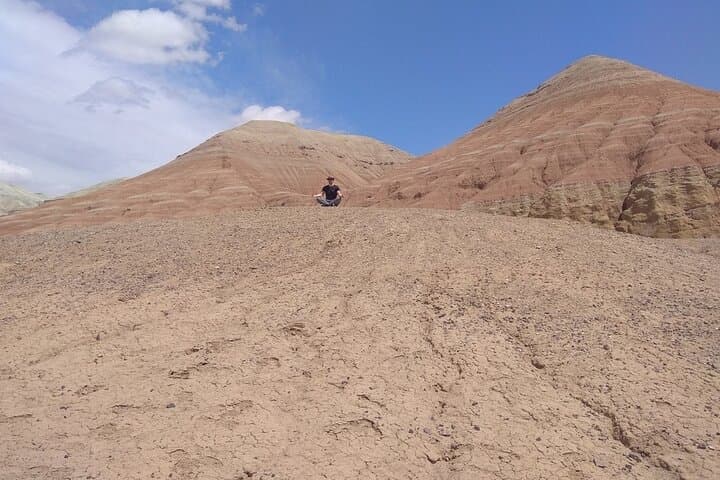
You step out of the vehicle onto cracked clay and the air feels thin and dry — the Aktau massif ahead looks like a carved planet. Bands of red, pink, white and ochre stack across steep gullies; wind and time have turned sandstone into towers and ribs that dare you to walk the narrow corridors between them.
You step out of the vehicle onto cracked clay and the air feels thin and dry — the Aktau massif ahead looks like a carved planet. Bands of red, pink, white and ochre stack across steep gullies; wind and time have turned sandstone into towers and ribs that dare you to walk the narrow corridors between them.
Geologically the Aktau ridge is the exposed floor of an ancient sea. Layers of sandstone, carnelian, jasper and quartz record some 60 million years of deposition and erosion. Locals call it the "Museum of the Earth's Past"; its name, Aktau, marks the pale and colorful cliffs that rise from the steppe. Cultural traces in the wider Almaty region include Kazakh nomad routes and modern conservation efforts that protect the fragile badlands.
On a private day tour you'll drive from Almaty across steppe, pass dried river valleys — Kokterek and Bokabaidyn-Ashasy — and skirt the Aigaikum sands. Expect uneven, eroded terrain: short steep ascents, narrow canyon bottoms and loose scree. The landscape is sculptural rather than forested; shade is sparse and exposure is high, so plan for sun, wind and dust.
Practical tips: start early to avoid midday heat, carry at least 2–3 liters of water, wear sturdy treaded boots and sun protection, and stick to visible paths to limit erosion. A guide will point out geological strata and safe viewpoints; photography is excellent in the low morning or late afternoon light. For anyone curious about deep time and stark landscapes, Aktau delivers an otherworldly, walkable lesson in erosion and Earth's memory.