THE ADVENTURE COLLECTIVE® · Independent discovery and booking for outdoor travel

Spend an evening at Akshardham exploring carved stone galleries, multimedia exhibits and a high-tech musical fountain show. This private guided tour includes hotel pickup, cloakroom access and a 4–5 hour window to experience temple culture and spectacle.
Spend an evening at Akshardham exploring carved stone galleries, multimedia exhibits and a high-tech musical fountain show. This private guided tour includes hotel pickup, cloakroom access and a 4–5 hour window to experience temple culture and spectacle.
Twilight in New Delhi narrows the city’s noise into a ribbon of lights as a private cab draws up at Akshardham’s stone boundary. The temple’s carved façade holds the glow of lamps and the hush of visitors; inside, corridors of reliefs and galleries move at a deliberate, human pace—an evening that balances spectacle and reflection.
Verified experiences and guided adventures in the surrounding area.
Operated by White and Yellow Tour · New Delhi, Delhi
Twilight in New Delhi narrows the city’s noise into a ribbon of lights as a private cab draws up at Akshardham’s stone boundary. The temple’s carved façade holds the glow of lamps and the hush of visitors; inside, corridors of reliefs and galleries move at a deliberate, human pace—an evening that balances spectacle and reflection.
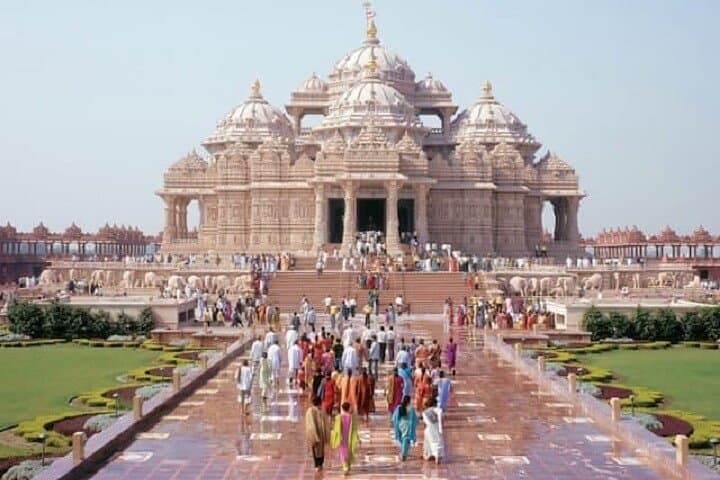
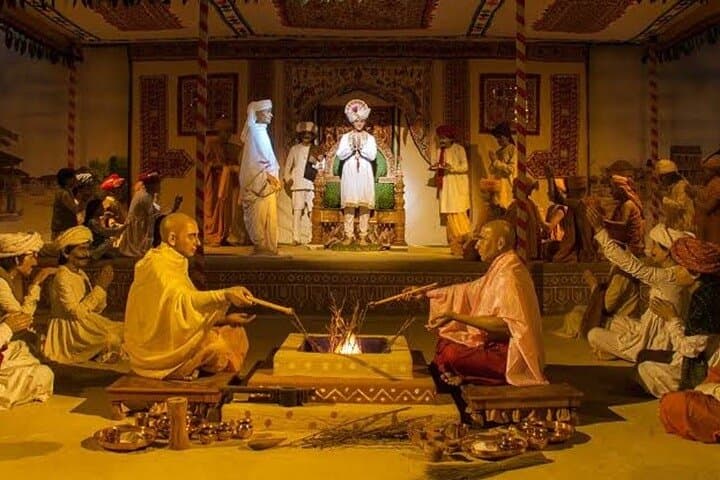
Akshardham was completed in 2005 by the BAPS organization and stands as a modern work in traditional materials: Rajasthani pink sandstone and white marble frame panels of myth, craft, and devotion. Exhibits such as Sahajanand Darshan and the Neelkanth film mix narrative and technology, while Sanskruti Darshan’s cultural boat ride traces India’s civilizational threads across projected landscapes. The complex sits on the east bank of the Yamuna, where the river’s breeze offers a cool contrast to the city’s heat.
The finale is the musical fountain—Yagnapurush Kund—where lasers, water jets, and live acting translate stories into movement and sound. Practical details shape the visit: shoes are left at the entrance, cameras and electronic devices are restricted inside and can be stored in the free cloakroom, and the light show typically begins after 7 PM. The private transfer means minimal navigation through traffic and a predictable evening window of about four to five hours.
For planners: arrive with modest clothing that covers shoulders and knees, carry minimal bags for smooth security checks, and time your pickup so you can move from the exhibitions to the fountain show without rushing. The experience pairs cultural depth with theatrical finish—ideal for travelers seeking structured, accessible insight into contemporary Hindu temple art and public spectacle.
easy.
4–5 hours.
Suitable for most fitness levels; involves walking on paved paths and standing during shows
No—cameras, mobile recording devices and memory drives are restricted inside; use the free cloakroom to store them before entry.
Yes—private hotel or airport pickup and drop-off in an air-conditioned vehicle are included; vehicle size depends on group size.
The laser and musical fountain show begins after 7 PM; exact timing can vary seasonally, so allow time between exhibits and the performance.
Yes—Akshardham and the tour’s transportation options are wheelchair accessible, and much of the complex has accessible surfaces.
Completed in 2005 by the BAPS organization, Akshardham blends traditional stone carving with modern exhibition technology to narrate Swaminarayan teachings and Indian cultural history.
Large visitor numbers require strict rules—no electronics inside and use cloakrooms; follow signage, avoid littering and respect restricted zones to protect carved stone and landscaped areas.
White and Yellow Tour operates guided outdoor trips and adventures with an emphasis on safety, stewardship, and memorable experiences.
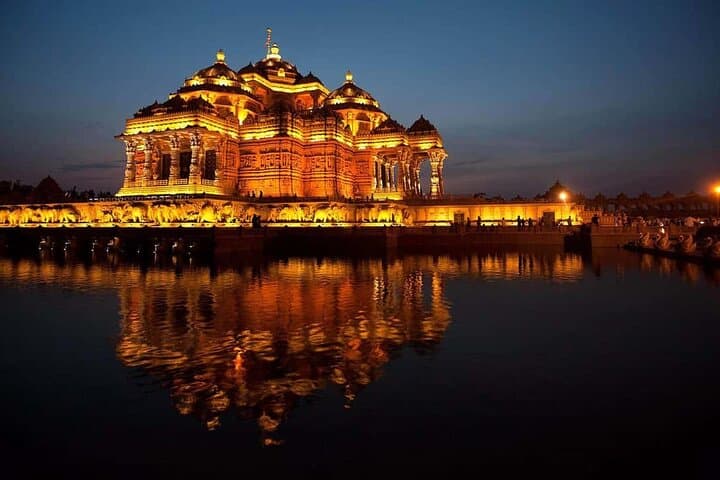
Twilight in New Delhi narrows the city’s noise into a ribbon of lights as a private cab draws up at Akshardham’s stone boundary. The temple’s carved façade holds the glow of lamps and the hush of visitors; inside, corridors of reliefs and galleries move at a deliberate, human pace—an evening that balances spectacle and reflection.
Twilight in New Delhi narrows the city’s noise into a ribbon of lights as a private cab draws up at Akshardham’s stone boundary. The temple’s carved façade holds the glow of lamps and the hush of visitors; inside, corridors of reliefs and galleries move at a deliberate, human pace—an evening that balances spectacle and reflection.
Akshardham was completed in 2005 by the BAPS organization and stands as a modern work in traditional materials: Rajasthani pink sandstone and white marble frame panels of myth, craft, and devotion. Exhibits such as Sahajanand Darshan and the Neelkanth film mix narrative and technology, while Sanskruti Darshan’s cultural boat ride traces India’s civilizational threads across projected landscapes. The complex sits on the east bank of the Yamuna, where the river’s breeze offers a cool contrast to the city’s heat.
The finale is the musical fountain—Yagnapurush Kund—where lasers, water jets, and live acting translate stories into movement and sound. Practical details shape the visit: shoes are left at the entrance, cameras and electronic devices are restricted inside and can be stored in the free cloakroom, and the light show typically begins after 7 PM. The private transfer means minimal navigation through traffic and a predictable evening window of about four to five hours.
For planners: arrive with modest clothing that covers shoulders and knees, carry minimal bags for smooth security checks, and time your pickup so you can move from the exhibitions to the fountain show without rushing. The experience pairs cultural depth with theatrical finish—ideal for travelers seeking structured, accessible insight into contemporary Hindu temple art and public spectacle.