THE ADVENTURE COLLECTIVE® · Independent discovery and booking for outdoor travel

A full-day cultural and nature tour from Accra to Akosombo: cruise Lake Volta, cross the Adomi Bridge and visit the Cedi bead factory to learn about bead-making traditions and view islanded highlands created by the Akosombo Dam.
A full-day cultural and nature tour from Accra to Akosombo: cruise Lake Volta, cross the Adomi Bridge and visit the Cedi bead factory to learn about bead-making traditions and view islanded highlands created by the Akosombo Dam.
Morning light slices across Lake Volta as the minivan threads out of Accra and into rolling cocoa country. By midmorning the air changes—wetter, greener—and the road drops toward the wide water where the Adomi Bridge hangs like an engineered promise over islands and shipping channels. Guests step from boat to shore, feel the breeze off the largest man-made lake in Ghana, and watch small fishing pirogues carve reflections from the dam's still surface.
Verified experiences and guided adventures in the surrounding area.
Operated by ProTour Africa · Akosombo, Eastern Region
Morning light slices across Lake Volta as the minivan threads out of Accra and into rolling cocoa country. By midmorning the air changes—wetter, greener—and the road drops toward the wide water where the Adomi Bridge hangs like an engineered promise over islands and shipping channels. Guests step from boat to shore, feel the breeze off the largest man-made lake in Ghana, and watch small fishing pirogues carve reflections from the dam's still surface.
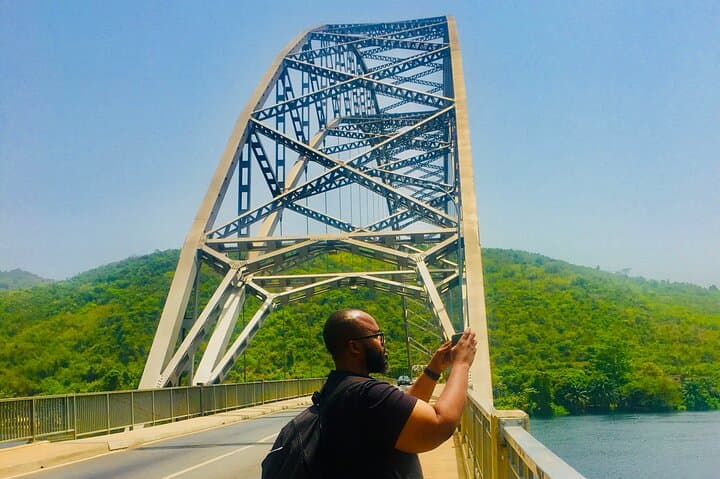
The trip folds cultural history into landscape: Volta Lake was created with the Akosombo Dam during Ghana’s early independence era, reshaping ecology and livelihoods across the Eastern Region. The Adomi Bridge, an icon of mid-20th-century engineering, connects highland roads with lowland communities. At the Cedi bead factory visitors see a craft deeply tied to Akan rites—glass beads remade into ceremonial strings and exported to museums abroad—linking present artisans to colonial and pre-colonial trade networks.
The geology is simple but visible: lateritic soils, hills of weathered shale and sandstone, and islands that were once hilltops before the lake rose. Culture shows in market stalls, in the cadence of boatmen’s calls, and in bead patterns that mark status and celebration.
Practical guidance: expect a full day (9–12 hours) with boat time and light walking; bring sun protection, insect repellent, and modest dress for village visits. Photography is welcome but ask before shooting people. Plan for variable boat spray and a steady pace—this is a cultural-nature day tour rather than a strenuous hike.
moderate.
9–12 hours.
Moderate fitness for getting on/off boats and short walks; comfortable standing for guided stops.
The full-day tour lasts approximately 9–12 hours, including round-trip transfers from Accra, boat time on Lake Volta, and stops at attractions.
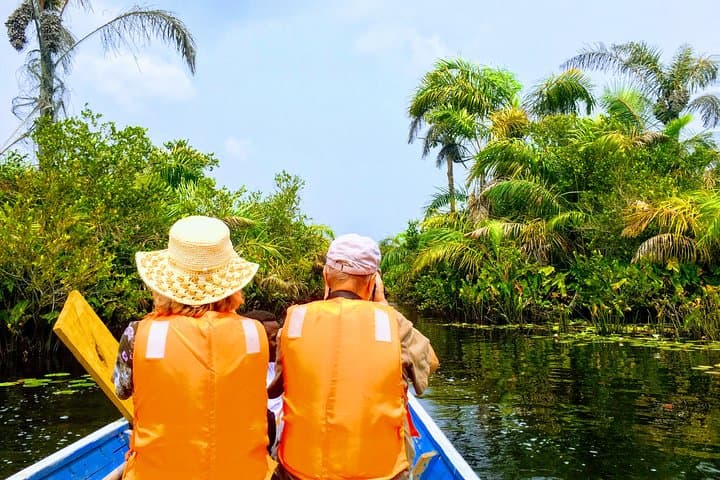
Yes—boats are typically stable and crew provide life vests; however, non-swimmers should remain seated when the boat is moving and follow crew instructions.
According to the itinerary, entrance fees to listed attractions are included, as well as guide support and local transportation.
The tour involves boarding boats and some short walks; it’s not recommended for those with serious spinal or cardiovascular conditions—check with the operator for accessibility accommodations.
The Akosombo Dam (completed in the 1960s) reshaped the Volta Basin and national development plans; vestiges of pre-inundation settlements appear as seasonal islands and fishing traditions.
Lake Volta’s ecosystem faces pressures from overfishing and shoreline erosion; responsible tours minimize disturbance, support local guides and advise against littering.
ProTour Africa operates guided outdoor trips and adventures with an emphasis on safety, stewardship, and memorable experiences.
Morning light slices across Lake Volta as the minivan threads out of Accra and into rolling cocoa country. By midmorning the air changes—wetter, greener—and the road drops toward the wide water where the Adomi Bridge hangs like an engineered promise over islands and shipping channels. Guests step from boat to shore, feel the breeze off the largest man-made lake in Ghana, and watch small fishing pirogues carve reflections from the dam's still surface.
Morning light slices across Lake Volta as the minivan threads out of Accra and into rolling cocoa country. By midmorning the air changes—wetter, greener—and the road drops toward the wide water where the Adomi Bridge hangs like an engineered promise over islands and shipping channels. Guests step from boat to shore, feel the breeze off the largest man-made lake in Ghana, and watch small fishing pirogues carve reflections from the dam's still surface.
The trip folds cultural history into landscape: Volta Lake was created with the Akosombo Dam during Ghana’s early independence era, reshaping ecology and livelihoods across the Eastern Region. The Adomi Bridge, an icon of mid-20th-century engineering, connects highland roads with lowland communities. At the Cedi bead factory visitors see a craft deeply tied to Akan rites—glass beads remade into ceremonial strings and exported to museums abroad—linking present artisans to colonial and pre-colonial trade networks.
The geology is simple but visible: lateritic soils, hills of weathered shale and sandstone, and islands that were once hilltops before the lake rose. Culture shows in market stalls, in the cadence of boatmen’s calls, and in bead patterns that mark status and celebration.
Practical guidance: expect a full day (9–12 hours) with boat time and light walking; bring sun protection, insect repellent, and modest dress for village visits. Photography is welcome but ask before shooting people. Plan for variable boat spray and a steady pace—this is a cultural-nature day tour rather than a strenuous hike.