THE ADVENTURE COLLECTIVE® · Independent discovery and booking for outdoor travel

Thread Tokyo’s neon arteries behind the wheel of a mini go‑kart. This 55–70 minute urban tour links Akihabara’s electronics alleys to Asakusa’s temple gate—just bring the right driving documents and expect a tight, photo‑friendly route.
Thread Tokyo’s neon arteries behind the wheel of a mini go‑kart. This 55–70 minute urban tour links Akihabara’s electronics alleys to Asakusa’s temple gate—just bring the right driving documents and expect a tight, photo‑friendly route.
The engine chitters and the neon of Akihabara blurs into a ribbon of color as your mini go‑kart threads through side streets and avenues. You pass maid cafés and electronics storefronts, then the skyline opens eastward toward the low timber roofs of Asakusa; Kaminarimon's gate frames the city like a waiting breath.
Verified experiences and guided adventures in the surrounding area.
Operated by Tokyo Go-kart Experience · Tokyo, Tokyo
The engine chitters and the neon of Akihabara blurs into a ribbon of color as your mini go‑kart threads through side streets and avenues. You pass maid cafés and electronics storefronts, then the skyline opens eastward toward the low timber roofs of Asakusa; Kaminarimon's gate frames the city like a waiting breath.
This route stitches modern Tokyo to older quarters—Akihabara's postwar electronics boom evolved into the global otaku scene, while Asakusa preserves Edo-period approaches to commerce and worship around Senso-ji. Geologically, you’re on the flat alluvial plains of the Kanto region, which is why broad streets and rivers like the Sumida define sightlines rather than steep climbs. Culturally, expect busy intersections, polite pedestrians, and tight windows for photographers; streets here are as much urban stage as transport corridor.
The tour lasts roughly 55–70 minutes, capped at six drivers, and includes a short stop for photos and video. Practicalities matter: bring an International Driving Permit (1949 convention) or the required domestic license plus a JAF translation for certain countries, carry your passport, and arrive 30 minutes early for safety briefing and fitting. The activity demands a moderate fitness level—getting in and out of karts and using both feet for pedals—and is not wheelchair accessible.
Wear closed-toe shoes, dress for traffic wind and sudden gusts, and keep voices and music low to respect neighborhoods. After the ride you’ll get photos, a magnetic frame, and a customized seal—small tokens that anchor a loud, precise hour of urban driving.
moderate.
55–70 minutes.
Should be in moderate physical shape—able to get in/out of a low kart and use both feet for pedals; comfortable with short bursts of urban driving.
Yes. Drivers must present a valid driver’s license recognized in Japan; most guests will also need an International Driving Permit (1949 convention). Some countries require a JAF translation of their domestic license—bring those documents and your passport.
No. The activity requires getting in and out of low-slung go-karts and using both feet for pedals, so it is not wheelchair accessible.
The route travels through Akihabara’s neon blocks, past Ueno neighborhoods and toward Asakusa, where you’ll see Senso-ji’s Kaminarimon gate among other urban landmarks; staff stop briefly for photos at a scenic point.
Tours are private with a maximum of six drivers per departure to keep groups compact and manageable on city streets.
Akihabara transformed after World War II from an electronics market into a global center of hobbyist and pop culture; Asakusa preserves older Edo-era street patterns centered on Senso-ji temple.
Operate quietly and without litter—urban tours move through residential areas where noise and waste impact daily life; follow staff guidance to minimize street disruption.
Tokyo Go-kart Experience operates guided outdoor trips and adventures with an emphasis on safety, stewardship, and memorable experiences.
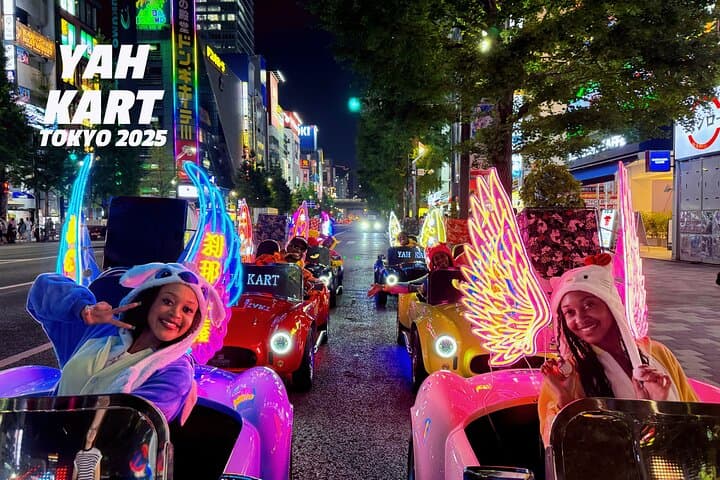
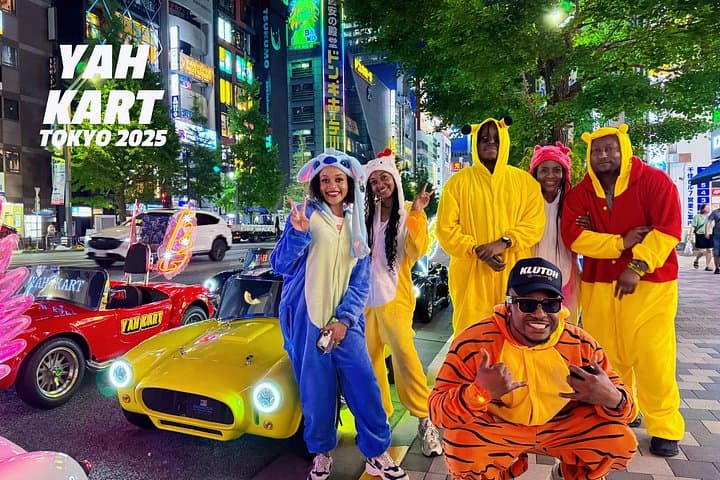
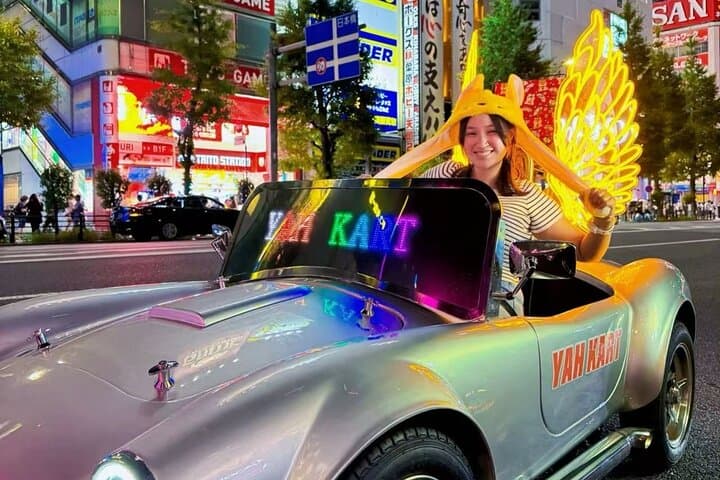
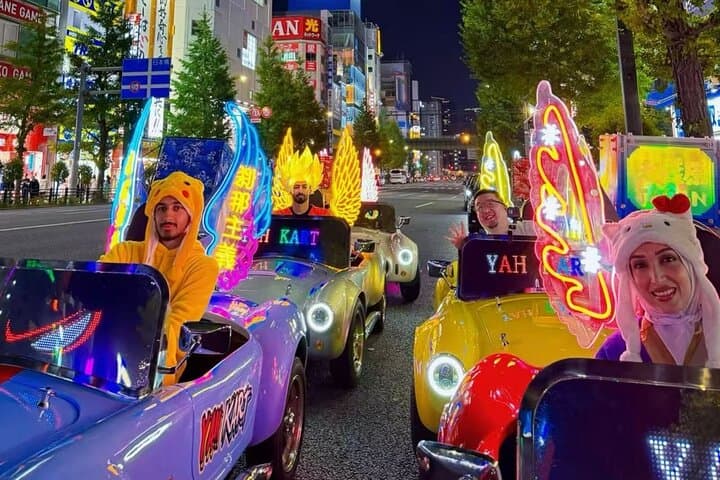
The engine chitters and the neon of Akihabara blurs into a ribbon of color as your mini go‑kart threads through side streets and avenues. You pass maid cafés and electronics storefronts, then the skyline opens eastward toward the low timber roofs of Asakusa; Kaminarimon's gate frames the city like a waiting breath.
The engine chitters and the neon of Akihabara blurs into a ribbon of color as your mini go‑kart threads through side streets and avenues. You pass maid cafés and electronics storefronts, then the skyline opens eastward toward the low timber roofs of Asakusa; Kaminarimon's gate frames the city like a waiting breath.
This route stitches modern Tokyo to older quarters—Akihabara's postwar electronics boom evolved into the global otaku scene, while Asakusa preserves Edo-period approaches to commerce and worship around Senso-ji. Geologically, you’re on the flat alluvial plains of the Kanto region, which is why broad streets and rivers like the Sumida define sightlines rather than steep climbs. Culturally, expect busy intersections, polite pedestrians, and tight windows for photographers; streets here are as much urban stage as transport corridor.
The tour lasts roughly 55–70 minutes, capped at six drivers, and includes a short stop for photos and video. Practicalities matter: bring an International Driving Permit (1949 convention) or the required domestic license plus a JAF translation for certain countries, carry your passport, and arrive 30 minutes early for safety briefing and fitting. The activity demands a moderate fitness level—getting in and out of karts and using both feet for pedals—and is not wheelchair accessible.
Wear closed-toe shoes, dress for traffic wind and sudden gusts, and keep voices and music low to respect neighborhoods. After the ride you’ll get photos, a magnetic frame, and a customized seal—small tokens that anchor a loud, precise hour of urban driving.