THE ADVENTURE COLLECTIVE® · Independent discovery and booking for outdoor travel

Follow a volcanic coastal trail from the shaded valley of Las Peñitas to the lava-carved caves and rock gate at Ajuy. This half-day hike mixes geology, local history and raw Atlantic coastline—best for travelers ready for uneven terrain and big ocean views.
Follow a volcanic coastal trail from the shaded valley of Las Peñitas to the lava-carved caves and rock gate at Ajuy. This half-day hike mixes geology, local history and raw Atlantic coastline—best for travelers ready for uneven terrain and big ocean views.
Wind carries salt and basalt dust as you step off the lane into Las Peñitas' narrow valley. Broken lava walls slope up on either side; a small chapel crouches above a palm-pocked oasis, and the trail threads between fig-like plants and scrub that smell faintly of resin.
Verified experiences and guided adventures in the surrounding area.
Operated by Fuerte Authentic Tours · Ajuy, Fuerteventura
Wind carries salt and basalt dust as you step off the lane into Las Peñitas' narrow valley. Broken lava walls slope up on either side; a small chapel crouches above a palm-pocked oasis, and the trail threads between fig-like plants and scrub that smell faintly of resin.
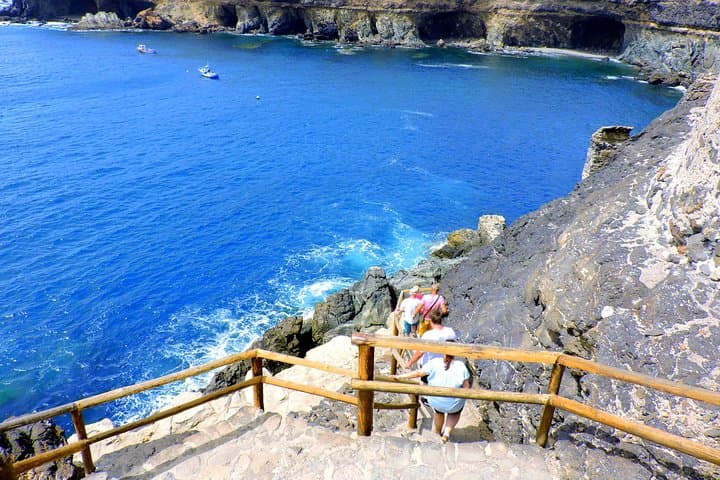
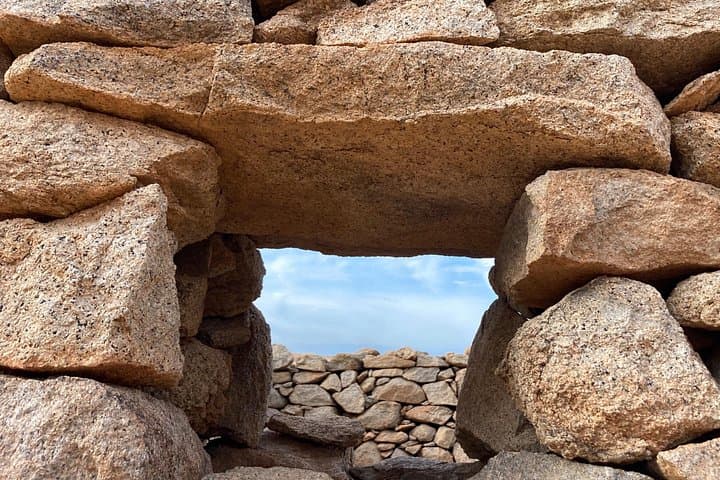
History here is close to the ground: centuries of fishing, occasional pirate landings and small chapels built by coastal families. Geologically the west coast of Fuerteventura is older rock—black basalt cliffs and layered sediments hammered by Atlantic surf—so you’ll move from packed volcanic fields into the carved mouth of Ajuy’s famous sea cave system. The coast shows clear evidence of eruptions and erosion: folded beds, pillow lavas, and a dramatic rock gate that frames open ocean like a window.
Culturally this is working coastline, not a resort promenade—fishermen’s houses, discreet ruins and carved cisterns whisper local life. The highlight is the Ajuy caves and the “rock gate” viewpoint where the ocean stages sudden, audible drama.
Practical guidance: expect 5–6 hours on uneven lava and sediment paths with short exposed sections. Bring at least 1.5–2 liters of water, sun protection and sturdy tread—the footing is often loose and sharp. Tide and swell affect the sense of safety around sea-level caves; keep to marked trails, follow your guide’s directions and allow extra time to photograph the cave entry and coastal arch. Morning or late afternoon light is best for the gate and cooling breezes.
moderate.
5–6 hours.
Moderate fitness: able to walk uneven ground for several hours with short rocky scrambles.
Moderate: uneven volcanic terrain and some exposed coastal sections make steady footing important, but no technical climbing is required.
Guides typically allow viewing the main caves from safe, established paths; avoid entering sea-level cave sections during high swell and follow your guide’s instructions.
Older, sure-footed children can join if supervised; the tour is not recommended for very young children due to rocky footing and coastal exposure.
Yes — the tour includes transport in an air-conditioned vehicle to and from the meeting or pickup point.
Ajuy and Las Peñitas were small fishing sites with historical ties to early island settlements and occasional pirate activity; nearby Betancuria served as Fuerteventura’s medieval capital.
The volcanic coast is geologically fragile and hosts nesting seabirds; stay on paths, avoid collecting geological specimens and minimize noise near colonies.
Fuerte Authentic Tours operates guided outdoor trips and adventures with an emphasis on safety, stewardship, and memorable experiences.
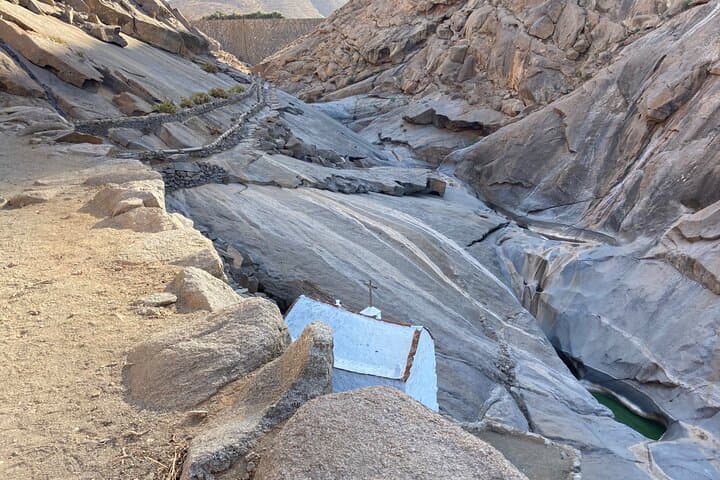
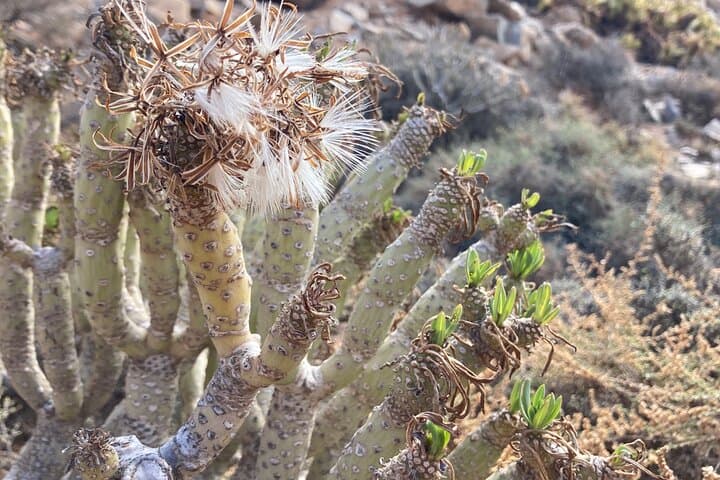
Wind carries salt and basalt dust as you step off the lane into Las Peñitas' narrow valley. Broken lava walls slope up on either side; a small chapel crouches above a palm-pocked oasis, and the trail threads between fig-like plants and scrub that smell faintly of resin.
Wind carries salt and basalt dust as you step off the lane into Las Peñitas' narrow valley. Broken lava walls slope up on either side; a small chapel crouches above a palm-pocked oasis, and the trail threads between fig-like plants and scrub that smell faintly of resin.
History here is close to the ground: centuries of fishing, occasional pirate landings and small chapels built by coastal families. Geologically the west coast of Fuerteventura is older rock—black basalt cliffs and layered sediments hammered by Atlantic surf—so you’ll move from packed volcanic fields into the carved mouth of Ajuy’s famous sea cave system. The coast shows clear evidence of eruptions and erosion: folded beds, pillow lavas, and a dramatic rock gate that frames open ocean like a window.
Culturally this is working coastline, not a resort promenade—fishermen’s houses, discreet ruins and carved cisterns whisper local life. The highlight is the Ajuy caves and the “rock gate” viewpoint where the ocean stages sudden, audible drama.
Practical guidance: expect 5–6 hours on uneven lava and sediment paths with short exposed sections. Bring at least 1.5–2 liters of water, sun protection and sturdy tread—the footing is often loose and sharp. Tide and swell affect the sense of safety around sea-level caves; keep to marked trails, follow your guide’s directions and allow extra time to photograph the cave entry and coastal arch. Morning or late afternoon light is best for the gate and cooling breezes.