THE ADVENTURE COLLECTIVE® · Independent discovery and booking for outdoor travel

Cover three UNESCO-era highlights in a single day: the monolithic wonder of Ellora, Ajanta’s painted Buddhist caves, and Aurangabad’s Bibi Ka Maqbara. This day trip pairs efficient logistics with sustained walking and uneven terrain—ideal for culture seekers who tolerate long drives.
Cover three UNESCO-era highlights in a single day: the monolithic wonder of Ellora, Ajanta’s painted Buddhist caves, and Aurangabad’s Bibi Ka Maqbara. This day trip pairs efficient logistics with sustained walking and uneven terrain—ideal for culture seekers who tolerate long drives.
You step off the early flight into Aurangabad and the air feels drier, edged with the warm scent of the Deccan plateau. The day opens with a drive to Ellora where carved rock faces rise like frozen waves of stone and the Kailasa temple looms — a single-mass monolith hewn downwards, its columns and reliefs holding centuries of ritual and work.
Verified experiences and guided adventures in the surrounding area.
Operated by Jee Tours · Aurangabad, Maharashtra
You step off the early flight into Aurangabad and the air feels drier, edged with the warm scent of the Deccan plateau. The day opens with a drive to Ellora where carved rock faces rise like frozen waves of stone and the Kailasa temple looms — a single-mass monolith hewn downwards, its columns and reliefs holding centuries of ritual and work.
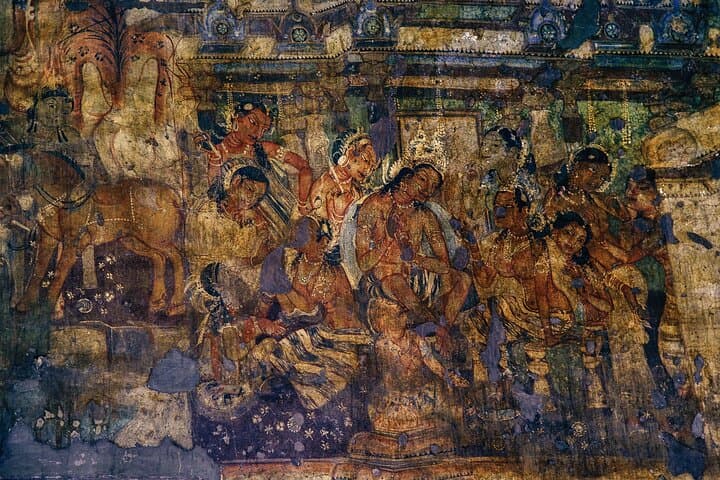
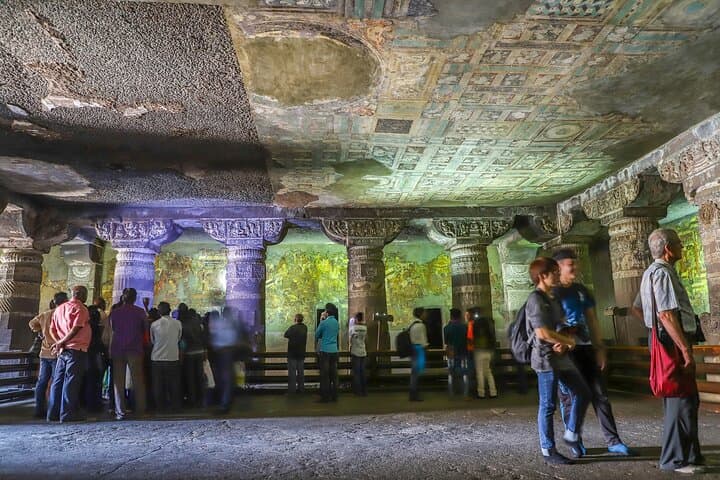
Ellora and Ajanta occupy two different chapters of the region’s history: Ellora (6th–10th century) showcases Hindu, Buddhist and Jain rock-cut architecture and the engineering bravado of the Rashtrakuta era, while Ajanta’s caves (2nd century BCE–6th century CE) preserve painted panels and frescoes that map the life and teachings of the Buddha. Geologically both sites are products of basalt flows on the Deccan plateau; artisans carved into the volcanic basalt, turning cliff faces into temples and galleries.
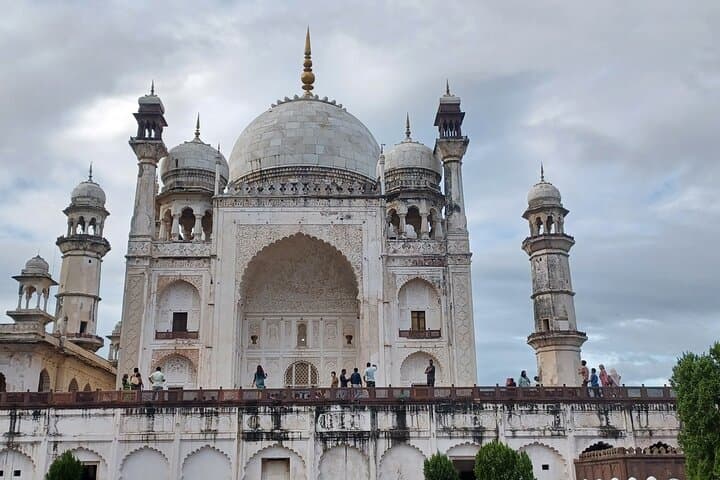
Bibi Ka Maqbara, the 17th-century mausoleum in Aurangabad, brings Mughal masonry and symmetry to the itinerary — a compact counterpoint to the spread-out caves.
Practical guidance: expect uneven stone steps, intermittent shade, and stretches of walking across hot, exposed paths. Plan an early start, bring a refillable water bottle, and allow time for airport transfers and security. Photography is allowed in many areas but follow onsite rules. The loop covers long car transfers — keep a flexible schedule for heat and traffic — and budget time to absorb each site rather than rush through them.
easy.
8 hours.
Light to moderate fitness; able to walk over uneven stone steps for several hours and tolerate short climbs.
This tour lists entrance for Ajanta, Ellora, and Bibi Ka Maqbara as included; the round‑trip flight from Mumbai to Aurangabad is included only if you select that option when booking.
Expect several short walks and stair climbs inside the caves and mausoleum over the day — generally easy but on uneven surfaces.
The tour is family-friendly but involves stairs and periods on foot; travelers with limited mobility should check specific accessibility and consider alternatives.
There are basic facilities at major sites and roadside stops on the drive; bring snacks for the transfer between Ajanta and Ellora and plan to eat in Aurangabad if time allows.
The caves were carved directly into Deccan basalt over many centuries, reflecting Buddhist, Hindu and Jain patronage and evolving religious practices across the Indian subcontinent.
Both UNESCO sites implement visitor limits and conservation efforts to protect pigments and stone; follow pathways and avoid touching painted surfaces to reduce wear and humidity impact.
Jee Tours operates guided outdoor trips and adventures with an emphasis on safety, stewardship, and memorable experiences.
You step off the early flight into Aurangabad and the air feels drier, edged with the warm scent of the Deccan plateau. The day opens with a drive to Ellora where carved rock faces rise like frozen waves of stone and the Kailasa temple looms — a single-mass monolith hewn downwards, its columns and reliefs holding centuries of ritual and work.
You step off the early flight into Aurangabad and the air feels drier, edged with the warm scent of the Deccan plateau. The day opens with a drive to Ellora where carved rock faces rise like frozen waves of stone and the Kailasa temple looms — a single-mass monolith hewn downwards, its columns and reliefs holding centuries of ritual and work.
Ellora and Ajanta occupy two different chapters of the region’s history: Ellora (6th–10th century) showcases Hindu, Buddhist and Jain rock-cut architecture and the engineering bravado of the Rashtrakuta era, while Ajanta’s caves (2nd century BCE–6th century CE) preserve painted panels and frescoes that map the life and teachings of the Buddha. Geologically both sites are products of basalt flows on the Deccan plateau; artisans carved into the volcanic basalt, turning cliff faces into temples and galleries.
Bibi Ka Maqbara, the 17th-century mausoleum in Aurangabad, brings Mughal masonry and symmetry to the itinerary — a compact counterpoint to the spread-out caves.
Practical guidance: expect uneven stone steps, intermittent shade, and stretches of walking across hot, exposed paths. Plan an early start, bring a refillable water bottle, and allow time for airport transfers and security. Photography is allowed in many areas but follow onsite rules. The loop covers long car transfers — keep a flexible schedule for heat and traffic — and budget time to absorb each site rather than rush through them.