THE ADVENTURE COLLECTIVE® · Independent discovery and booking for outdoor travel

Drive the Tizi n'Tichka pass and step into Aït Benhaddou's UNESCO-listed ksar on a private day trip from Marrakech. This full-day excursion pairs high Atlas panoramas with historic kasbahs and a behind-the-scenes look at Ouarzazate’s film sets.
Drive the Tizi n'Tichka pass and step into Aït Benhaddou's UNESCO-listed ksar on a private day trip from Marrakech. This full-day excursion pairs high Atlas panoramas with historic kasbahs and a behind-the-scenes look at Ouarzazate’s film sets.
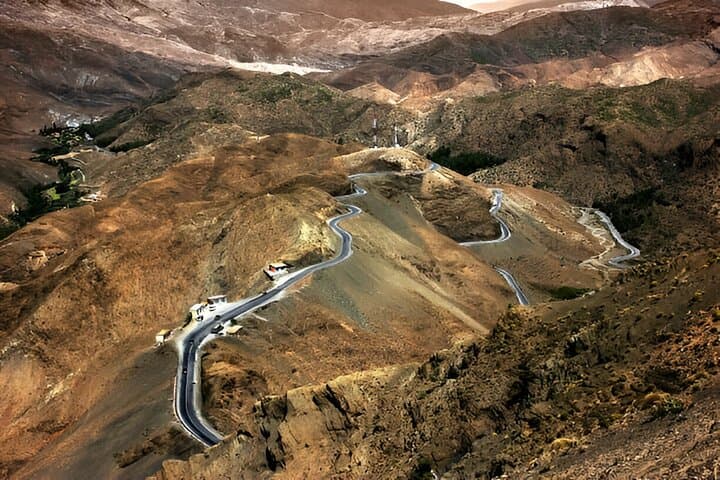
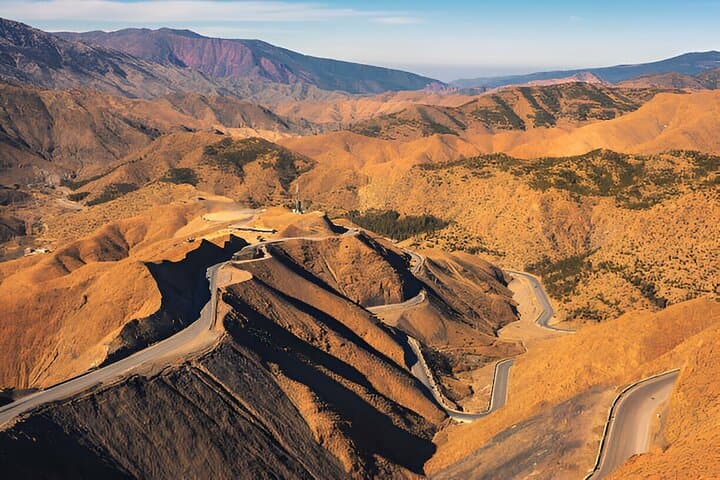
The road climbs out of Marrakech before sunrise and the Atlas takes on a different voice: wind that scours the slopes, rocky ridges that hold centuries of trade routes, and villages that watch travelers pass. By midmorning the Tizi n'Tichka pass pushes visitors to 2,260 meters, where light sharpens the ochre of distant kasbah roofs and the air demands a jacket.
Verified experiences and guided adventures in the surrounding area.
Operated by Eddyafa Travel · Aït Benhaddou, Ouarzazate Province
The road climbs out of Marrakech before sunrise and the Atlas takes on a different voice: wind that scours the slopes, rocky ridges that hold centuries of trade routes, and villages that watch travelers pass. By midmorning the Tizi n'Tichka pass pushes visitors to 2,260 meters, where light sharpens the ochre of distant kasbah roofs and the air demands a jacket.
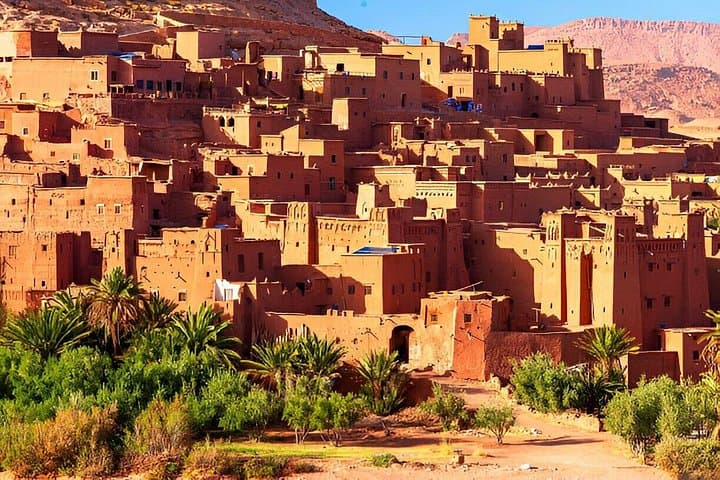
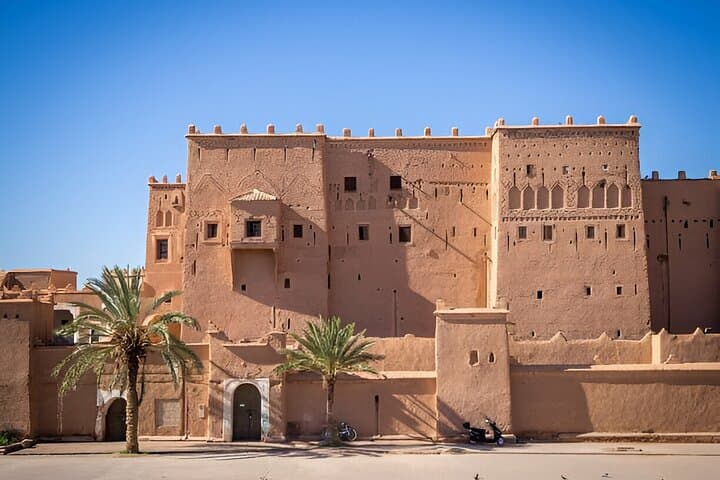
Aït Benhaddou is a living example of southern Moroccan earthen architecture — a ksar of adobe towers and narrow alleys that once registered the arrivals and departures of caravans bound for the Sahara. Ouarzazate grew as a crossroads and then as a film hub; its Taourirt Kasbah and nearby studios reveal the town’s double life as both local stronghold and cinematic backdrop.
Expect cobbled walkways, steep steps into viewpoints, and uneven surfaces inside the ksar. Guides point out mud-brick construction techniques, seasonal water channels, and film locations from global productions. Local tea stalls and small museums provide cultural context and a chance to rest. Photography rewards early-morning and late-afternoon visits when shadows carve texture across walls.
Practical side: this is a full-day road trip (11–14 hours) with long stretches of driving; pack layers, sun protection, and snacks for the road. Bring cash for small entry fees and local purchases, and choose comfortable shoes for compacted earth and stone. If you have mobility concerns, check specific stop logistics in advance — many lanes in the ksar are stepped and narrow.
The route combines high-mountain panoramas with the human scale of fortified villages, offering a compact survey of southern Morocco’s geology, history, and film-era culture.
moderate.
11–14 hours.
Suitable for average fitness — long periods in vehicle plus short to moderate walking on uneven ground
Expect a full day: roughly 11 to 14 hours round-trip, including driving time and site visits.
Admission fees to some sites and studios are often not included—confirm with the operator and bring cash for optional entries.
Yes, but there is a fair amount of driving and uneven walking surfaces; check specific mobility needs with the operator before booking.
Private tours typically include hotel pickup and drop-off from central Marrakech — confirm your pickup point when booking.
Aït Benhaddou developed as a fortified caravan stop on trans-Saharan trade routes; many of its earthen buildings date back several centuries and reflect traditional rammed-earth construction.
The ksar’s mud-brick architecture is fragile; stick to marked paths, avoid climbing restored walls, and support local guides who manage visitor impact.
Eddyafa Travel operates guided outdoor trips and adventures with an emphasis on safety, stewardship, and memorable experiences.
The road climbs out of Marrakech before sunrise and the Atlas takes on a different voice: wind that scours the slopes, rocky ridges that hold centuries of trade routes, and villages that watch travelers pass. By midmorning the Tizi n'Tichka pass pushes visitors to 2,260 meters, where light sharpens the ochre of distant kasbah roofs and the air demands a jacket.
The road climbs out of Marrakech before sunrise and the Atlas takes on a different voice: wind that scours the slopes, rocky ridges that hold centuries of trade routes, and villages that watch travelers pass. By midmorning the Tizi n'Tichka pass pushes visitors to 2,260 meters, where light sharpens the ochre of distant kasbah roofs and the air demands a jacket.
Aït Benhaddou is a living example of southern Moroccan earthen architecture — a ksar of adobe towers and narrow alleys that once registered the arrivals and departures of caravans bound for the Sahara. Ouarzazate grew as a crossroads and then as a film hub; its Taourirt Kasbah and nearby studios reveal the town’s double life as both local stronghold and cinematic backdrop.
Expect cobbled walkways, steep steps into viewpoints, and uneven surfaces inside the ksar. Guides point out mud-brick construction techniques, seasonal water channels, and film locations from global productions. Local tea stalls and small museums provide cultural context and a chance to rest. Photography rewards early-morning and late-afternoon visits when shadows carve texture across walls.
Practical side: this is a full-day road trip (11–14 hours) with long stretches of driving; pack layers, sun protection, and snacks for the road. Bring cash for small entry fees and local purchases, and choose comfortable shoes for compacted earth and stone. If you have mobility concerns, check specific stop logistics in advance — many lanes in the ksar are stepped and narrow.
The route combines high-mountain panoramas with the human scale of fortified villages, offering a compact survey of southern Morocco’s geology, history, and film-era culture.