THE ADVENTURE COLLECTIVE® · Independent discovery and booking for outdoor travel

Drive over the High Atlas to Aït Benhaddou, a UNESCO earthen ksar where caravan history and film sets meet. This full-day trip mixes panoramic mountain passes, Berber villages, and two hours of guided exploration inside the kasbah.
Drive over the High Atlas to Aït Benhaddou, a UNESCO earthen ksar where caravan history and film sets meet. This full-day trip mixes panoramic mountain passes, Berber villages, and two hours of guided exploration inside the kasbah.
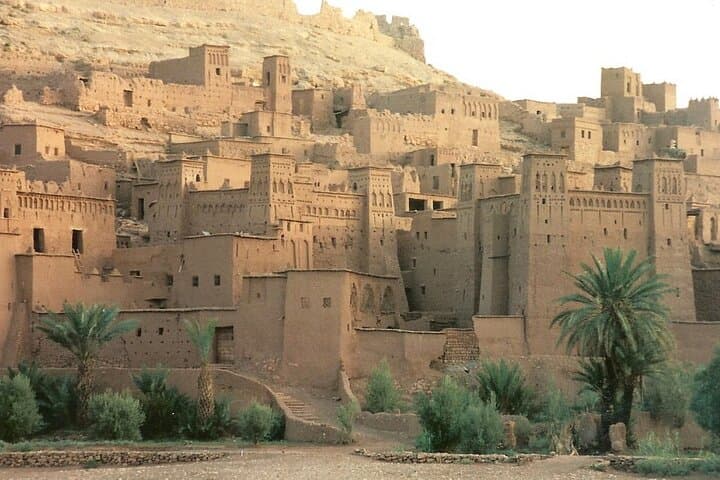
Morning light strips back the shadows on the earthen ramparts of Aït Benhaddou as a day-trip minibus leaves Marrakech, climbing the High Atlas until the road folds open onto wide, wind-carved valleys.
Verified experiences and guided adventures in the surrounding area.
Operated by Morocco unlimited adventures · Aït Benhaddou, Marrakesh-Safi
Morning light strips back the shadows on the earthen ramparts of Aït Benhaddou as a day-trip minibus leaves Marrakech, climbing the High Atlas until the road folds open onto wide, wind-carved valleys.
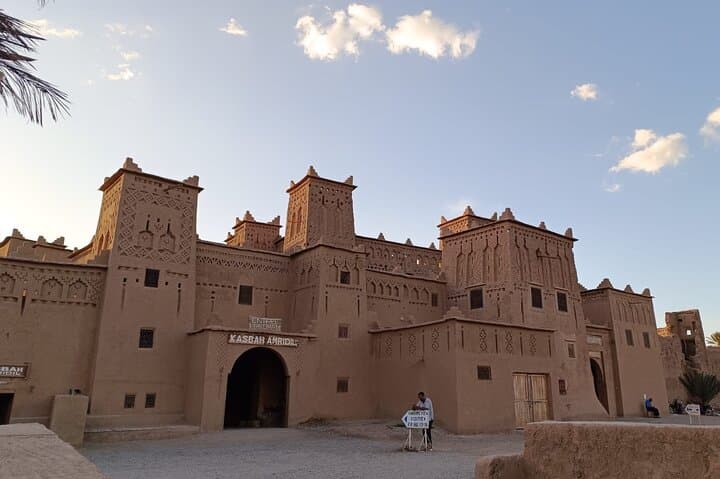
The route follows an age-old caravan corridor; the kasbah’s mud-brick towers—built in rammed earth (pisé) and baked by the sun—stand as durable markers of trans-Saharan trade and later, film crews. Geologically, the High Atlas is a recent mountain range formed by the collision of the African and Eurasian plates; its jagged passes and folded strata create dramatic viewpoints and abrupt climate shifts across short distances.
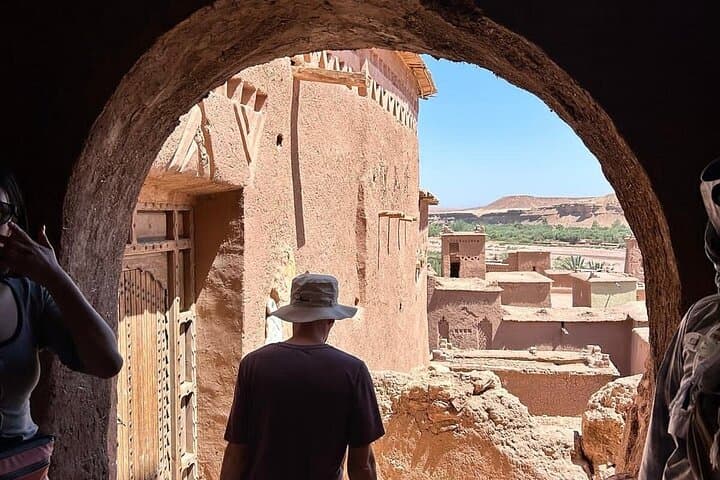
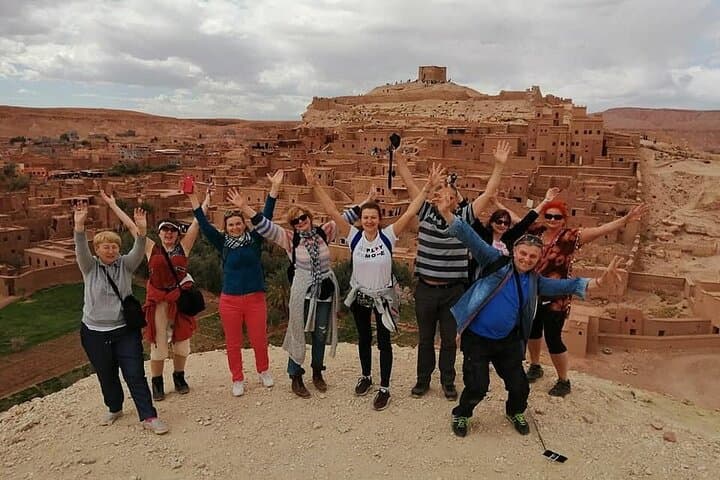
Culturally, visitors pass small Berber villages where flat-roofed houses stack against hillsides and hospitality is practical—tea, shared bread, and the expectation of respectful curiosity. Aït Benhaddou itself is a UNESCO-listed ksar: narrow alleys, defensive towers, and rooftop views that frame the surrounding desert basin. Guides often point out kasbah construction techniques and stories of merchants and filmmakers who used these streets as sets.
Practical guidance: expect a 6-hour round trip with roughly 2 hours on foot inside the ksar. The Tizi n’Tichka pass reaches near 2,260 m—weather can change quickly and the drive includes tight switchbacks.
Bring sturdy, closed-toe shoes for uneven cobbles; sun protection and at least 1–1.5 L of water per person; small change for local purchases; and a camera with spare batteries. If motion sickness is a concern, sit forward and choose a morning departure. The experience blends easy walking with long scenic driving—rich in history, geology, and clear, photographable moments.
easy.
6 hours.
Suitable for most fitness levels; expect up to two hours of walking on uneven ground and multiple short climbs.
Expect roughly 3 hours each way depending on traffic and stops; total trip time is about 6 hours.
No—walking inside the ksar is moderate and suitable for most visitors, but surfaces are uneven and include short climbs.
This tour description usually includes a guided visit and lunch, but confirm whether site entry or museum fees are included when booking.
Yes, but the Tizi n’Tichka pass can be much colder and occasionally snowy—dress in layers and check weather conditions.
Aït Benhaddou grew as a fortified caravan route settlement; its rammed-earth construction preserved trade-era layouts and later attracted filmmakers for its authentic, timeless streets.
Rising tourist numbers pressure fragile earthen structures; visitors should stick to marked paths, avoid climbing fragile walls, and support local guides and conservation fees when available.
Morocco unlimited adventures operates guided outdoor trips and adventures with an emphasis on safety, stewardship, and memorable experiences.
Morning light strips back the shadows on the earthen ramparts of Aït Benhaddou as a day-trip minibus leaves Marrakech, climbing the High Atlas until the road folds open onto wide, wind-carved valleys.
Morning light strips back the shadows on the earthen ramparts of Aït Benhaddou as a day-trip minibus leaves Marrakech, climbing the High Atlas until the road folds open onto wide, wind-carved valleys.
The route follows an age-old caravan corridor; the kasbah’s mud-brick towers—built in rammed earth (pisé) and baked by the sun—stand as durable markers of trans-Saharan trade and later, film crews. Geologically, the High Atlas is a recent mountain range formed by the collision of the African and Eurasian plates; its jagged passes and folded strata create dramatic viewpoints and abrupt climate shifts across short distances.
Culturally, visitors pass small Berber villages where flat-roofed houses stack against hillsides and hospitality is practical—tea, shared bread, and the expectation of respectful curiosity. Aït Benhaddou itself is a UNESCO-listed ksar: narrow alleys, defensive towers, and rooftop views that frame the surrounding desert basin. Guides often point out kasbah construction techniques and stories of merchants and filmmakers who used these streets as sets.
Practical guidance: expect a 6-hour round trip with roughly 2 hours on foot inside the ksar. The Tizi n’Tichka pass reaches near 2,260 m—weather can change quickly and the drive includes tight switchbacks.
Bring sturdy, closed-toe shoes for uneven cobbles; sun protection and at least 1–1.5 L of water per person; small change for local purchases; and a camera with spare batteries. If motion sickness is a concern, sit forward and choose a morning departure. The experience blends easy walking with long scenic driving—rich in history, geology, and clear, photographable moments.