THE ADVENTURE COLLECTIVE® · Independent discovery and booking for outdoor travel

Cross the High Atlas to reach Ait Benhaddou’s dramatic mud-brick ksar — a caravan-era village and film location offering narrow alleys, rooftop views, and sunset light. Expect long drives, short hikes over cobbles, and layered history from the Tichka Pass to the Glaoui Kasbah.
Cross the High Atlas to reach Ait Benhaddou’s dramatic mud-brick ksar — a caravan-era village and film location offering narrow alleys, rooftop views, and sunset light. Expect long drives, short hikes over cobbles, and layered history from the Tichka Pass to the Glaoui Kasbah.
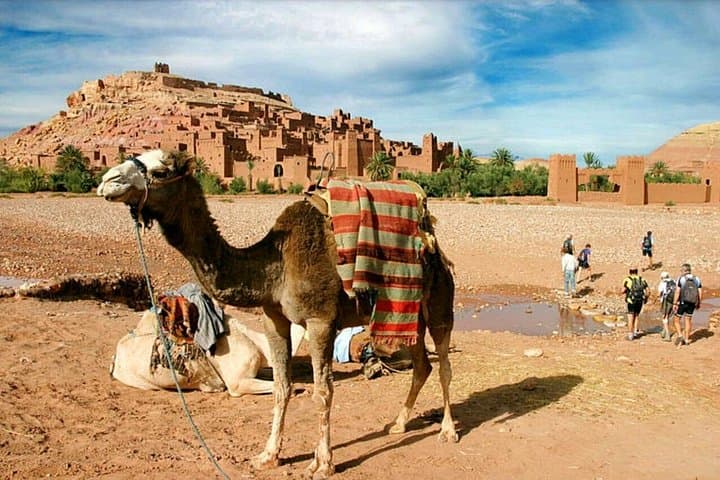
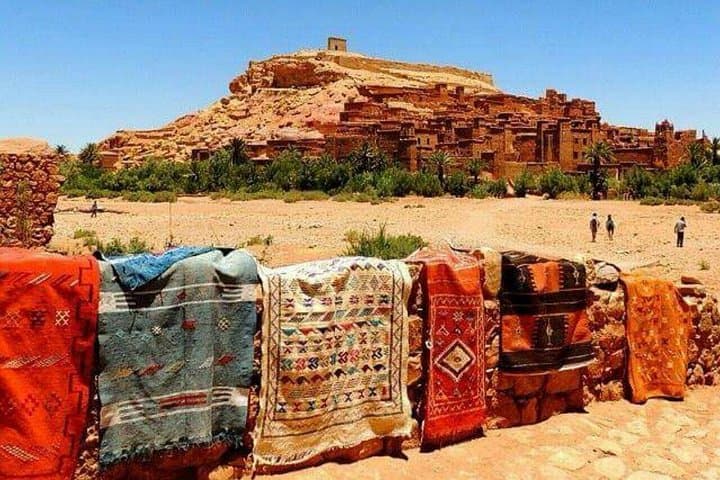
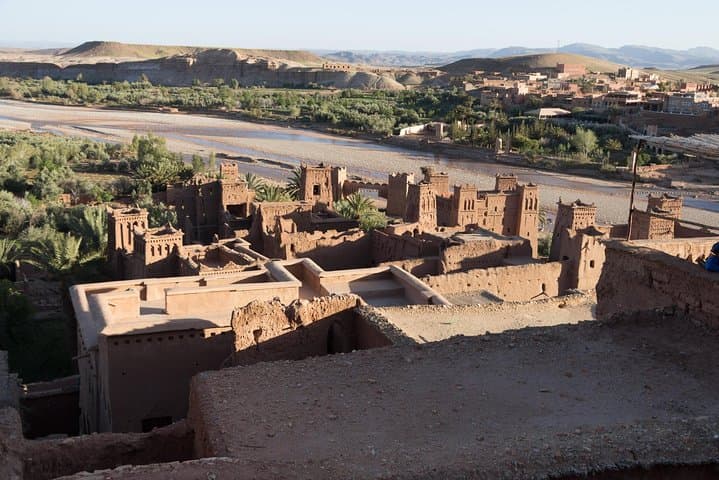
A low sun slants across the ochre ramparts of Ait Benhaddou, painting the mud-brick walls a fierce amber as minarets and ruined towers cast long, clean shadows. Travelers arrive after a high-Al Atlas crossing where the Tichka Pass opens like a throat between mountain ridges, and the road gives panoramic views of terraced valleys and remote hamlets.
Verified experiences and guided adventures in the surrounding area.
Operated by Typique Tours · Ait Benhaddou, Ouarzazate Province
A low sun slants across the ochre ramparts of Ait Benhaddou, painting the mud-brick walls a fierce amber as minarets and ruined towers cast long, clean shadows. Travelers arrive after a high-Al Atlas crossing where the Tichka Pass opens like a throat between mountain ridges, and the road gives panoramic views of terraced valleys and remote hamlets.
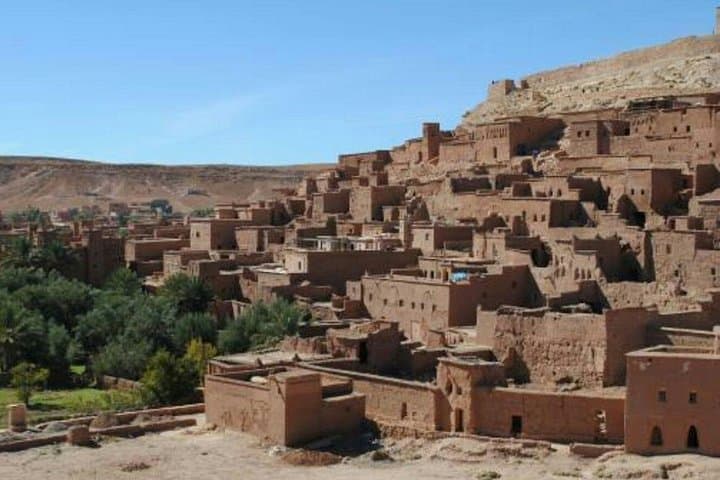
Ait Benhaddou is a ksar — a fortified village — where architecture and climate meet: thick adobe walls and narrow alleys built to hold daytime heat and channel evening wind. The site became familiar on film, but its history is older: a caravan waypoint linking southern Saharan routes to northern cities, and later a stronghold influenced by the Glaoui family. Geology here shifts from the volcanic and metamorphic highs of the Atlas to the alluvial plains below; the mud-brick survives because builders blend local clay, straw, and skilled technique.
Culturally, expect courteous local guides and families who still occupy scattered houses; photographic light is strongest at sunset. Telouet’s Glaoui Kasbah, rebuilt in the 19th century, offers another window into the region’s feudal past and trade routes.
Practical guidance: the day is long — plan for a 9–10 hour excursion with a mix of driving and short walks over uneven cobbles. Wear supportive shoes, bring sun protection, and carry water for the roadside stretches. Respect fragile adobe surfaces, ask before photographing residents, and time your visit for late afternoon light if you want dramatic colors without the midday heat.
easy.
9–10 hours.
Suitable for travelers in average fitness; includes long vehicle time and short, easy to moderate walks over uneven ground.
The round trip is about 9–10 hours total; the one-way drive to Ait Benhaddou is roughly 2–3 hours depending on stops and traffic.
Most day-trip itineraries include guided access around the ksar but not official museum admissions; confirm with the operator on booking.
Photography is generally allowed, but always ask permission before photographing people or entering private homes; some areas are sensitive.
Snow and ice can affect the pass in winter; operators may cancel or reroute if roads are unsafe, so check conditions before travel.
Ait Benhaddou was a caravan stop connecting Saharan trade routes north across the High Atlas; the Glaoui family later consolidated regional power in the 19th century, leaving the Telouet Kasbah as an example of their influence.
Adobe structures are vulnerable to erosion and modern wear; visitors should avoid climbing fragile walls, stick to marked paths, and support local conservation and community-run initiatives.
Typique Tours operates guided outdoor trips and adventures with an emphasis on safety, stewardship, and memorable experiences.
A low sun slants across the ochre ramparts of Ait Benhaddou, painting the mud-brick walls a fierce amber as minarets and ruined towers cast long, clean shadows. Travelers arrive after a high-Al Atlas crossing where the Tichka Pass opens like a throat between mountain ridges, and the road gives panoramic views of terraced valleys and remote hamlets.
A low sun slants across the ochre ramparts of Ait Benhaddou, painting the mud-brick walls a fierce amber as minarets and ruined towers cast long, clean shadows. Travelers arrive after a high-Al Atlas crossing where the Tichka Pass opens like a throat between mountain ridges, and the road gives panoramic views of terraced valleys and remote hamlets.
Ait Benhaddou is a ksar — a fortified village — where architecture and climate meet: thick adobe walls and narrow alleys built to hold daytime heat and channel evening wind. The site became familiar on film, but its history is older: a caravan waypoint linking southern Saharan routes to northern cities, and later a stronghold influenced by the Glaoui family. Geology here shifts from the volcanic and metamorphic highs of the Atlas to the alluvial plains below; the mud-brick survives because builders blend local clay, straw, and skilled technique.
Culturally, expect courteous local guides and families who still occupy scattered houses; photographic light is strongest at sunset. Telouet’s Glaoui Kasbah, rebuilt in the 19th century, offers another window into the region’s feudal past and trade routes.
Practical guidance: the day is long — plan for a 9–10 hour excursion with a mix of driving and short walks over uneven cobbles. Wear supportive shoes, bring sun protection, and carry water for the roadside stretches. Respect fragile adobe surfaces, ask before photographing residents, and time your visit for late afternoon light if you want dramatic colors without the midday heat.