THE ADVENTURE COLLECTIVE® · Independent discovery and booking for outdoor travel

This private day trip from Marrakech traces the Tizi n’Tichka pass to Telouet’s historic kasbah and the earthen ksar of Ait Ben Haddou. Expect long scenic driving, short uneven walks, and vivid cultural and geological contrasts between high mountains and desert-edge settlements.
This private day trip from Marrakech traces the Tizi n’Tichka pass to Telouet’s historic kasbah and the earthen ksar of Ait Ben Haddou. Expect long scenic driving, short uneven walks, and vivid cultural and geological contrasts between high mountains and desert-edge settlements.
Morning light peels across the High Atlas as your driver threads the Tizi n’Tichka pass, the road curling like a ribbon through scorched limestone and scrub.
Verified experiences and guided adventures in the surrounding area.
Operated by BARBIL TOURS · Ait Ben Haddou, Marrakesh-Safi
Morning light peels across the High Atlas as your driver threads the Tizi n’Tichka pass, the road curling like a ribbon through scorched limestone and scrub.
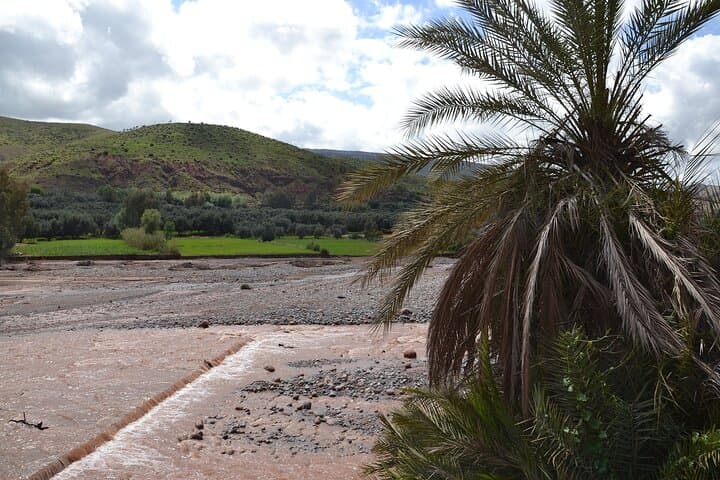
You arrive at Telouet first: a cluster of mud-brick houses cradling the crumbling Kasbah of the Glaoui, where carved cedar beams and faded ochre walls recall a time when this was a power center on the caravan route. The geology here shifts from folded highland ridges to the terracotta silhouettes of Ait Ben Haddou, a ksar of rammed earth that perches above an arid valley—an architecture designed to breathe in a dry climate.
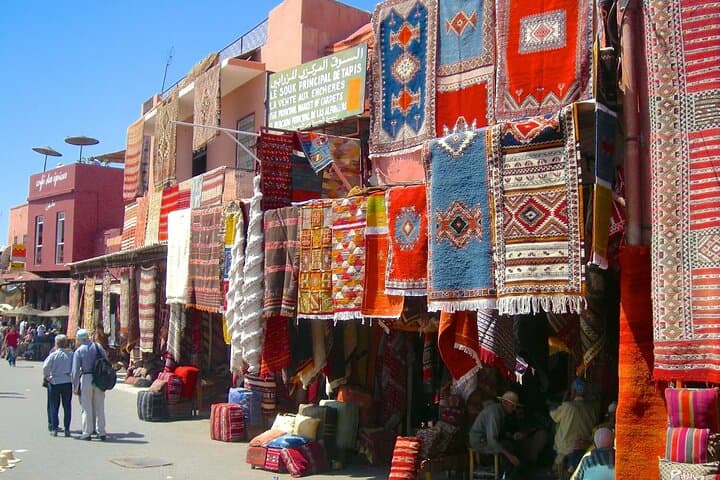
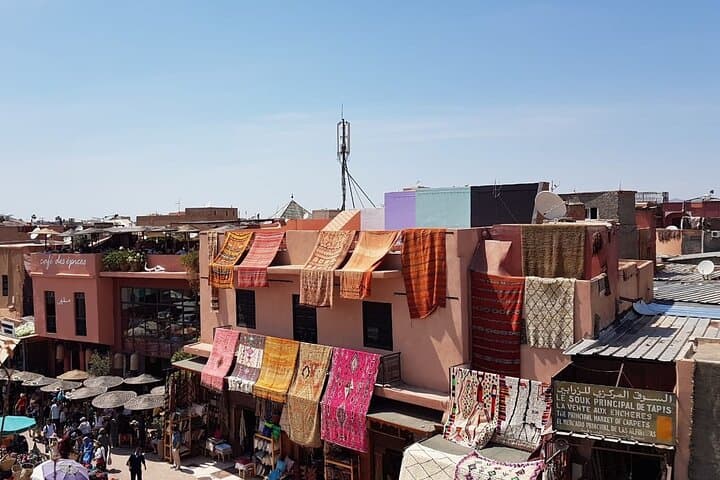
Along the way, Berber villages punctuate the drive, local markets hawk argan oil and handwoven blankets, and goats graze precariously on steep terraces. Guides will touch on the Glaoui dynasty’s colonial-era prominence and the ksar’s role as a fortified stop between Marrakech and Sahara-bound caravans. Film crews have used Ait Ben Haddou’s sculpted walls as backdrops for their cinematic deserts, but the real draw remains the place’s human scale: narrow alleys, rooftop views, and the interplay of light on mud-brick angles.
Practical notes: expect a long day—10–11 hours in total—most of it in an air-conditioned vehicle with two short walking periods on uneven, often dusty surfaces. Wear sturdy shoes, bring sun protection, and carry snacks and water beyond what’s provided. The pass can be cool; layer up. Timed right, the late afternoon glow on Ait Ben Haddou rewards the drive and gives a quiet moment to absorb a landscape shaped by climate, trade, and centuries of local life.
easy.
10–11 hours.
Suitable for most fitness levels; requires short walks on uneven terrain and long periods seated in a vehicle
Most standard day-trip prices do not include kasbah or ksar admission unless explicitly stated—bring cash for tickets if required.
Private tours typically include pickup and drop-off from central Marrakech hotels or riads—confirm your pickup point when booking.
Yes, the tour is family-friendly, though expect long vehicle time and short walks on uneven ground; infant seats are often available.
From Marrakech it’s roughly 3–4 hours one-way depending on stops and traffic; the full itinerary typically runs 10–11 hours.
Telouet’s Kasbah was the Glaoui family stronghold, influential in regional politics during the 19th and early 20th centuries; Ait Ben Haddou sat on an ancient caravan corridor between Marrakech and the Sahara.
The ksar’s earthen architecture is vulnerable to erosion and tourism wear—stick to marked paths, avoid climbing fragile walls, and support local conservation-minded guides.
BARBIL TOURS operates guided outdoor trips and adventures with an emphasis on safety, stewardship, and memorable experiences.
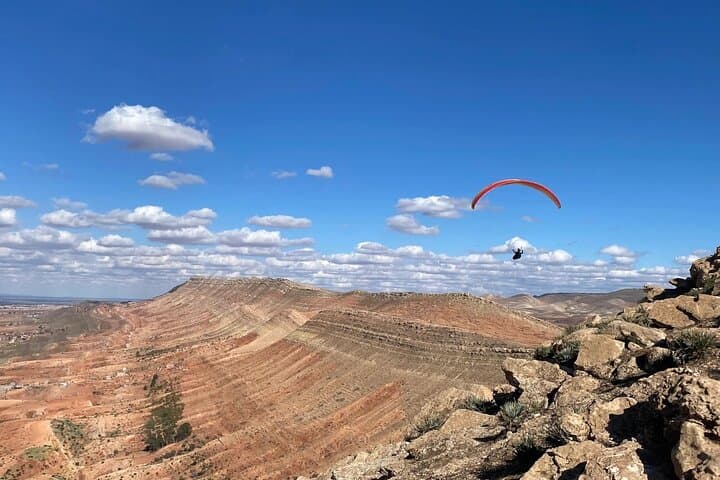
Morning light peels across the High Atlas as your driver threads the Tizi n’Tichka pass, the road curling like a ribbon through scorched limestone and scrub.
Morning light peels across the High Atlas as your driver threads the Tizi n’Tichka pass, the road curling like a ribbon through scorched limestone and scrub.
You arrive at Telouet first: a cluster of mud-brick houses cradling the crumbling Kasbah of the Glaoui, where carved cedar beams and faded ochre walls recall a time when this was a power center on the caravan route. The geology here shifts from folded highland ridges to the terracotta silhouettes of Ait Ben Haddou, a ksar of rammed earth that perches above an arid valley—an architecture designed to breathe in a dry climate.
Along the way, Berber villages punctuate the drive, local markets hawk argan oil and handwoven blankets, and goats graze precariously on steep terraces. Guides will touch on the Glaoui dynasty’s colonial-era prominence and the ksar’s role as a fortified stop between Marrakech and Sahara-bound caravans. Film crews have used Ait Ben Haddou’s sculpted walls as backdrops for their cinematic deserts, but the real draw remains the place’s human scale: narrow alleys, rooftop views, and the interplay of light on mud-brick angles.
Practical notes: expect a long day—10–11 hours in total—most of it in an air-conditioned vehicle with two short walking periods on uneven, often dusty surfaces. Wear sturdy shoes, bring sun protection, and carry snacks and water beyond what’s provided. The pass can be cool; layer up. Timed right, the late afternoon glow on Ait Ben Haddou rewards the drive and gives a quiet moment to absorb a landscape shaped by climate, trade, and centuries of local life.