THE ADVENTURE COLLECTIVE® · Independent discovery and booking for outdoor travel

Ride along the rim of Aït Ben Haddou’s ksar at sunrise or sunset and watch mudbrick walls catch fire with color. This two-hour guided tour through palm valleys and desert lanes suits beginners and experienced riders alike.
Ride along the rim of Aït Ben Haddou’s ksar at sunrise or sunset and watch mudbrick walls catch fire with color. This two-hour guided tour through palm valleys and desert lanes suits beginners and experienced riders alike.
Morning light cuts across mudbrick streets and the horses shift under you, impatient to move.
Verified experiences and guided adventures in the surrounding area.
Operated by Equestrian Art In Morocco · Ait Ben Haddou, Drâa-Tafilalet
Morning light cuts across mudbrick streets and the horses shift under you, impatient to move.
This two-hour ride threads the rim of Ait Ben Haddou’s ksar, where compacted clay walls throw back gold and rose as the High Atlas watches in the distance. The route crosses palm-dotted valleys, stretches of hard-packed desert, and narrow lanes that once funneled traders and film crews alike.
Aït Ben Haddou dates to at least the 17th century as a caravan stop on the trans-Saharan trade routes; its earthen architecture sits on a fold of Miocene-era alluvial terraces linking the desert plain to mountain foothills. Local Berber families maintain the site and guide services, and many riders will recognize sights used in Hollywood and TV productions—layers of living history meet contemporary culture here.
Expect an easy-to-moderate rhythm: steady walk and occasional trot on well-trained horses, guided by local riders who know the terrain and tide of light. Sunsets are the most cinematic time to ride; mornings are cooler and quieter. Bring sun protection, a light layer for early warmth, and closed-toe shoes. Hydrate before you mount—water in the saddle is limited—and follow your guide’s instructions on mounting, pace, and dismounting.
Practical details: rides usually allow beginners, helmets are available, and groups remain small. Meeting points are near the ksar entrance; transfers from Ouarzazate are common. Ride with respect for fragile earthen walls and grazing areas—your pace and footprint shape how this place will be seen by future visitors.
moderate.
2 hours.
Suitable for people with basic mobility and balance; riders should be comfortable sitting for short periods and walking on uneven ground.
No—rides accommodate beginners with well-trained horses and experienced local guides who set a comfortable pace.
Yes, helmets are typically available; you may bring your own for comfort and fit.
Most travelers stay in Ouarzazate and take a short transfer or taxi to Aït Ben Haddou; some operators arrange pickups.
Operators may reschedule if conditions make riding unsafe; check cancellation policy and confirm with your guide if forecasts look poor.
Aït Ben Haddou evolved as a caravanserai and fortified village on trans-Saharan routes; its earthen architecture reflects centuries of Berber construction techniques.
The ksar is fragile—stay on designated paths, avoid leaning on clay walls, and support local conservation initiatives that limit wear from tourism.
Equestrian Art In Morocco operates guided outdoor trips and adventures with an emphasis on safety, stewardship, and memorable experiences.

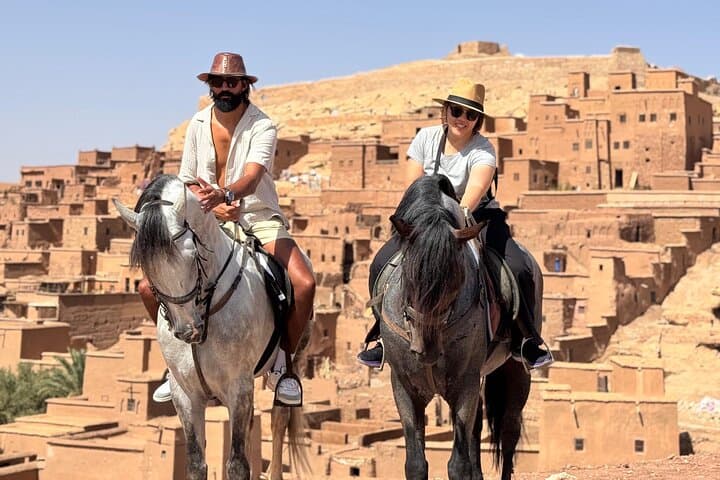


Morning light cuts across mudbrick streets and the horses shift under you, impatient to move.
Morning light cuts across mudbrick streets and the horses shift under you, impatient to move.
This two-hour ride threads the rim of Ait Ben Haddou’s ksar, where compacted clay walls throw back gold and rose as the High Atlas watches in the distance. The route crosses palm-dotted valleys, stretches of hard-packed desert, and narrow lanes that once funneled traders and film crews alike.
Aït Ben Haddou dates to at least the 17th century as a caravan stop on the trans-Saharan trade routes; its earthen architecture sits on a fold of Miocene-era alluvial terraces linking the desert plain to mountain foothills. Local Berber families maintain the site and guide services, and many riders will recognize sights used in Hollywood and TV productions—layers of living history meet contemporary culture here.
Expect an easy-to-moderate rhythm: steady walk and occasional trot on well-trained horses, guided by local riders who know the terrain and tide of light. Sunsets are the most cinematic time to ride; mornings are cooler and quieter. Bring sun protection, a light layer for early warmth, and closed-toe shoes. Hydrate before you mount—water in the saddle is limited—and follow your guide’s instructions on mounting, pace, and dismounting.
Practical details: rides usually allow beginners, helmets are available, and groups remain small. Meeting points are near the ksar entrance; transfers from Ouarzazate are common. Ride with respect for fragile earthen walls and grazing areas—your pace and footprint shape how this place will be seen by future visitors.