THE ADVENTURE COLLECTIVE® · Independent discovery and booking for outdoor travel

A full-day loop from Marrakech over the Tizi n'Tichka pass to the UNESCO-listed Ksar Ait Ben Haddou and Ouarzazate. Expect dramatic mountain roads, a guided walk through earthen lanes, and cinematic landscapes in a single long day.
A full-day loop from Marrakech over the Tizi n'Tichka pass to the UNESCO-listed Ksar Ait Ben Haddou and Ouarzazate. Expect dramatic mountain roads, a guided walk through earthen lanes, and cinematic landscapes in a single long day.
A winded road climbs out of Marrakech and the High Atlas opens like a folded map; hairpin after hairpin, the pass at Tizi n'Tichka pushes travelers up to 2,260 meters where stone and sky trade places.
Verified experiences and guided adventures in the surrounding area.
Operated by Marrakech Tours · Ouarzazate, Drâa-Tafilalet
A winded road climbs out of Marrakech and the High Atlas opens like a folded map; hairpin after hairpin, the pass at Tizi n'Tichka pushes travelers up to 2,260 meters where stone and sky trade places.
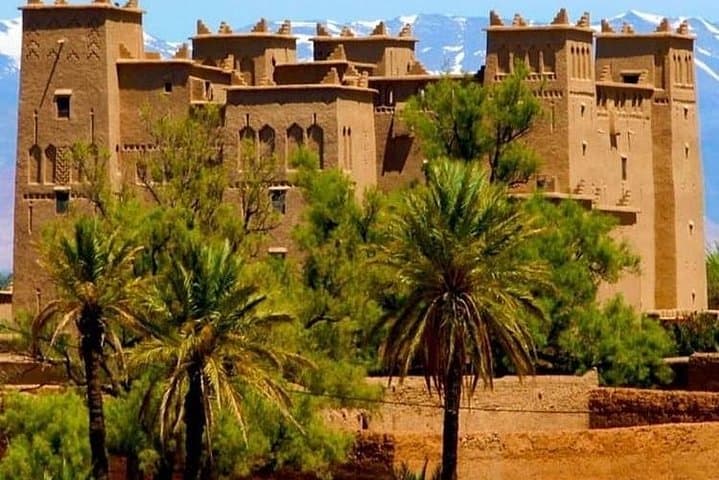
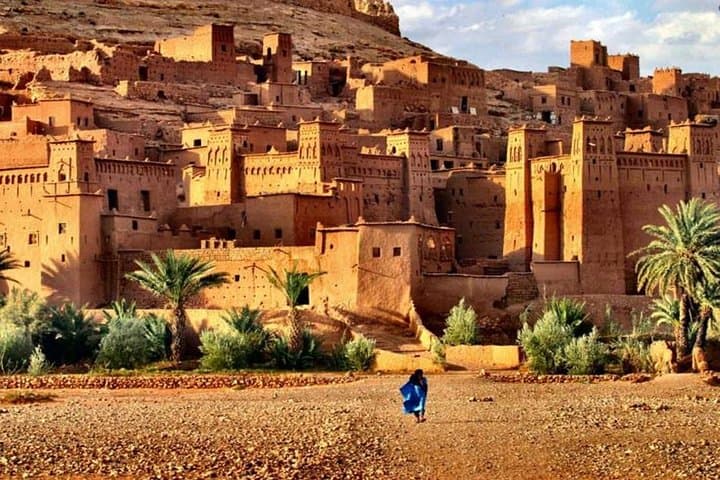
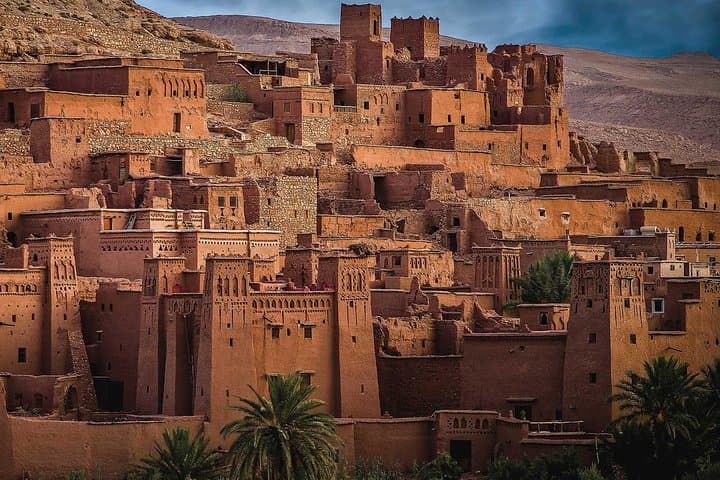
By midmorning the minivan drops you at the rim of an age-old network of fortified houses—Ait Ben Haddou—its mud-brick walls holding the heat and stories of caravans. The kasbah’s compact lanes funnel the sun and the visitor alike, with rooftop perches that frame the southern plain and the first dunes of the desert beyond.
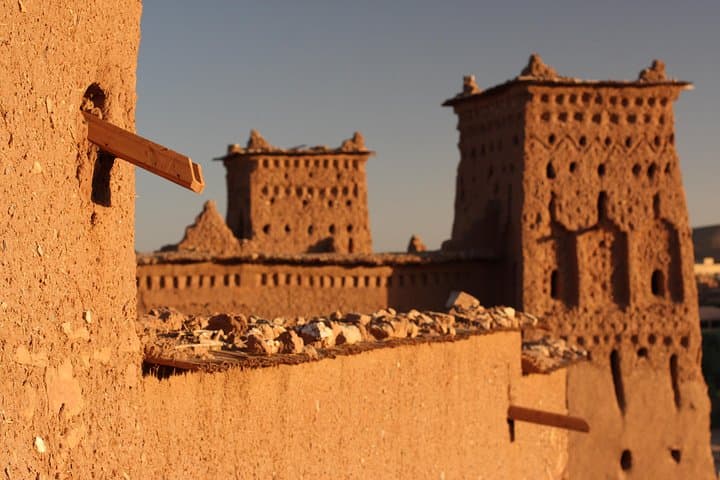
Geologically, the route traces the southern edge of the High Atlas: metamorphic rock gives way to red earth and alluvial plains. Culturally, Ait Ben Haddou sits on the old trans-Saharan caravan corridor; its clay architecture and adobe towers are practical responses to scarce rainfall and seasonal temperature swings. Nearby Ouarzazate grew as a film and trade hub, its Taourirt Kasbah reflecting 19th-century power and later cinematic economies.
Practical guidance: expect a long day—roughly 12 hours door-to-door—with stops for photos and a 2–3 hour guided visit at Ait Ben Haddou. Wear broken-in walking shoes for uneven cobbles and a hat for high, bright sun. Bring at least 1.5–2 liters of water, layered clothing for cooler mountain air on the pass, and local currency for small entrance fees or tipping a guide.
This is a compact cultural trek across varied terrain—mountain passes daring you to look back, and a fortified village that rewards slow steps and close observation.
moderate.
12 hours.
Suitable for travelers in average physical condition who can manage several short hikes, stairs and uneven surfaces during a long day.
The tour is approximately 12 hours; most departures leave early morning and return to Marrakech in the evening—check your confirmation for exact pickup time.
According to the itinerary, admission to Ait Ben Haddou is included during the scheduled stop; small guided-site fees or donations may be requested locally.
Walking through the ksar involves uneven cobbles and short, sometimes steep sections; no special fitness level is required but good mobility and steady footing help.
Yes—Ait Ben Haddou is a popular filming location; personal photography is allowed, though commercial filming may require permits and coordination with local authorities.
Ait Ben Haddou was a fortified caravan stop on trans-Saharan trade routes and was inscribed as a UNESCO World Heritage site in 1987 for its earthen architecture and historic urban ensemble.
The earthen structures are sensitive to erosion and unregulated tourism; visitors should stick to paths, avoid climbing fragile walls, and support local guides to reduce impact.
Marrakech Tours operates guided outdoor trips and adventures with an emphasis on safety, stewardship, and memorable experiences.
A winded road climbs out of Marrakech and the High Atlas opens like a folded map; hairpin after hairpin, the pass at Tizi n'Tichka pushes travelers up to 2,260 meters where stone and sky trade places.
A winded road climbs out of Marrakech and the High Atlas opens like a folded map; hairpin after hairpin, the pass at Tizi n'Tichka pushes travelers up to 2,260 meters where stone and sky trade places.
By midmorning the minivan drops you at the rim of an age-old network of fortified houses—Ait Ben Haddou—its mud-brick walls holding the heat and stories of caravans. The kasbah’s compact lanes funnel the sun and the visitor alike, with rooftop perches that frame the southern plain and the first dunes of the desert beyond.
Geologically, the route traces the southern edge of the High Atlas: metamorphic rock gives way to red earth and alluvial plains. Culturally, Ait Ben Haddou sits on the old trans-Saharan caravan corridor; its clay architecture and adobe towers are practical responses to scarce rainfall and seasonal temperature swings. Nearby Ouarzazate grew as a film and trade hub, its Taourirt Kasbah reflecting 19th-century power and later cinematic economies.
Practical guidance: expect a long day—roughly 12 hours door-to-door—with stops for photos and a 2–3 hour guided visit at Ait Ben Haddou. Wear broken-in walking shoes for uneven cobbles and a hat for high, bright sun. Bring at least 1.5–2 liters of water, layered clothing for cooler mountain air on the pass, and local currency for small entrance fees or tipping a guide.
This is a compact cultural trek across varied terrain—mountain passes daring you to look back, and a fortified village that rewards slow steps and close observation.