THE ADVENTURE COLLECTIVE® · Independent discovery and booking for outdoor travel

Walk the earthen alleys of a UNESCO ksar and watch history held in mud and sunlight. This day trip pairs High Atlas panoramas with cinematic architecture and practical tips for visiting Ait Ben Haddou.
Walk the earthen alleys of a UNESCO ksar and watch history held in mud and sunlight. This day trip pairs High Atlas panoramas with cinematic architecture and practical tips for visiting Ait Ben Haddou.
You arrive on a road that climbs out of the Atlas foothills and the ksar appears, an ochre silhouette against the blue — towers, alleys and orthogonal roofs of hardened earth rising like a village carved from the hillside.
Verified experiences and guided adventures in the surrounding area.
Operated by Green Atlas Travel · Ait Ben Haddou, Ouarzazate Province
You arrive on a road that climbs out of the Atlas foothills and the ksar appears, an ochre silhouette against the blue — towers, alleys and orthogonal roofs of hardened earth rising like a village carved from the hillside.
Ait Ben Haddou sits on the old caravan route between the Sahara and Marrakech, a fortified cluster of homes and granaries first built and rebuilt over centuries. Its rammed-earth architecture — mud brick, straw and reed — both records and breathes local building knowledge; the clay walls shed light and hold heat, shaping daily life here. Geologically, the site sits at the edge of the High Atlas foothills where eroded alluvial fans meet arid plains, and the Tizi n'Tichka pass above brings occasional snow-melt that feeds the nearby palm groves.
Culturally the ksar is Amazigh (Berber) in origin and has been a living settlement and a cinematic backdrop — Gladiator, The Mummy and Game of Thrones used its streets to stand in for other worlds. Local vendors sell ceramics and hand-stitched textiles; the pace remains measured, tied to prayer times and seasonal trade.
Practical guidance: expect several flights of narrow steps and uneven surfaces — sturdy shoes are essential. Plan for midday heat in summer and chill at dawn; bottled water and sun protection are musts. Allow 1.5–2 hours to walk the site slowly, plus time for photos from the hilltop viewpoint. If you’re coming from Marrakech, the drive over Tizi n'Tichka is scenic but winding; motion-sickness preparations help. Respect fragile walls — the mudwork is repairable but vulnerable, so avoid climbing and take only pictures.
moderate.
8–10 hours (round trip from Marrakech).
Moderate fitness: able to walk uphill on uneven surfaces for 1–2 hours and handle a full day of travel.
Yes, a modest entrance fee is typically charged at the ksar—carry local currency and check current rates at the ticket point.
Allocate 1.5–2 hours for a relaxed walk through the alleys and up to the hilltop viewpoint; add travel time if coming from Marrakech or Ouarzazate.
Yes—day trips are common; expect a 3–4 hour round drive over Tizi n'Tichka, so the total excursion is a full day.
No—the ksar’s narrow alleys and steps make wheelchair access extremely limited; travelers with mobility constraints should contact guides about alternatives.
Ait Ben Haddou grew as a fortified caravan stop on trans-Saharan trade routes and was designated a UNESCO World Heritage Site in 1987 for its outstanding example of earthen architecture.
The mudbrick structures require continuous, local repair; visitors should avoid touching fragile walls and support conservation by using local guides and purchasing responsibly.
Green Atlas Travel operates guided outdoor trips and adventures with an emphasis on safety, stewardship, and memorable experiences.

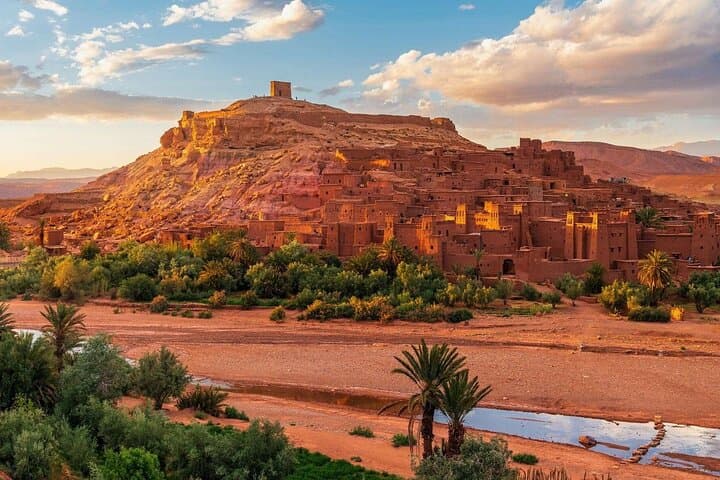

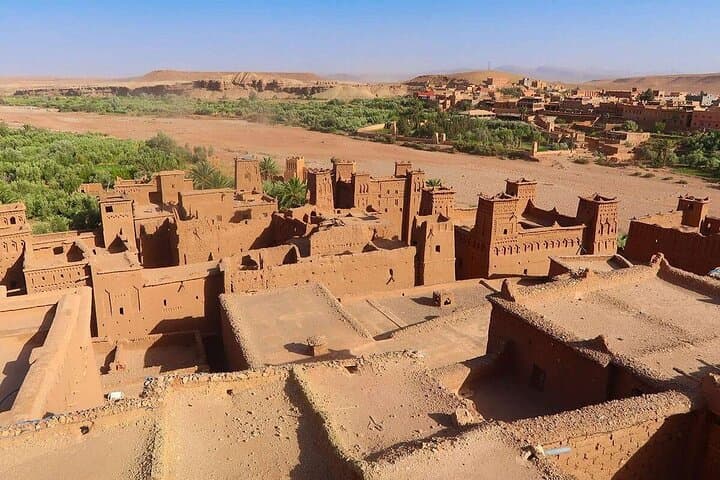
You arrive on a road that climbs out of the Atlas foothills and the ksar appears, an ochre silhouette against the blue — towers, alleys and orthogonal roofs of hardened earth rising like a village carved from the hillside.
You arrive on a road that climbs out of the Atlas foothills and the ksar appears, an ochre silhouette against the blue — towers, alleys and orthogonal roofs of hardened earth rising like a village carved from the hillside.
Ait Ben Haddou sits on the old caravan route between the Sahara and Marrakech, a fortified cluster of homes and granaries first built and rebuilt over centuries. Its rammed-earth architecture — mud brick, straw and reed — both records and breathes local building knowledge; the clay walls shed light and hold heat, shaping daily life here. Geologically, the site sits at the edge of the High Atlas foothills where eroded alluvial fans meet arid plains, and the Tizi n'Tichka pass above brings occasional snow-melt that feeds the nearby palm groves.
Culturally the ksar is Amazigh (Berber) in origin and has been a living settlement and a cinematic backdrop — Gladiator, The Mummy and Game of Thrones used its streets to stand in for other worlds. Local vendors sell ceramics and hand-stitched textiles; the pace remains measured, tied to prayer times and seasonal trade.
Practical guidance: expect several flights of narrow steps and uneven surfaces — sturdy shoes are essential. Plan for midday heat in summer and chill at dawn; bottled water and sun protection are musts. Allow 1.5–2 hours to walk the site slowly, plus time for photos from the hilltop viewpoint. If you’re coming from Marrakech, the drive over Tizi n'Tichka is scenic but winding; motion-sickness preparations help. Respect fragile walls — the mudwork is repairable but vulnerable, so avoid climbing and take only pictures.