THE ADVENTURE COLLECTIVE® · Independent discovery and booking for outdoor travel

Ride the Aiguille du Midi cable car to 3,842 m with a private guide and take in a 360° panorama of Mont Blanc, the Vallée Blanche and the Grandes Jorasses. This three-hour guided visit combines high-alpine viewpoints, mountaineering history and practical guidance for coping with altitude.
Ride the Aiguille du Midi cable car to 3,842 m with a private guide and take in a 360° panorama of Mont Blanc, the Vallée Blanche and the Grandes Jorasses. This three-hour guided visit combines high-alpine viewpoints, mountaineering history and practical guidance for coping with altitude.
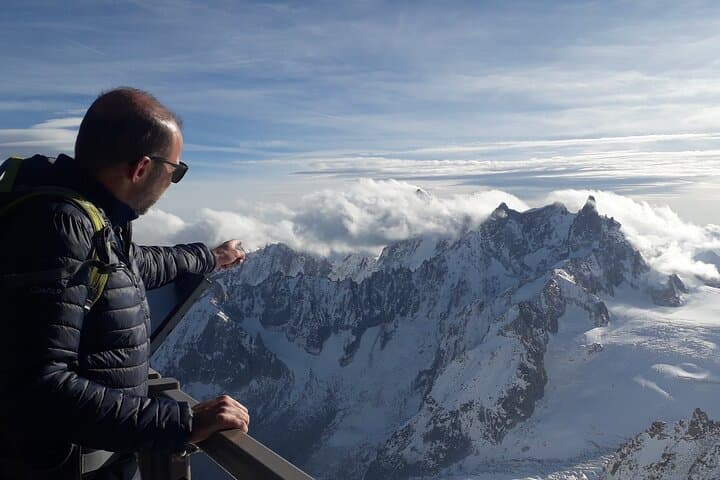
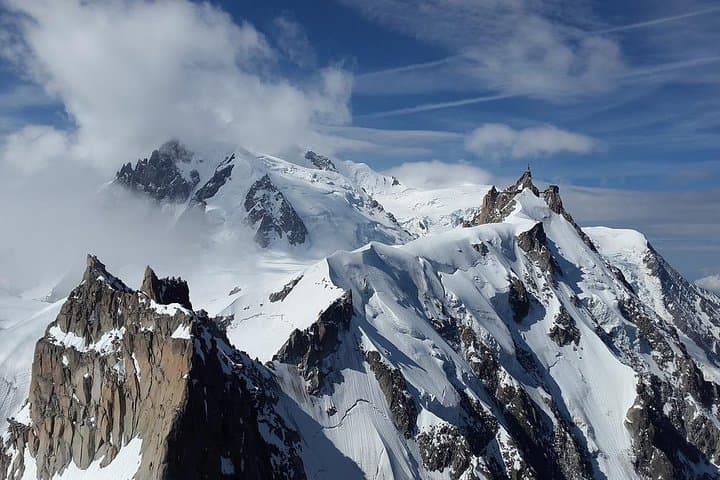
The cable car lifts you out of the village air and into a thinner sky—windows fog briefly, then clear to reveal a 360° arena of rock, ice and peaks. At 3,842 m the Aiguille du Midi terrace exposes the massif: Mont Blanc towering at 4,810 m, the knife-edges of the Grandes Jorasses, and the white sweep of the Vallée Blanche. The wind has its own temper; it pushes and hushes, and the glaciers below seem to pull the horizon forward.
Verified experiences and guided adventures in the surrounding area.
Operated by Agence 1786 · Chamonix, Auvergne-Rhône-Alpes
The cable car lifts you out of the village air and into a thinner sky—windows fog briefly, then clear to reveal a 360° arena of rock, ice and peaks. At 3,842 m the Aiguille du Midi terrace exposes the massif: Mont Blanc towering at 4,810 m, the knife-edges of the Grandes Jorasses, and the white sweep of the Vallée Blanche. The wind has its own temper; it pushes and hushes, and the glaciers below seem to pull the horizon forward.
This ridge has written chapters of alpine history. Chamoniards became household names after the 1786 first ascent of Mont Blanc, and the Aiguille du Midi cable car—opened in the mid-20th century—made high alpine panoramas accessible to non-climbers. The peaks are mostly granite sculpted by repeated glaciation; crevasses and cirques mark the slow, cold work of ice.
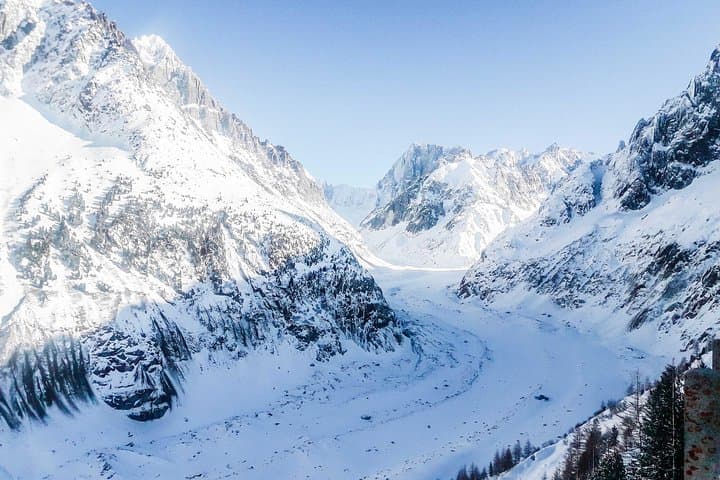
A private guide threads geography, geology and human stories together: identifying the Matterhorn’s distant silhouette, pointing out seracs on the Mer de Glace, and explaining mountaineering lore. Cultural life in Chamonix still orbits those stories—alpine refuges, guide companies and the local museum preserve the craft.
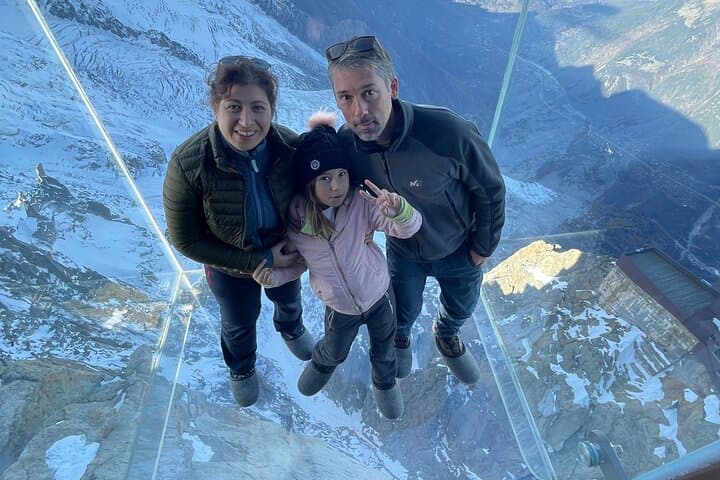
Practical notes: with pre-booked cable car tickets and a private guide this experience runs about three hours. Temperatures fall quickly with elevation; sun and wind both demand preparation. Expect short walks on rock and metal platforms—no technical climbing—but allow extra time for photos, acclimatization and the famous Pas dans le Vide glass viewpoint. Hydrate, layer, and move at a calm pace: the mountain will reveal itself if you give it a moment.
easy.
3 hours.
Suitable for those with basic mobility; involves short walks on rocky platforms and stairs at altitude
No technical climbing skills are required; the experience uses cable cars and marked platforms, but you'll encounter stairs and exposed viewpoints.
The guided experience is about three hours and includes cable car tickets and the services of a private guide who explains the peaks, glaciology and mountaineering history.
Some visitors feel mild breathlessness or headache; acclimatize in Chamonix, hydrate, avoid alcohol and descend if symptoms worsen.
The glass viewpoint is usually accessible year-round but can close temporarily for high winds or maintenance—your guide will advise on the day.
Chamonix's climbing culture accelerated after the 1786 ascent of Mont Blanc; the Aiguille du Midi cable car later democratized high-alpine views when it opened in the 1950s.
High-altitude environments are fragile—stay on marked areas, pack out all waste, and avoid drone use near wildlife and busy viewpoints.
Agence 1786 operates guided outdoor trips and adventures with an emphasis on safety, stewardship, and memorable experiences.
The cable car lifts you out of the village air and into a thinner sky—windows fog briefly, then clear to reveal a 360° arena of rock, ice and peaks. At 3,842 m the Aiguille du Midi terrace exposes the massif: Mont Blanc towering at 4,810 m, the knife-edges of the Grandes Jorasses, and the white sweep of the Vallée Blanche. The wind has its own temper; it pushes and hushes, and the glaciers below seem to pull the horizon forward.
The cable car lifts you out of the village air and into a thinner sky—windows fog briefly, then clear to reveal a 360° arena of rock, ice and peaks. At 3,842 m the Aiguille du Midi terrace exposes the massif: Mont Blanc towering at 4,810 m, the knife-edges of the Grandes Jorasses, and the white sweep of the Vallée Blanche. The wind has its own temper; it pushes and hushes, and the glaciers below seem to pull the horizon forward.
This ridge has written chapters of alpine history. Chamoniards became household names after the 1786 first ascent of Mont Blanc, and the Aiguille du Midi cable car—opened in the mid-20th century—made high alpine panoramas accessible to non-climbers. The peaks are mostly granite sculpted by repeated glaciation; crevasses and cirques mark the slow, cold work of ice.
A private guide threads geography, geology and human stories together: identifying the Matterhorn’s distant silhouette, pointing out seracs on the Mer de Glace, and explaining mountaineering lore. Cultural life in Chamonix still orbits those stories—alpine refuges, guide companies and the local museum preserve the craft.
Practical notes: with pre-booked cable car tickets and a private guide this experience runs about three hours. Temperatures fall quickly with elevation; sun and wind both demand preparation. Expect short walks on rock and metal platforms—no technical climbing—but allow extra time for photos, acclimatization and the famous Pas dans le Vide glass viewpoint. Hydrate, layer, and move at a calm pace: the mountain will reveal itself if you give it a moment.