THE ADVENTURE COLLECTIVE® · Independent discovery and booking for outdoor travel

A three-day wildlife circuit from Ahmedabad that pairs two safaris with cultural stops at Garjia Devi Temple and the Corbett Museum. Ideal for travelers seeking focused wildlife viewing and a short immersion in the Terai foothills.
A three-day wildlife circuit from Ahmedabad that pairs two safaris with cultural stops at Garjia Devi Temple and the Corbett Museum. Ideal for travelers seeking focused wildlife viewing and a short immersion in the Terai foothills.
You arrive just after dawn: an air-conditioned transfer leaves Delhi behind and the road unwinds through foothills, the scent of riverine forest sharpening as Ramnagar appears on the horizon. By afternoon the lodge sits against a green fringe of sal and khair trees; beyond it the park’s ridgelines keep their secrets.
Verified experiences and guided adventures in the surrounding area.
Operated by Padma Holidays · Ramnagar, Uttarakhand
You arrive just after dawn: an air-conditioned transfer leaves Delhi behind and the road unwinds through foothills, the scent of riverine forest sharpening as Ramnagar appears on the horizon. By afternoon the lodge sits against a green fringe of sal and khair trees; beyond it the park’s ridgelines keep their secrets.
Jim Corbett was India’s first national park, created in the 1930s to protect the subcontinent’s tigers and the river valleys they patrol. Geologically the area is the southern edge of the lesser Himalaya — folded ridges, shallow streams and alluvial floodplains that feed the Kosi and Ramganga. Culturally, villages around the park have long practiced river worship; Garjia Devi Temple sits on a rocky islet where devotees come at sunset.
Over three days you balance short cultural stops with two safaris: morning light scans grasslands and riverbanks while evening runs move toward denser forest. Jim Corbett Falls and the Corbett Museum add quiet variety between drives.
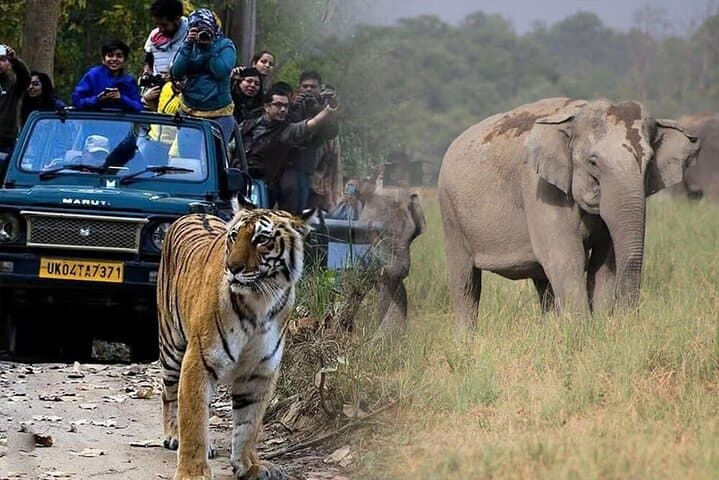
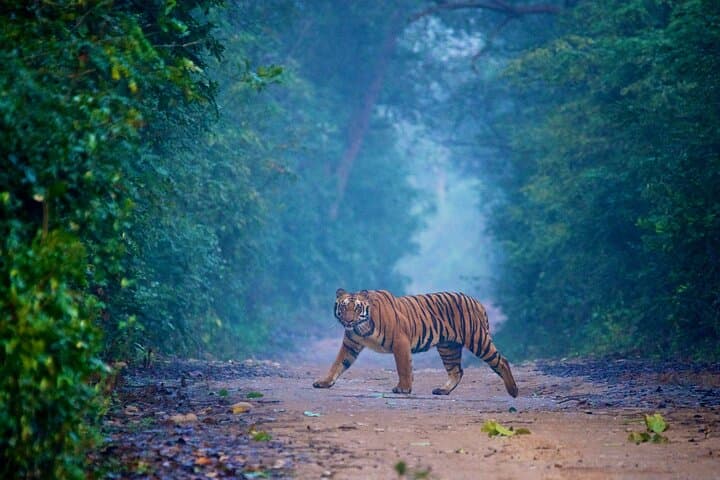
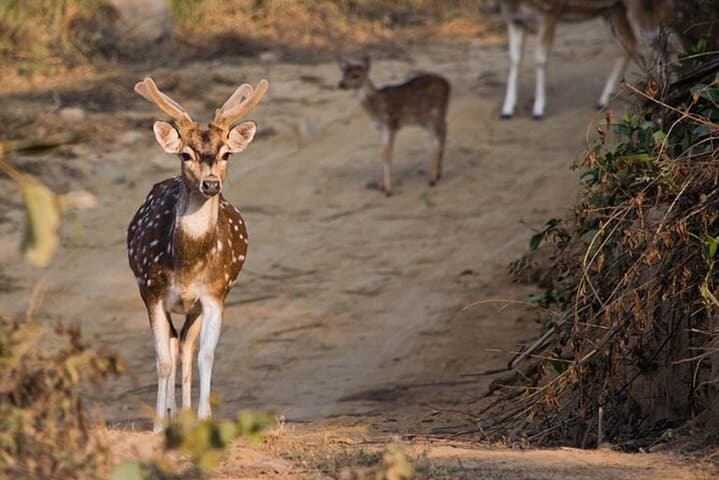
Practical guidance: safaris are in shared jeeps or canters and guides are appointed by forest authorities; tiger sightings are never guaranteed but choosing different zones for morning and evening increases odds. Reach boarding points 20 minutes early, keep noise low and follow guides’ instructions. Pack binoculars, layered clothing for cool mornings, and a small daypack for water and camera gear. Expect bumpy tracks, limited cell service, and strict park rules during monsoon season. With a little patience and good timing, the park gives rewarding glimpses of large mammals and rich birdlife—raw, direct, and unedited by the road.
moderate.
3 days.
Suitable for travelers in average fitness; involves short walks and long periods in vehicle
No. Tigers roam freely; sightings depend on animal movement and zone allocation, though morning and evening safaris in different zones improve chances.
The itinerary includes round-flight tickets and road transfers between Delhi and Jim Corbett as described in the tour option.
Access is reduced during the monsoon when certain zones may close; seasons and operational dates are managed by forest authorities and can change annually.
Guidelines vary; safaris are typically not recommended for pregnant travelers and some routes may restrict very young children—check provider policies before booking.
Established in the 1930s as Hailey National Park and later renamed for hunter-turned-conservationist Jim Corbett, the park was created to conserve tigers and Terai habitats.
The reserve is part of India’s Project Tiger network; visitors must follow strict rules to minimize disturbance and support ongoing protection efforts.
Padma Holidays operates guided outdoor trips and adventures with an emphasis on safety, stewardship, and memorable experiences.

You arrive just after dawn: an air-conditioned transfer leaves Delhi behind and the road unwinds through foothills, the scent of riverine forest sharpening as Ramnagar appears on the horizon. By afternoon the lodge sits against a green fringe of sal and khair trees; beyond it the park’s ridgelines keep their secrets.
You arrive just after dawn: an air-conditioned transfer leaves Delhi behind and the road unwinds through foothills, the scent of riverine forest sharpening as Ramnagar appears on the horizon. By afternoon the lodge sits against a green fringe of sal and khair trees; beyond it the park’s ridgelines keep their secrets.
Jim Corbett was India’s first national park, created in the 1930s to protect the subcontinent’s tigers and the river valleys they patrol. Geologically the area is the southern edge of the lesser Himalaya — folded ridges, shallow streams and alluvial floodplains that feed the Kosi and Ramganga. Culturally, villages around the park have long practiced river worship; Garjia Devi Temple sits on a rocky islet where devotees come at sunset.
Over three days you balance short cultural stops with two safaris: morning light scans grasslands and riverbanks while evening runs move toward denser forest. Jim Corbett Falls and the Corbett Museum add quiet variety between drives.
Practical guidance: safaris are in shared jeeps or canters and guides are appointed by forest authorities; tiger sightings are never guaranteed but choosing different zones for morning and evening increases odds. Reach boarding points 20 minutes early, keep noise low and follow guides’ instructions. Pack binoculars, layered clothing for cool mornings, and a small daypack for water and camera gear. Expect bumpy tracks, limited cell service, and strict park rules during monsoon season. With a little patience and good timing, the park gives rewarding glimpses of large mammals and rich birdlife—raw, direct, and unedited by the road.