THE ADVENTURE COLLECTIVE® · Independent discovery and booking for outdoor travel

Experience the turquoise cascades of Agua Azul and the towering drop of Misol‑Há on a full‑day trip from San Cristóbal de las Casas, capped with a visit to the Palenque ruins. Expect long transfers, short uneven hikes, and vivid lowland jungle scenery.
Experience the turquoise cascades of Agua Azul and the towering drop of Misol‑Há on a full‑day trip from San Cristóbal de las Casas, capped with a visit to the Palenque ruins. Expect long transfers, short uneven hikes, and vivid lowland jungle scenery.
You arrive before dawn in the highland town of San Cristóbal; the air holds humidity and the van’s windows fog as the road unfurls toward lowland jungle. By midmorning the forest opens and the water changes color — a collective gasp at the turquoise tiers of Agua Azul, where limestone and calcified terraces force the river into bright pools that dare you to look away.
Verified experiences and guided adventures in the surrounding area.
Operated by OTISA · San Cristóbal de las Casas, Chiapas
You arrive before dawn in the highland town of San Cristóbal; the air holds humidity and the van’s windows fog as the road unfurls toward lowland jungle. By midmorning the forest opens and the water changes color — a collective gasp at the turquoise tiers of Agua Azul, where limestone and calcified terraces force the river into bright pools that dare you to look away.
These falls are carved from Chiapas’ karst landscape: soft limestone, volcanic uplifts and centuries of mineral-rich water building terraces. Misol‑Há, later in the day, arrives like a different chapter — a single 30‑meter curtain dropping into a deep plunge pool beneath a canopy of tropical hardwoods. Both sites sit within a cultural corridor shaped by ancient Maya routes; Palenque, reached after the waterfalls, is the archaeological anchor that explains the human story behind the jungle.
Expect long road transfers (the operator notes roughly five hours of combined travel early in the day), short hikes on uneven paths, and stairways and platforms at viewpoints. Swimming is sometimes possible but always at each visitor’s discretion depending on conditions — check with guides before entering the water.
Practical edge: bring quick‑dry layers, waterproof your pack, carry cash for small vendors and park fees, and schedule the trip early in the week to avoid crowds. Respect signage at cascades: the travertine terraces are fragile and conservation rules are enforced seasonally.
This is a full‑day blend of sensory waterwork, light walking and cultural payoff at Palenque — perfect for travelers ready for a long day of varied terrain and strong visual rewards.
moderate.
12–13 hours.
Suitable for travelers with average fitness—able to handle long vehicle transfers, short walks on uneven terrain, and stairs.
This is a full‑day excursion—about 12–13 hours total according to the operator, including round‑trip transfers and time at each site.
Swimming is sometimes allowed but depends on local conditions and operator guidance; the passenger is responsible for choosing to swim and should check with staff first.
Entrances to Agua Azul and Misol‑Há are included in the tour as listed in the itinerary details.
The operator lists the activity as physically easy, but note there are uneven surfaces and steps at viewpoints; wheelchair access may be limited beyond main viewing areas.
The route connects lowland Maya sites and colonial highland towns; Palenque preserves Classic Maya architecture and inscriptions that illuminate the region’s ancient political centers.
The travertine terraces are sensitive to trampling and pollution—follow marked trails, avoid throwing trash, and use reef‑safe or no sunscreen before swimming to protect water quality.
OTISA operates guided outdoor trips and adventures with an emphasis on safety, stewardship, and memorable experiences.

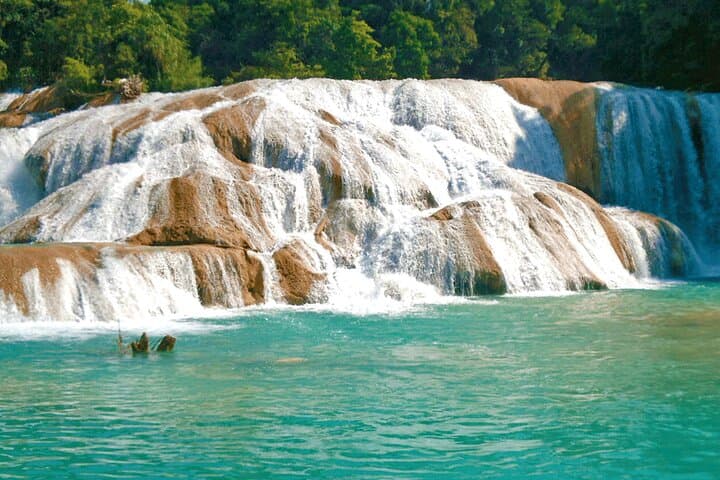


You arrive before dawn in the highland town of San Cristóbal; the air holds humidity and the van’s windows fog as the road unfurls toward lowland jungle. By midmorning the forest opens and the water changes color — a collective gasp at the turquoise tiers of Agua Azul, where limestone and calcified terraces force the river into bright pools that dare you to look away.
You arrive before dawn in the highland town of San Cristóbal; the air holds humidity and the van’s windows fog as the road unfurls toward lowland jungle. By midmorning the forest opens and the water changes color — a collective gasp at the turquoise tiers of Agua Azul, where limestone and calcified terraces force the river into bright pools that dare you to look away.
These falls are carved from Chiapas’ karst landscape: soft limestone, volcanic uplifts and centuries of mineral-rich water building terraces. Misol‑Há, later in the day, arrives like a different chapter — a single 30‑meter curtain dropping into a deep plunge pool beneath a canopy of tropical hardwoods. Both sites sit within a cultural corridor shaped by ancient Maya routes; Palenque, reached after the waterfalls, is the archaeological anchor that explains the human story behind the jungle.
Expect long road transfers (the operator notes roughly five hours of combined travel early in the day), short hikes on uneven paths, and stairways and platforms at viewpoints. Swimming is sometimes possible but always at each visitor’s discretion depending on conditions — check with guides before entering the water.
Practical edge: bring quick‑dry layers, waterproof your pack, carry cash for small vendors and park fees, and schedule the trip early in the week to avoid crowds. Respect signage at cascades: the travertine terraces are fragile and conservation rules are enforced seasonally.
This is a full‑day blend of sensory waterwork, light walking and cultural payoff at Palenque — perfect for travelers ready for a long day of varied terrain and strong visual rewards.