THE ADVENTURE COLLECTIVE® · Independent discovery and booking for outdoor travel

Catch the Taj Mahal as dawn paints its marble in shifting tones on this private day trip from Delhi. Early pickup, historical insight at Agra Fort, and time for local shopping make this a concise, high-value cultural adventure.
Catch the Taj Mahal as dawn paints its marble in shifting tones on this private day trip from Delhi. Early pickup, historical insight at Agra Fort, and time for local shopping make this a concise, high-value cultural adventure.
You step from the car before dawn, the marble of the Taj Mahal holding the first gold of morning like a mirror. A hush hangs across the reflecting pool; the river beyond moves in a low, determined voice. The guide points out how the changing light sculpts every curve — a quiet, precise reveal that rewards the early hour.
Verified experiences and guided adventures in the surrounding area.
Operated by Yoganshi Travel · Agra, Uttar Pradesh
You step from the car before dawn, the marble of the Taj Mahal holding the first gold of morning like a mirror. A hush hangs across the reflecting pool; the river beyond moves in a low, determined voice. The guide points out how the changing light sculpts every curve — a quiet, precise reveal that rewards the early hour.
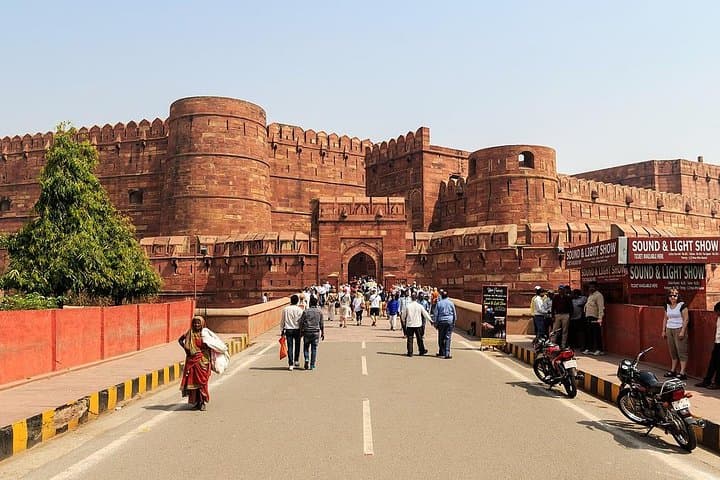
Built in the 17th century by Shah Jahan, the Taj Mahal crowns a Mughal story of empire, art and grief. It sits on the alluvial floodplain of the Yamuna — a flat, fertile landscape that allowed craftsmen to lay an impossibly level platform of red sandstone and marble. Nearby Agra Fort shows the same imperial palette: red sandstone ramparts punctuated by delicate marble pavilions.
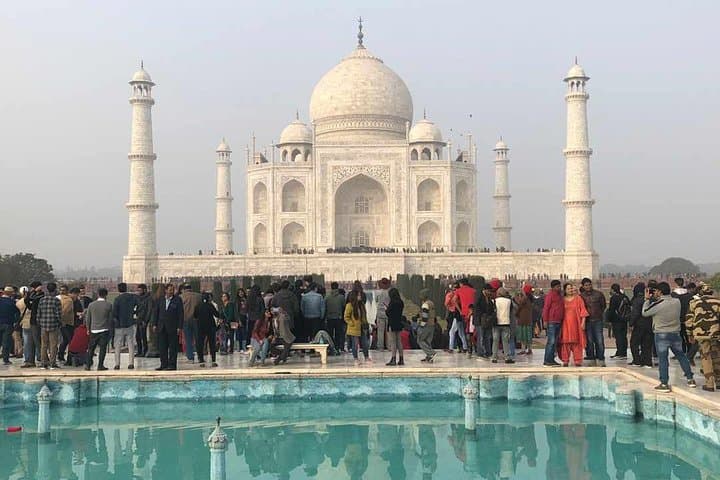
Culture here follows measured rhythms: morning prayers, markets filling with petha sweets and embroidered textiles, and guides whose narratives thread architecture, dynasty, and craft. Mehtab Bagh across the river offers a quieter view if you want to trade the crowd for birdsong.
Practical note: expect a very early pickup (around 2:30am from Delhi), a three-hour drive each way, and roughly three hours in Agra including the sunrise visit, breakfast, and Agra Fort. Dress respectfully — smart casual is the suggested code — and bring sun protection and comfortable shoes for walking on stone and uneven paths. Security checks are strict; leave large bags and drone equipment at your hotel. Hydrate before you arrive and aim to book a private guide to skip confusion and get historical context that lifts the monuments off the page.
easy.
12 hours (roundtrip from Delhi).
Suitable for most fitness levels; requires short periods of walking and standing on uneven stone surfaces.
Pickup from Delhi is usually around 2:30am to reach the Taj for sunrise; confirm exact time with your operator.
This tour description indicates admission is not included — verify with the operator and prepare cash or card for tickets if needed.
There are ramps and assistance at some entry points, but stone surfaces and steps can be challenging; check accessibility options with your guide in advance.
Tripods and drones are typically prohibited inside the Taj complex; leave drone equipment at your hotel and use a small travel tripod only if allowed after checking security rules.
The Taj Mahal was completed in the mid-1600s as an imperial mausoleum under Mughal emperor Shah Jahan; Agra Fort was the Mughal military and administrative center before British rule.
The Taj is a UNESCO World Heritage Site protected by conservation rules that limit pollutants and visitor impact; visitors are encouraged to avoid littering and to use designated paths.
Yoganshi Travel operates guided outdoor trips and adventures with an emphasis on safety, stewardship, and memorable experiences.
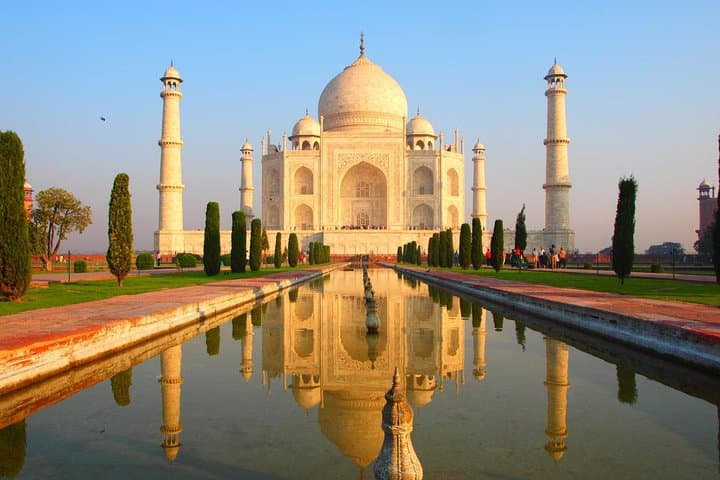
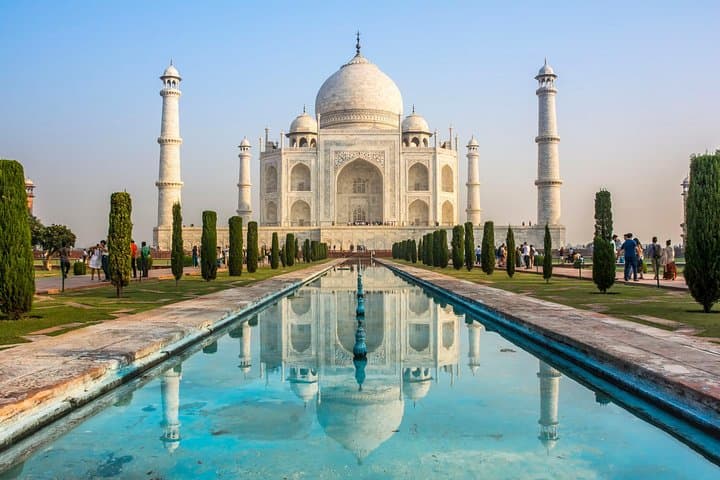
You step from the car before dawn, the marble of the Taj Mahal holding the first gold of morning like a mirror. A hush hangs across the reflecting pool; the river beyond moves in a low, determined voice. The guide points out how the changing light sculpts every curve — a quiet, precise reveal that rewards the early hour.
You step from the car before dawn, the marble of the Taj Mahal holding the first gold of morning like a mirror. A hush hangs across the reflecting pool; the river beyond moves in a low, determined voice. The guide points out how the changing light sculpts every curve — a quiet, precise reveal that rewards the early hour.
Built in the 17th century by Shah Jahan, the Taj Mahal crowns a Mughal story of empire, art and grief. It sits on the alluvial floodplain of the Yamuna — a flat, fertile landscape that allowed craftsmen to lay an impossibly level platform of red sandstone and marble. Nearby Agra Fort shows the same imperial palette: red sandstone ramparts punctuated by delicate marble pavilions.
Culture here follows measured rhythms: morning prayers, markets filling with petha sweets and embroidered textiles, and guides whose narratives thread architecture, dynasty, and craft. Mehtab Bagh across the river offers a quieter view if you want to trade the crowd for birdsong.
Practical note: expect a very early pickup (around 2:30am from Delhi), a three-hour drive each way, and roughly three hours in Agra including the sunrise visit, breakfast, and Agra Fort. Dress respectfully — smart casual is the suggested code — and bring sun protection and comfortable shoes for walking on stone and uneven paths. Security checks are strict; leave large bags and drone equipment at your hotel. Hydrate before you arrive and aim to book a private guide to skip confusion and get historical context that lifts the monuments off the page.