THE ADVENTURE COLLECTIVE® · Independent discovery and booking for outdoor travel

A tiny Byzantine chapel in Arcadia has trees growing straight through its walls and roof and a spring running beneath its foundations. Visit via a full-day private tour from Athens that includes a photo stop at the Corinth Canal and 1–3 hours to explore the miraculous site up close.
A tiny Byzantine chapel in Arcadia has trees growing straight through its walls and roof and a spring running beneath its foundations. Visit via a full-day private tour from Athens that includes a photo stop at the Corinth Canal and 1–3 hours to explore the miraculous site up close.
You arrive on a narrow, sun-dappled lane and the hills press close, green and honest. The chapel appears like a misplaced shard of human craft, its low stone walls pierced by trunks that thrust through roof and floor — trees as tall as 30 meters rising from the very fabric of the building. Water murmurs beneath the foundation, threading the site like a secret.
Verified experiences and guided adventures in the surrounding area.
Operated by alex elpiadis · Dimitsana, Peloponnese
You arrive on a narrow, sun-dappled lane and the hills press close, green and honest. The chapel appears like a misplaced shard of human craft, its low stone walls pierced by trunks that thrust through roof and floor — trees as tall as 30 meters rising from the very fabric of the building. Water murmurs beneath the foundation, threading the site like a secret.
The place is Byzantine in origin and intertwined with local legend: Saint Theodora is said to have prayed that her body become a church, her hair the trees, and her blood the water. The result is a compact, 30-centimeter-thick walled chapel that feels both fragile and stubbornly permanent. Geologically, the Peloponnese landscape here is limestone and karst; shallow soils and fissures let deep roots wedge into stone and can draw springs close to the surface, which helps explain the persistent flow beneath the chapel.
Local culture treats the temple as sacred and communal — small tavernas cluster nearby, and an Orthodox etiquette informs how visitors move and photograph. Expect a short, mostly gentle walk around the site on uneven paths; some low elevation change (roughly 100–300 m of local rise depending on approach) through mixed oak and pine hills.
Practical notes: the tour route commonly stops at the Corinth Canal (photo stop) before a 1.5–2 hour drive into Arcadia; on-site time is typically 1–3 hours. Wear sturdy shoes for rocky paths, bring water and sun protection, and carry small change for the taverna or donations. Mornings are cooler and quieter; afternoons suit a long lunch. Respect the chapel interior and follow local guidance — this is both a cultural site and a living landscape.
easy.
7–9 hours.
Suitable for most fitness levels; involves short walks on uneven ground and minimal elevation change (approx. 100–300 m locally).
Most itineraries allot 1 to 3 hours at the chapel, enough time to walk around the exterior, enter modestly if allowed, and eat at the nearby taverna.
Access involves short uneven paths and low thresholds; visitors with significant mobility limits should contact the operator in advance to discuss pickup points and alternatives.
This tour typically includes private transport and guide services; any chapel donations or optional lunch at the taverna are paid on-site.
Photography is usually permitted but follow local rules and requests from caretakers—avoid flash and respect worshippers during services.
The chapel dates to the Byzantine period and is linked in local tradition to Saint Theodora, whose martyrdom and prayer are said to have transformed the site into its present, tree‑filled state.
The trees and spring form a fragile, interdependent system; stick to marked paths, avoid climbing on roots or walls, and minimize noise and litter to protect both cultural fabric and natural roots.
alex elpiadis operates guided outdoor trips and adventures with an emphasis on safety, stewardship, and memorable experiences.
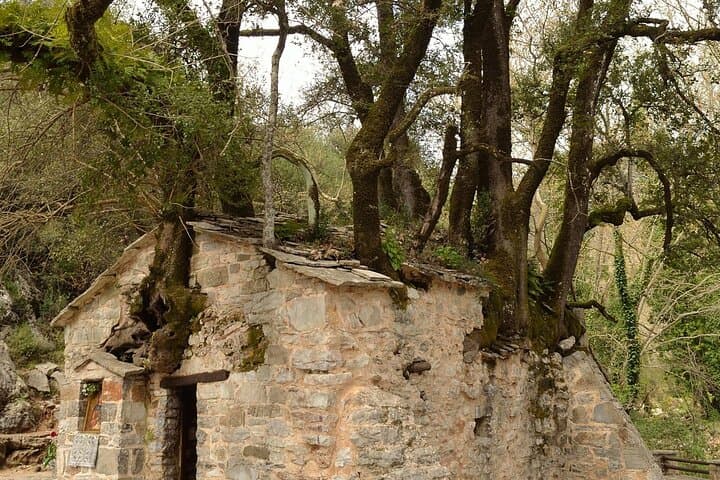
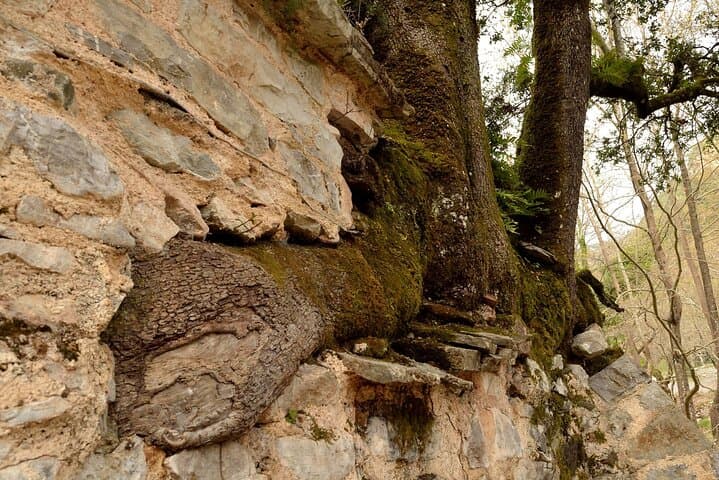
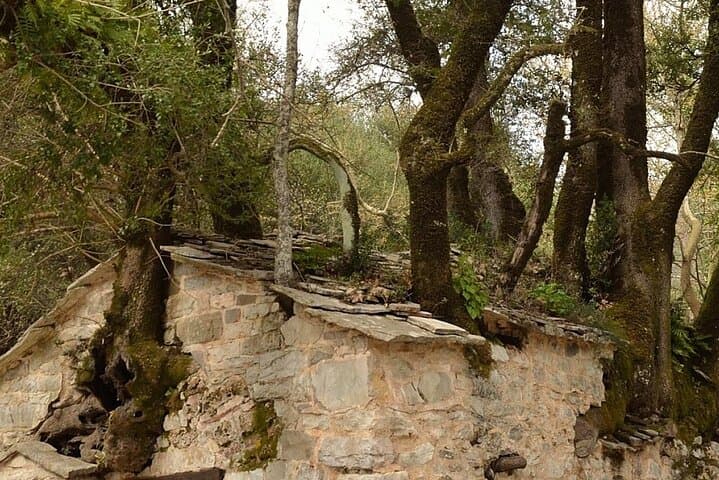
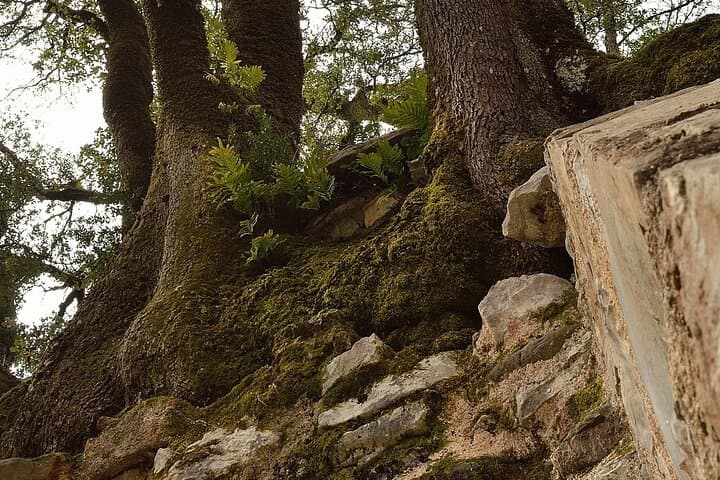
You arrive on a narrow, sun-dappled lane and the hills press close, green and honest. The chapel appears like a misplaced shard of human craft, its low stone walls pierced by trunks that thrust through roof and floor — trees as tall as 30 meters rising from the very fabric of the building. Water murmurs beneath the foundation, threading the site like a secret.
You arrive on a narrow, sun-dappled lane and the hills press close, green and honest. The chapel appears like a misplaced shard of human craft, its low stone walls pierced by trunks that thrust through roof and floor — trees as tall as 30 meters rising from the very fabric of the building. Water murmurs beneath the foundation, threading the site like a secret.
The place is Byzantine in origin and intertwined with local legend: Saint Theodora is said to have prayed that her body become a church, her hair the trees, and her blood the water. The result is a compact, 30-centimeter-thick walled chapel that feels both fragile and stubbornly permanent. Geologically, the Peloponnese landscape here is limestone and karst; shallow soils and fissures let deep roots wedge into stone and can draw springs close to the surface, which helps explain the persistent flow beneath the chapel.
Local culture treats the temple as sacred and communal — small tavernas cluster nearby, and an Orthodox etiquette informs how visitors move and photograph. Expect a short, mostly gentle walk around the site on uneven paths; some low elevation change (roughly 100–300 m of local rise depending on approach) through mixed oak and pine hills.
Practical notes: the tour route commonly stops at the Corinth Canal (photo stop) before a 1.5–2 hour drive into Arcadia; on-site time is typically 1–3 hours. Wear sturdy shoes for rocky paths, bring water and sun protection, and carry small change for the taverna or donations. Mornings are cooler and quieter; afternoons suit a long lunch. Respect the chapel interior and follow local guidance — this is both a cultural site and a living landscape.