THE ADVENTURE COLLECTIVE® · Independent discovery and booking for outdoor travel

Pair high-speed ATV riding across the Agafay stone desert with a relaxed camel ride and a Berber tea break. This three-hour combo gives a quick but varied taste of Morocco’s desert landscape and local hospitality.
Pair high-speed ATV riding across the Agafay stone desert with a relaxed camel ride and a Berber tea break. This three-hour combo gives a quick but varied taste of Morocco’s desert landscape and local hospitality.
The afternoon light thins to gold as a line of ATVs cuts across the Agafay stone desert, dust rising like a short-lived memory. You feel the engine’s vibration through the handlebars, then trade speed for the slow sway of a camel as the group eases toward a low ridge where the Atlas Mountains silhouette the horizon.
Verified experiences and guided adventures in the surrounding area.
Operated by marrakech travel tours · Marrakech, Marrakesh-Safi
The afternoon light thins to gold as a line of ATVs cuts across the Agafay stone desert, dust rising like a short-lived memory. You feel the engine’s vibration through the handlebars, then trade speed for the slow sway of a camel as the group eases toward a low ridge where the Atlas Mountains silhouette the horizon.
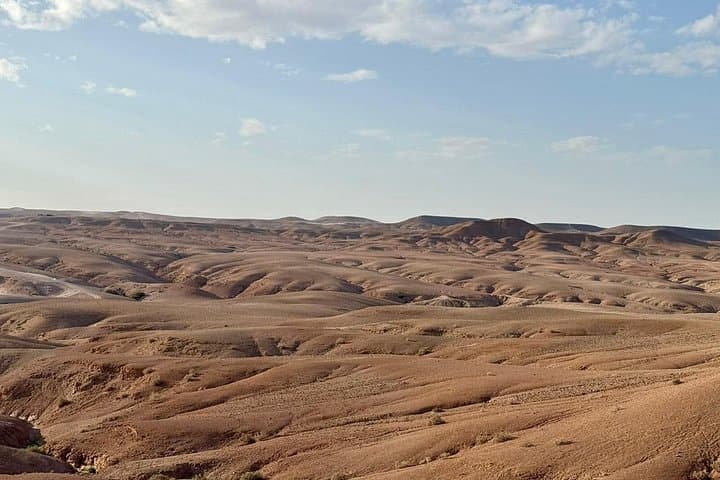
Geology here is raw: a rocky, arid plain of broken limestone and gravel carved by millennia of erosion rather than sand dunes—often called the Stone Desert. Human history is present in small gestures: the Berber families who have long grazed goats at the margins and the ritual of mint tea that punctuates hospitality across Morocco.
Culturally, the experience combines modern recreation with local tradition: guided quad routes across open plateaus, short visits to village outskirts, then a camel ride and a tea break in a simple Berber camp. Guides typically share basic safety instruction and context on local life and landscape.
Practical guidance: wear closed-toe shoes and long pants to guard against grit; bring at least 1–2 liters of water and sunscreen—the high desert sun is unrelenting. Opt for a late-afternoon slot to avoid midday heat and to get a sunset camel ride. Expect uneven, rocky terrain rather than soft dunes; quads handle it but muscles and wrists will feel it after an hour. Photography stops are frequent, but keep a hand free for balance on moving vehicles.
This is a short, accessible outing—three hours of contrast between speed and slow pace that gives a compact, sensory introduction to Morocco’s desert edge.
moderate.
3 hours.
Light–moderate fitness: able to handle short bursts of standing on footrests and bracing on uneven terrain; camel ride requires basic balance.
No — guides provide a brief safety orientation and a practice area; the route is suitable for first-time riders with basic coordination.
Policies vary; many operators provide child seats or require minimum age—check booking questions and advise providers of children when reserving.
Most bookings include hotel pick-up and drop-off from Marrakech; confirm your pickup point when you book.
Camel rides in this combined tour are typically short (15–30 minutes) focused on sunset views and photos rather than long treks.
The Agafay area is not Sahara sand but a stony plain historically used by local Berber communities for grazing and seasonal movement; tea hospitality remains central to social exchange.
Operators are encouraged to limit off-route riding and pack out waste; visitors should respect camel welfare and choose providers that follow humane handling and water-rest practices.
marrakech travel tours operates guided outdoor trips and adventures with an emphasis on safety, stewardship, and memorable experiences.
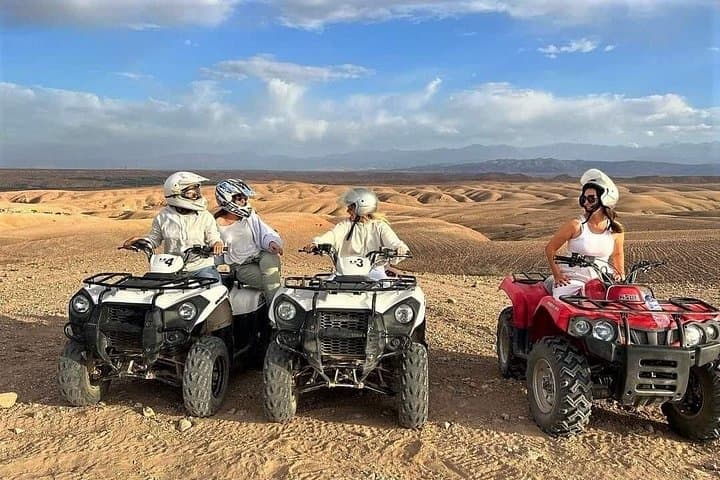

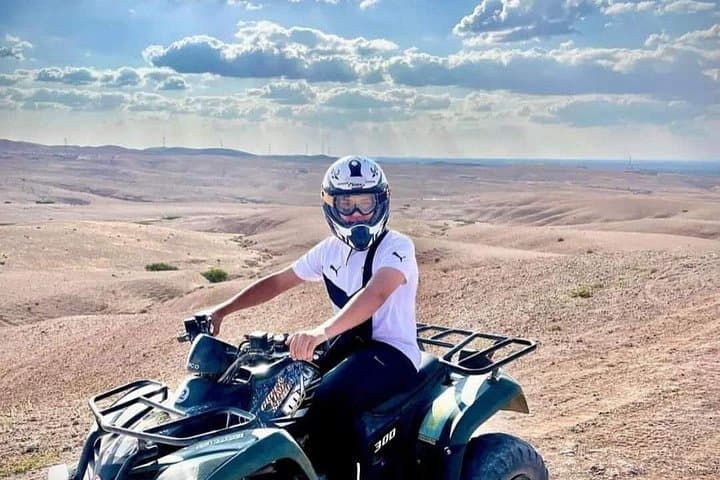
The afternoon light thins to gold as a line of ATVs cuts across the Agafay stone desert, dust rising like a short-lived memory. You feel the engine’s vibration through the handlebars, then trade speed for the slow sway of a camel as the group eases toward a low ridge where the Atlas Mountains silhouette the horizon.
The afternoon light thins to gold as a line of ATVs cuts across the Agafay stone desert, dust rising like a short-lived memory. You feel the engine’s vibration through the handlebars, then trade speed for the slow sway of a camel as the group eases toward a low ridge where the Atlas Mountains silhouette the horizon.
Geology here is raw: a rocky, arid plain of broken limestone and gravel carved by millennia of erosion rather than sand dunes—often called the Stone Desert. Human history is present in small gestures: the Berber families who have long grazed goats at the margins and the ritual of mint tea that punctuates hospitality across Morocco.
Culturally, the experience combines modern recreation with local tradition: guided quad routes across open plateaus, short visits to village outskirts, then a camel ride and a tea break in a simple Berber camp. Guides typically share basic safety instruction and context on local life and landscape.
Practical guidance: wear closed-toe shoes and long pants to guard against grit; bring at least 1–2 liters of water and sunscreen—the high desert sun is unrelenting. Opt for a late-afternoon slot to avoid midday heat and to get a sunset camel ride. Expect uneven, rocky terrain rather than soft dunes; quads handle it but muscles and wrists will feel it after an hour. Photography stops are frequent, but keep a hand free for balance on moving vehicles.
This is a short, accessible outing—three hours of contrast between speed and slow pace that gives a compact, sensory introduction to Morocco’s desert edge.