THE ADVENTURE COLLECTIVE® · Independent discovery and booking for outdoor travel

Trade Marrakech’s bustle for a five-hour evening in the Agafay: an open-air tagine dinner timed to sunset, live music, fire performances and a visit with a Berber women’s cooperative. Expect rocky desert views, seasonal local food, and clear night skies.
Trade Marrakech’s bustle for a five-hour evening in the Agafay: an open-air tagine dinner timed to sunset, live music, fire performances and a visit with a Berber women’s cooperative. Expect rocky desert views, seasonal local food, and clear night skies.
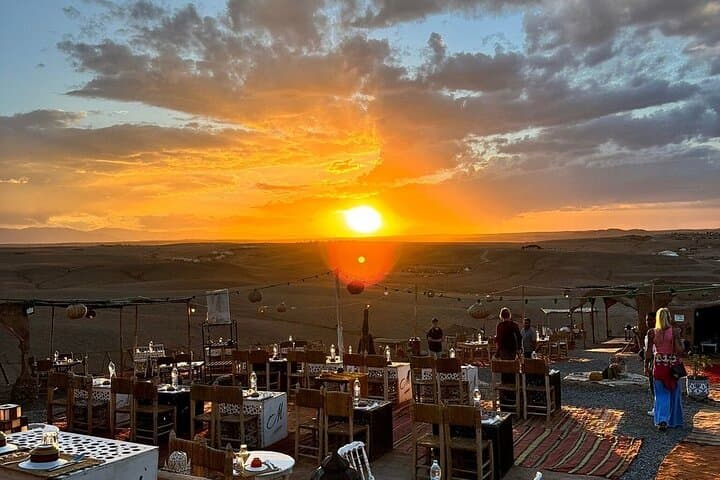
The van threads out of Marrakech as the light softens and the Atlas foothills shift from hard silhouette to muted shadow. Arrive in the Agafay’s stony expanse an hour later and the landscape seems to breathe—you stand on a rocky plain where wind-carved stone and scrub dare you to be still while the sun slides behind distant ridgelines.
Verified experiences and guided adventures in the surrounding area.
Operated by Marrakesh Day Tour · Marrakech, Marrakesh-Safi
The van threads out of Marrakech as the light softens and the Atlas foothills shift from hard silhouette to muted shadow. Arrive in the Agafay’s stony expanse an hour later and the landscape seems to breathe—you stand on a rocky plain where wind-carved stone and scrub dare you to be still while the sun slides behind distant ridgelines.
Agafay is not Sahara sand but a pale, rolling reg; its surface is the result of ancient river sediments and erosion rather than dunes. Locally, Berber families have grazed goats here for generations and small cooperatives keep regional crafts and tea rituals alive. The evening program combines those cultural threads: a chef preparing seasonal tagine, a visit to a women’s cooperative, live music, and fire performers that animate the cooling air.
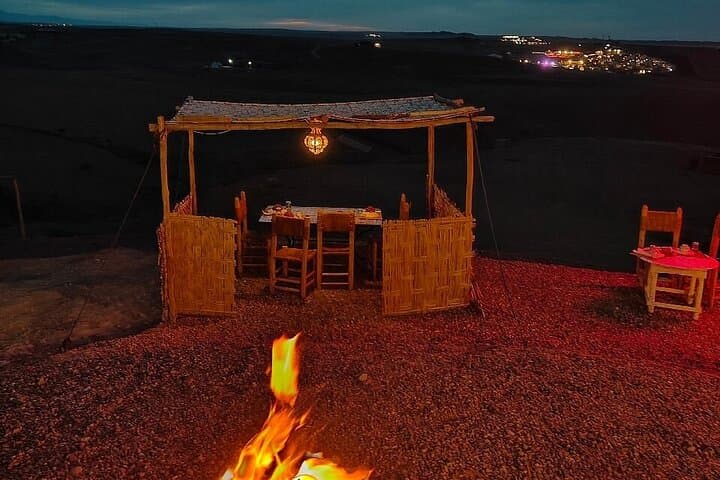
Practical side: the trip runs about five hours round-trip from Marrakech, starting roughly two hours before sunset and finishing after dark. Terrain at the dinner site is flat but uneven compact rock—good footwear matters; the camp is simple, with low seating and open fires, so dress in layers. Food commonly includes salads, soup, chicken tagine, couscous, and vegetarian options with mint tea and pastries.
Timing is everything—arrive with camera, a small headlamp, and a lightweight jacket. Respect local customs during performances and keep waste packed out: this arid landscape heals slowly. For first-time visitors it’s an accessible, sensory way to experience Morocco’s high plain under a wide, star-rich sky.
easy.
4–5 hours.
Suitable for most fitness levels; requires brief walks on flat, rocky terrain and the ability to board a shuttle vehicle
Round-trip transportation from Marrakech is included; departure is typically from central hotel pickup points or an agreed meeting place.
Yes—operators offer vegetarian options but you should note dietary requirements at booking to ensure availability.
Facilities are basic and may be portable; plan accordingly and ask operator for specifics if accessibility is a concern.
Yes—the light pollution is low compared to Marrakech, so clear nights offer excellent views of stars and constellations.
Agafay is a rocky plateau formed by ancient fluvial deposits; unlike the Saharan dunes, its terrain supported pastoral and seasonal grazing for local Berber communities.
This fragile reg requires low-impact tourism—avoid campfires outside designated areas, pack out waste, and support local cooperatives to keep economic benefits local.
Marrakesh Day Tour operates guided outdoor trips and adventures with an emphasis on safety, stewardship, and memorable experiences.


The van threads out of Marrakech as the light softens and the Atlas foothills shift from hard silhouette to muted shadow. Arrive in the Agafay’s stony expanse an hour later and the landscape seems to breathe—you stand on a rocky plain where wind-carved stone and scrub dare you to be still while the sun slides behind distant ridgelines.
The van threads out of Marrakech as the light softens and the Atlas foothills shift from hard silhouette to muted shadow. Arrive in the Agafay’s stony expanse an hour later and the landscape seems to breathe—you stand on a rocky plain where wind-carved stone and scrub dare you to be still while the sun slides behind distant ridgelines.
Agafay is not Sahara sand but a pale, rolling reg; its surface is the result of ancient river sediments and erosion rather than dunes. Locally, Berber families have grazed goats here for generations and small cooperatives keep regional crafts and tea rituals alive. The evening program combines those cultural threads: a chef preparing seasonal tagine, a visit to a women’s cooperative, live music, and fire performers that animate the cooling air.
Practical side: the trip runs about five hours round-trip from Marrakech, starting roughly two hours before sunset and finishing after dark. Terrain at the dinner site is flat but uneven compact rock—good footwear matters; the camp is simple, with low seating and open fires, so dress in layers. Food commonly includes salads, soup, chicken tagine, couscous, and vegetarian options with mint tea and pastries.
Timing is everything—arrive with camera, a small headlamp, and a lightweight jacket. Respect local customs during performances and keep waste packed out: this arid landscape heals slowly. For first-time visitors it’s an accessible, sensory way to experience Morocco’s high plain under a wide, star-rich sky.