THE ADVENTURE COLLECTIVE® · Independent discovery and booking for outdoor travel

Leave Marrakech late afternoon for the Agafay Stone Desert: a 5‑hour private tour that pairs a short camel ride with a traditional dinner and sunset views of the High Atlas. It’s an accessible, sensory evening of music, local food and open-sky panoramas.
Leave Marrakech late afternoon for the Agafay Stone Desert: a 5‑hour private tour that pairs a short camel ride with a traditional dinner and sunset views of the High Atlas. It’s an accessible, sensory evening of music, local food and open-sky panoramas.
The minivan slips out of Marrakech as the city’s heat softens and the road unfolds toward a stony horizon. In under an hour you trade ochre riads and traffic for a wide, moonlit plain where the wind lays claim to the gravel—this is the Agafay Stone Desert, its low hummocks and scattered dunes cutting a clean silhouette against the High Atlas peaks.
Verified experiences and guided adventures in the surrounding area.
Operated by Trekking in Morocco · Marrakech, Marrakech-Safi
The minivan slips out of Marrakech as the city’s heat softens and the road unfolds toward a stony horizon. In under an hour you trade ochre riads and traffic for a wide, moonlit plain where the wind lays claim to the gravel—this is the Agafay Stone Desert, its low hummocks and scattered dunes cutting a clean silhouette against the High Atlas peaks.
Geology here is blunt and honest: wind-sculpted metamorphic rock and gravel left when ancient river channels dried, not the Sahara’s sweeping sand seas. Local Berber communities have long grazed these margins and—nearby—cooperatives weave and prepare goods that sustain village life. The trip often pauses by Amezmiz Dam and, as the sun drops, the desert puts on filmic light backlit by the High Atlas.
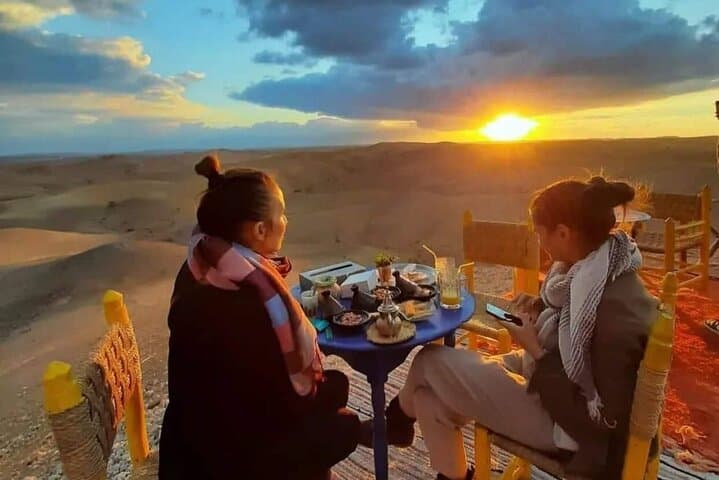
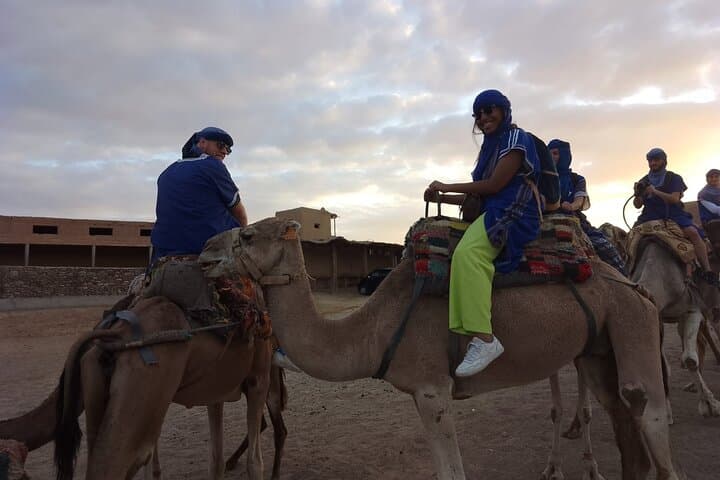
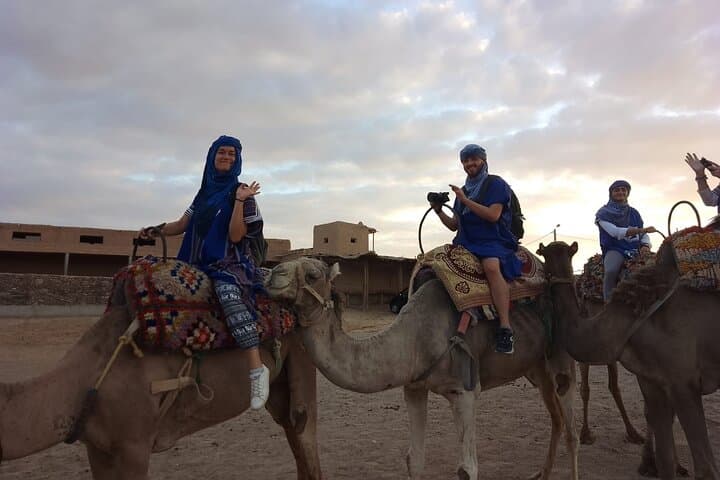
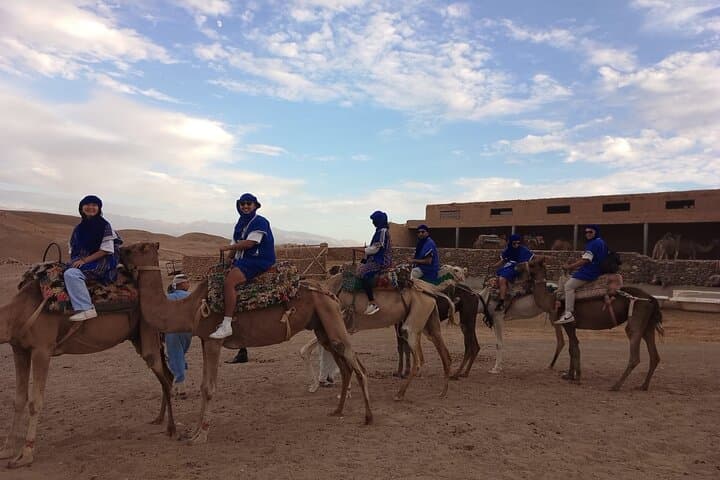
On arrival you can take a short camel ride across the small dunes, then sit at a low table beneath simple canopies for soup, salad, bread and a choice of tajine or couscous, followed by fruit and mint tea. Musicians play traditional rhythms; evenings are relaxed and social. The terrain is uneven—stone and compacted sand—and the experience is sensory: wind that rakes the plain, a sky that deepens from orange to a vault of stars.
Practicalities: the outing runs about five hours with pickup around 17:30, a roughly 30–45 minute drive each way (≈40 km). Wear sturdy shoes for rocky ground, bring layers for rapid temperature drops, and carry water and sunscreen. Photography is excellent at golden hour; be respectful of performers and local customs when taking portraits. The outing is low-impact but support local providers with fair tips and mindful behavior to keep this fragile environment and its communities thriving.
easy.
5 hours.
Suitable for most fitness levels; involves short, gentle walks and an optional brief camel ride, no sustained exertion required.
The transfer is typically 30–45 minutes depending on traffic and your riad’s location—roughly 30–40 km one way.
A short camel ride is offered as part of the experience, though some operators list it as optional or bookable on-site—confirm when you book.
Most operators can accommodate dietary needs if notified at booking; specify vegetarian, allergies or other restrictions when you reserve.
The tour is generally family-friendly; however camel boarding and uneven ground can be challenging—check accessibility options and request assistance if needed.
The Agafay area is a stony plateau formed as rivers retreated and the Atlas Mountains eroded; local Berber communities have long used these margins for grazing and small-scale farming.
Tour operators work with local teams to minimize impact—stick to established tracks, avoid littering, and support local cooperatives to keep economic benefits in the community.
Trekking in Morocco operates guided outdoor trips and adventures with an emphasis on safety, stewardship, and memorable experiences.
The minivan slips out of Marrakech as the city’s heat softens and the road unfolds toward a stony horizon. In under an hour you trade ochre riads and traffic for a wide, moonlit plain where the wind lays claim to the gravel—this is the Agafay Stone Desert, its low hummocks and scattered dunes cutting a clean silhouette against the High Atlas peaks.
The minivan slips out of Marrakech as the city’s heat softens and the road unfolds toward a stony horizon. In under an hour you trade ochre riads and traffic for a wide, moonlit plain where the wind lays claim to the gravel—this is the Agafay Stone Desert, its low hummocks and scattered dunes cutting a clean silhouette against the High Atlas peaks.
Geology here is blunt and honest: wind-sculpted metamorphic rock and gravel left when ancient river channels dried, not the Sahara’s sweeping sand seas. Local Berber communities have long grazed these margins and—nearby—cooperatives weave and prepare goods that sustain village life. The trip often pauses by Amezmiz Dam and, as the sun drops, the desert puts on filmic light backlit by the High Atlas.
On arrival you can take a short camel ride across the small dunes, then sit at a low table beneath simple canopies for soup, salad, bread and a choice of tajine or couscous, followed by fruit and mint tea. Musicians play traditional rhythms; evenings are relaxed and social. The terrain is uneven—stone and compacted sand—and the experience is sensory: wind that rakes the plain, a sky that deepens from orange to a vault of stars.
Practicalities: the outing runs about five hours with pickup around 17:30, a roughly 30–45 minute drive each way (≈40 km). Wear sturdy shoes for rocky ground, bring layers for rapid temperature drops, and carry water and sunscreen. Photography is excellent at golden hour; be respectful of performers and local customs when taking portraits. The outing is low-impact but support local providers with fair tips and mindful behavior to keep this fragile environment and its communities thriving.