THE ADVENTURE COLLECTIVE® · Independent discovery and booking for outdoor travel

Just a short drive from Marrakech, the Agafay Desert offers a sunset-focused evening of camel or quad rides followed by a traditional Moroccan dinner under the stars. It’s an accessible, atmospheric escape that pairs easy logistics with authentic desert hospitality.
Just a short drive from Marrakech, the Agafay Desert offers a sunset-focused evening of camel or quad rides followed by a traditional Moroccan dinner under the stars. It’s an accessible, atmospheric escape that pairs easy logistics with authentic desert hospitality.
The sun drops behind a band of low, stone ridges and the Agafay plains turn from ochre to copper. Travelers step out of an air-conditioned shuttle into a dry wind that smells faintly of thyme and dust; ahead, low mesas and scattered boulders frame a horizon used more for reflection than travel. Choice is immediate: a slow, rhythmic camel walk that sets a steady pace for sunset photography, or the sharper dash of a quad across stony tracks that throws up rooster tails of dust.
Verified experiences and guided adventures in the surrounding area.
Operated by Tourist and Staff Transports · Marrakech, Marrakech-Safi
The sun drops behind a band of low, stone ridges and the Agafay plains turn from ochre to copper. Travelers step out of an air-conditioned shuttle into a dry wind that smells faintly of thyme and dust; ahead, low mesas and scattered boulders frame a horizon used more for reflection than travel. Choice is immediate: a slow, rhythmic camel walk that sets a steady pace for sunset photography, or the sharper dash of a quad across stony tracks that throws up rooster tails of dust.
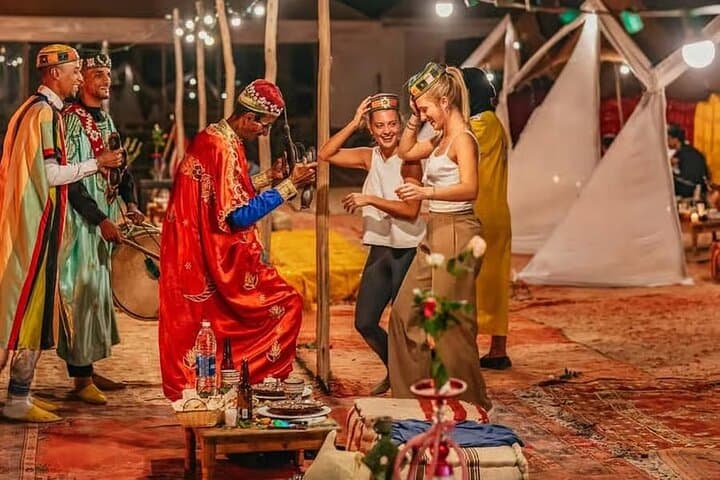
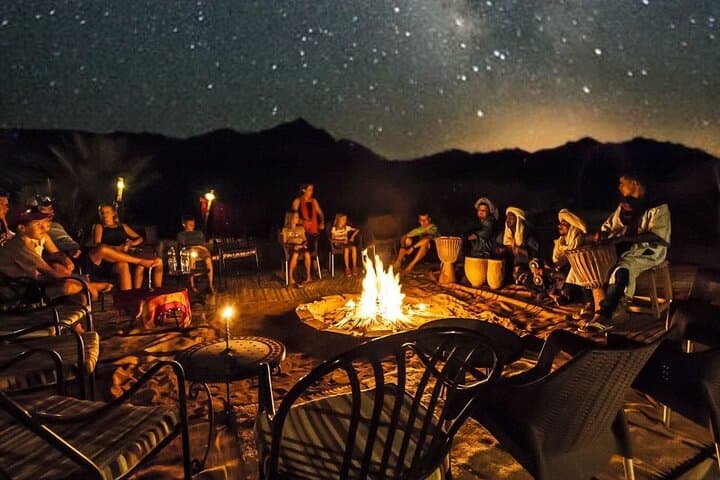
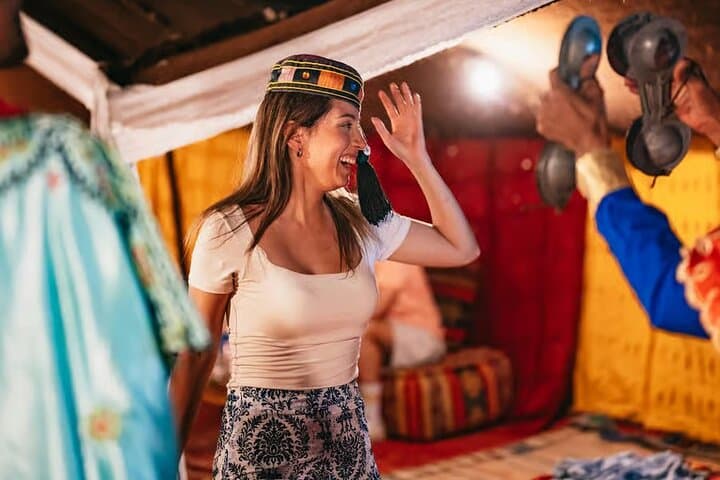
Agafay is not the Sahara but a rocky, late-Pleistocene plain formed by river and volcanic action—a working landscape historically grazed by Berber communities and today dotted with small camps and argan cooperatives. Evenings here blend modern hospitality with traditional elements: mint tea served upon arrival, live Gnawa or Berber music, and a family-style tagine cooked over coals under an open sky.
Practicalities are straightforward. Transfers from Marrakech take about 40–50 minutes; the full experience runs roughly eight hours door-to-door. Options suit a range of travelers—families, couples, and small groups—and staff provide basic safety briefings for quads and camels. Wear closed-toe shoes, bring sun protection and a light layer for cooling desert nights. Hydrate on the drive and leave space for the later shared dinner—meals often include vegetarian and meat tagines, salads, and local sweets.
The ride ends with the return trip to Marrakech around 9:30 pm, carrying the night's warm light and the quieter knowledge of how close the desert sits to the city.
easy.
8 hours (round trip, approx.).
Suitable for most fitness levels; quad riding needs basic balance and ability to mount a camel for short periods.
Yes—an air-conditioned vehicle transfers guests from central Marrakech to the Agafay site and returns them to their pickup point after the evening.
Guests choose their preferred option during booking or upon arrival; operators typically accommodate both but confirm availability ahead of time.
Traditional Moroccan dinners usually include vegetarian-friendly tagines and salads; note any dietary restrictions when booking to ensure accommodation.
Yes—brief safety instruction and helmets are provided; quads are operated on controlled tracks suited to a range of skill levels.
Agafay’s stony plains were formed by ancient river and volcanic activity and have long supported local nomadic and semi-nomadic grazing traditions.
Water is scarce and vegetation fragile—operators typically limit impact by using established camps and supporting local cooperatives; visitors should avoid littering and conserve water.
Tourist and Staff Transports operates guided outdoor trips and adventures with an emphasis on safety, stewardship, and memorable experiences.
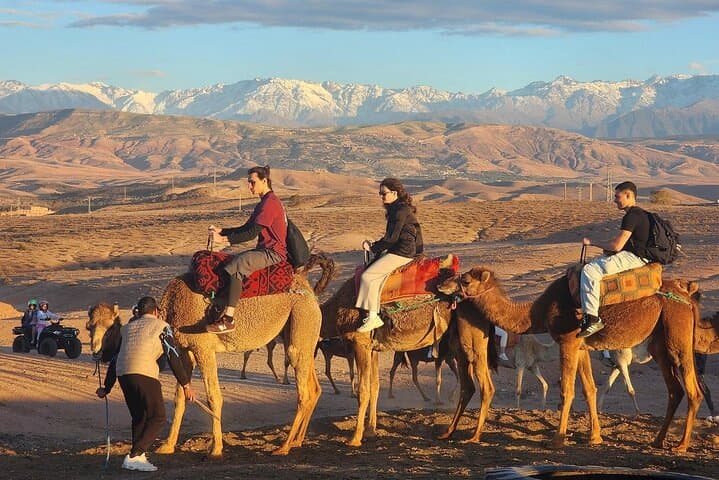
The sun drops behind a band of low, stone ridges and the Agafay plains turn from ochre to copper. Travelers step out of an air-conditioned shuttle into a dry wind that smells faintly of thyme and dust; ahead, low mesas and scattered boulders frame a horizon used more for reflection than travel. Choice is immediate: a slow, rhythmic camel walk that sets a steady pace for sunset photography, or the sharper dash of a quad across stony tracks that throws up rooster tails of dust.
The sun drops behind a band of low, stone ridges and the Agafay plains turn from ochre to copper. Travelers step out of an air-conditioned shuttle into a dry wind that smells faintly of thyme and dust; ahead, low mesas and scattered boulders frame a horizon used more for reflection than travel. Choice is immediate: a slow, rhythmic camel walk that sets a steady pace for sunset photography, or the sharper dash of a quad across stony tracks that throws up rooster tails of dust.
Agafay is not the Sahara but a rocky, late-Pleistocene plain formed by river and volcanic action—a working landscape historically grazed by Berber communities and today dotted with small camps and argan cooperatives. Evenings here blend modern hospitality with traditional elements: mint tea served upon arrival, live Gnawa or Berber music, and a family-style tagine cooked over coals under an open sky.
Practicalities are straightforward. Transfers from Marrakech take about 40–50 minutes; the full experience runs roughly eight hours door-to-door. Options suit a range of travelers—families, couples, and small groups—and staff provide basic safety briefings for quads and camels. Wear closed-toe shoes, bring sun protection and a light layer for cooling desert nights. Hydrate on the drive and leave space for the later shared dinner—meals often include vegetarian and meat tagines, salads, and local sweets.
The ride ends with the return trip to Marrakech around 9:30 pm, carrying the night's warm light and the quieter knowledge of how close the desert sits to the city.