THE ADVENTURE COLLECTIVE® · Independent discovery and booking for outdoor travel

Trade the bustle of Marrakech for a short drive to the Agafay Desert, where a sunset camel ride leads to a communal Moroccan dinner, live Berber music and a dramatic fire show. Practical and sensory, this evening is best timed for golden hour and layered clothing.
Trade the bustle of Marrakech for a short drive to the Agafay Desert, where a sunset camel ride leads to a communal Moroccan dinner, live Berber music and a dramatic fire show. Practical and sensory, this evening is best timed for golden hour and layered clothing.
The sun is a low, copper coin as the bus leaves Marrakech and the cultivated fields thin into stony scrub; the Agafay Desert spreads out in short, rolling plains and scattered granite outcrops. Riders hoist themselves onto calm dromedaries for a 15–20 minute trek across pale, pebbled ground while the horizon ignites—light leans into every ridge and the wind seems to push the caravan gently forward.
Verified experiences and guided adventures in the surrounding area.
Operated by Ressa Tours · Marrakech, Marrakech-Safi
The sun is a low, copper coin as the bus leaves Marrakech and the cultivated fields thin into stony scrub; the Agafay Desert spreads out in short, rolling plains and scattered granite outcrops. Riders hoist themselves onto calm dromedaries for a 15–20 minute trek across pale, pebbled ground while the horizon ignites—light leans into every ridge and the wind seems to push the caravan gently forward.
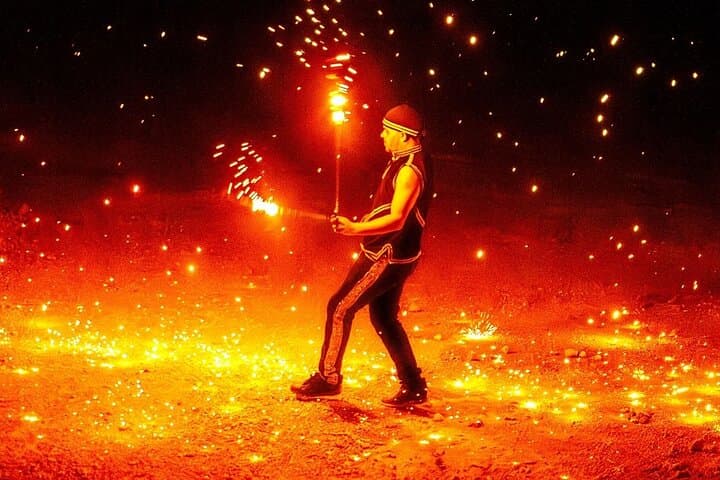
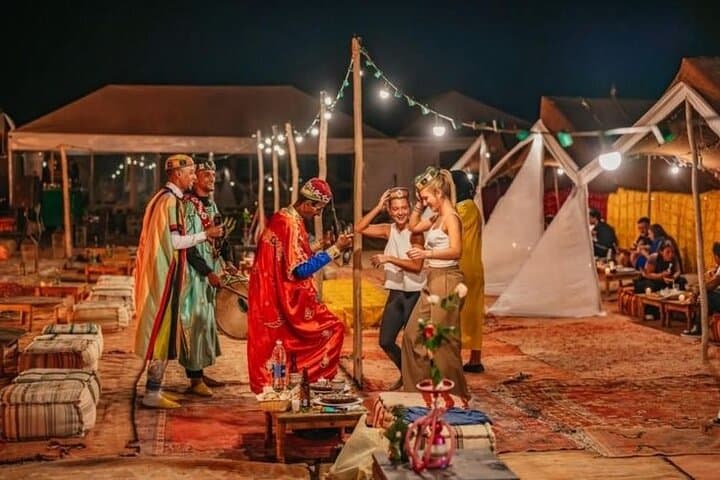
This non-sandy ‘desert of stones’ sits on ancient alluvial terraces carved by rivers and streams long diverted by the High Atlas. The area has long been a crossroads for Berber villages; nearby argan houses hint at traditional livelihoods that persist alongside growing tourism. Music and dance at the desert camp are modern ceremonies built on those local traditions: rhythm, call-and-response singing, and often a theatrical fire performance after dark.
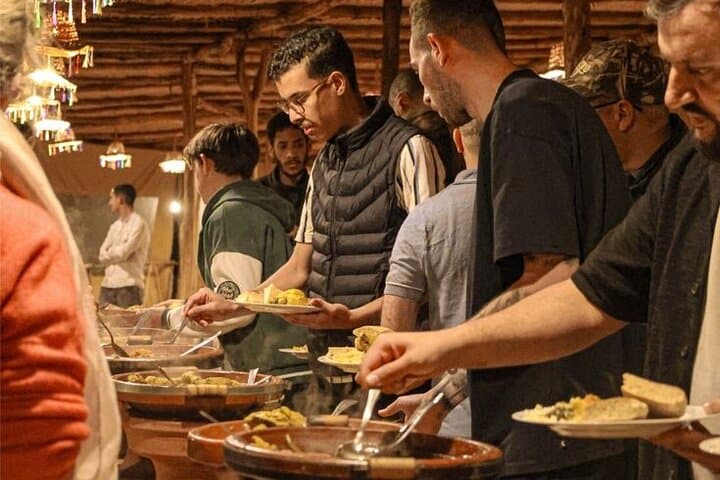
Expect a practical, sensory evening rather than an expedition: short drives (about 40 minutes), a brief camel ride, and a communal sit-down dinner of tagine, couscous and salads served in a sheltered camp. Photography is excellent at golden hour; the air cools quickly after sunset, and the terrain is largely level but rocky underfoot.
Plan to bring layered clothing, closed-toe shoes, and a headlamp for the return. If you have mobility concerns, ask about pickup and accessible areas—many operators provide wheelchair-accessible transport and seating. The result is a compact, culturally rich outing that pairs a desert horizon with a generous Moroccan feast—and a clear window into Berber-centered life on the outskirts of Marrakech.
easy.
6 hours.
Suitable for most fitness levels; requires basic mobility to mount a camel and walk short uneven distances
The camel ride typically lasts 15–20 minutes—short and suitable for first-time riders.
Yes, most operators include hotel pickup and drop-off in Marrakech and nearby accommodations—confirm your pickup point at booking.
Yes, common dishes like vegetable couscous and vegetarian tagine are usually offered if requested in advance.
Many tours provide wheelchair-accessible transport and level dining areas, but camel mounting may not be suitable—ask the operator for specific accommodations.
The Agafay is a stony plain shaped by ancient river systems and long-used by Berber communities; its modern role blends traditional livelihood sites with nomadic-inspired tourism camps.
Operators increasingly limit camp footprints and promote reusable serviceware to reduce waste; visitors should avoid disturbing local flora and leave no trace of evening gatherings.
Ressa Tours operates guided outdoor trips and adventures with an emphasis on safety, stewardship, and memorable experiences.
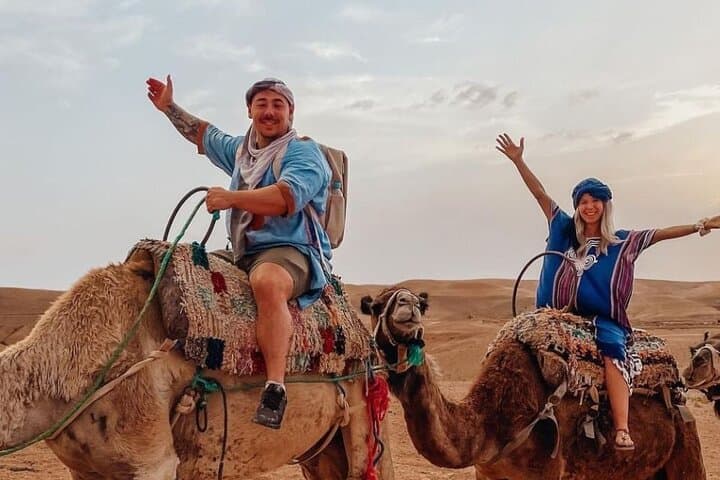
The sun is a low, copper coin as the bus leaves Marrakech and the cultivated fields thin into stony scrub; the Agafay Desert spreads out in short, rolling plains and scattered granite outcrops. Riders hoist themselves onto calm dromedaries for a 15–20 minute trek across pale, pebbled ground while the horizon ignites—light leans into every ridge and the wind seems to push the caravan gently forward.
The sun is a low, copper coin as the bus leaves Marrakech and the cultivated fields thin into stony scrub; the Agafay Desert spreads out in short, rolling plains and scattered granite outcrops. Riders hoist themselves onto calm dromedaries for a 15–20 minute trek across pale, pebbled ground while the horizon ignites—light leans into every ridge and the wind seems to push the caravan gently forward.
This non-sandy ‘desert of stones’ sits on ancient alluvial terraces carved by rivers and streams long diverted by the High Atlas. The area has long been a crossroads for Berber villages; nearby argan houses hint at traditional livelihoods that persist alongside growing tourism. Music and dance at the desert camp are modern ceremonies built on those local traditions: rhythm, call-and-response singing, and often a theatrical fire performance after dark.
Expect a practical, sensory evening rather than an expedition: short drives (about 40 minutes), a brief camel ride, and a communal sit-down dinner of tagine, couscous and salads served in a sheltered camp. Photography is excellent at golden hour; the air cools quickly after sunset, and the terrain is largely level but rocky underfoot.
Plan to bring layered clothing, closed-toe shoes, and a headlamp for the return. If you have mobility concerns, ask about pickup and accessible areas—many operators provide wheelchair-accessible transport and seating. The result is a compact, culturally rich outing that pairs a desert horizon with a generous Moroccan feast—and a clear window into Berber-centered life on the outskirts of Marrakech.