THE ADVENTURE COLLECTIVE® · Independent discovery and booking for outdoor travel

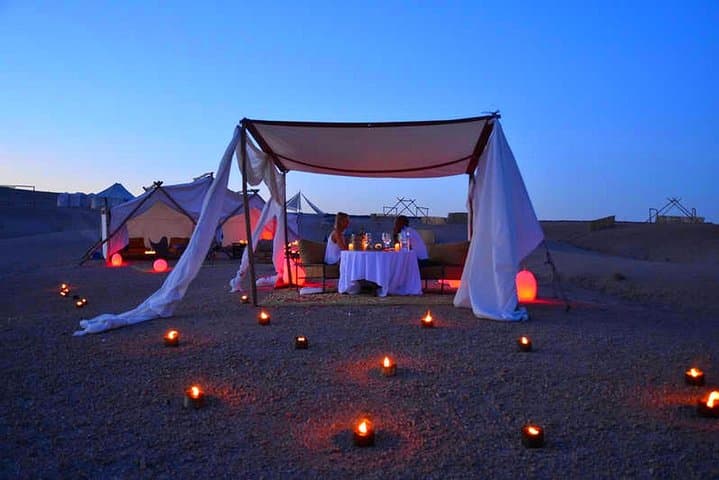
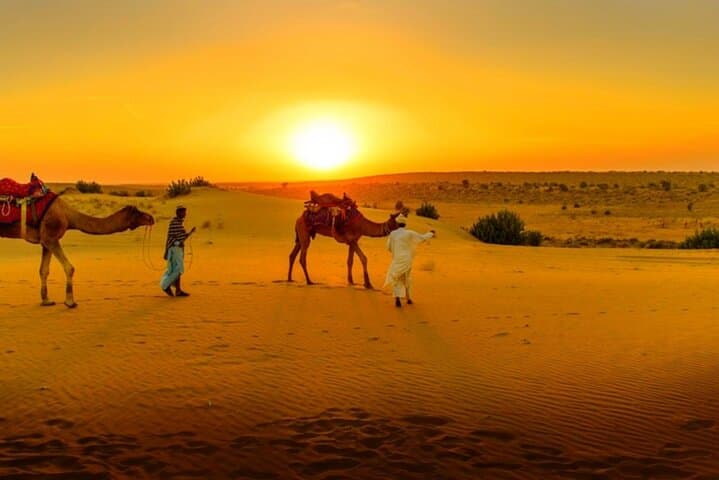
Watch sunset over the Agafay stone desert, ride a camel as the light softens, then settle in for a private three-course dinner under wide Saharan-adjacent skies. This short, easily accessible evening trip pairs dramatic views with traditional Moroccan hospitality.
Watch sunset over the Agafay stone desert, ride a camel as the light softens, then settle in for a private three-course dinner under wide Saharan-adjacent skies. This short, easily accessible evening trip pairs dramatic views with traditional Moroccan hospitality.
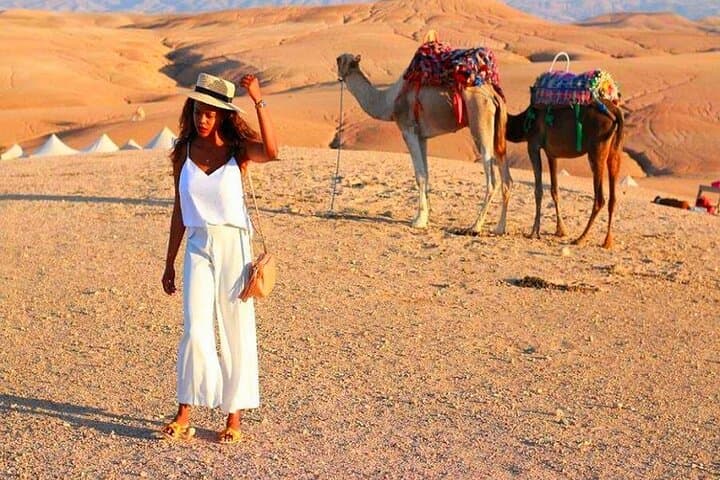
A low sun turns the Agafay plain to ochre and slate as your vehicle leaves Marrakech’s bustle behind. The stone desert stretches flat and honest—pebbled flats, scrubby tufts, and sculpted gullies—where the horizon takes on a long, patient line. Camels shift and sigh; the evening air cools and the first stars prick through.
Verified experiences and guided adventures in the surrounding area.
Operated by Targa Travel & Trekkinginmorocco · Marrakech, Marrakech-Safi
A low sun turns the Agafay plain to ochre and slate as your vehicle leaves Marrakech’s bustle behind. The stone desert stretches flat and honest—pebbled flats, scrubby tufts, and sculpted gullies—where the horizon takes on a long, patient line. Camels shift and sigh; the evening air cools and the first stars prick through.
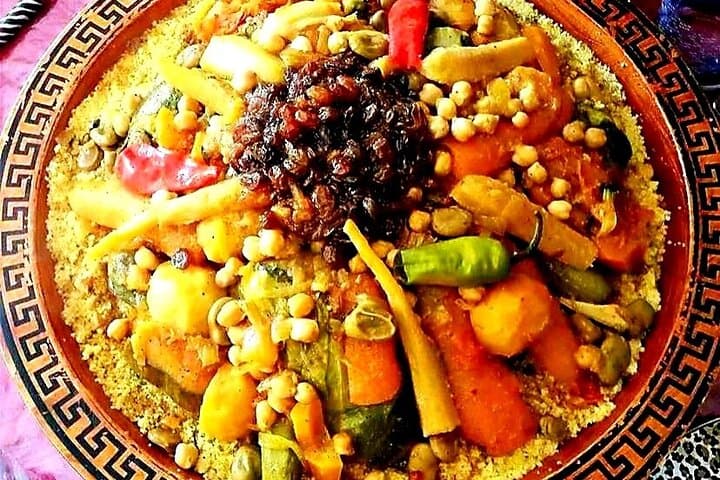
Geology here is not dune but stone: wind and water worn down from the High Atlas, leaving a moonscape of limestone and gravel. The area has been a transit zone between mountain and city for centuries; local hosts draw on Amazigh and Moroccan traditions to create the hospitality at camp—tagines, mint tea, and slow-cooked flavors under open sky.
Expect a short wildlife drive into the plains, a gentle 20–30 minute camel ride at sunset, and a private, three-course meal served outdoors as darkness settles. The experience emphasizes atmosphere: broad views, a quiet that feels deliberate, and the smell of wood smoke and spices.
Practicalities: pickup is generally from central Marrakech in an air-conditioned vehicle; plan for an autumn-to-spring chill after sunset and hot sun before it sets in summer. Wear closed-toe shoes for rocky ground, bring a headlamp for returning to vehicles, and keep a reusable water bottle—guides will often provide refreshments. Photography is best during the golden hour and again when the stars appear; polite tipping for staff and restraint around campfires help preserve the setting. The trip is light on fitness but rich in sensory detail—an accessible desert evening without the technical demands of long treks.
easy.
5–6 hours.
Suitable for most fitness levels; minimal walking and short, seated camel ride.
Yes—transport from and to Marrakech hotels is typically included by air‑conditioned vehicle; confirm pickup location when booking.
The camel ride is a short, gentle outing—usually 20–30 minutes—designed for sunset photos rather than long treks.
The dinner is traditional Moroccan cuisine; organizers can often accommodate common dietary needs if you notify them in advance.
Yes—children and infants are usually welcome; infant seats and stroller access are often available but check when booking.
The Agafay 'stone desert' formed from ancient river and mountain erosion at the foot of the Atlas; it has long been a transit and grazing zone for Berber communities and a modern backdrop for film and tourism.
Stick to established camp areas, avoid creating new fire pits, and carry out all waste; supporting local guides helps maintain sustainable livelihoods in a fragile landscape.
Targa Travel & Trekkinginmorocco operates guided outdoor trips and adventures with an emphasis on safety, stewardship, and memorable experiences.
A low sun turns the Agafay plain to ochre and slate as your vehicle leaves Marrakech’s bustle behind. The stone desert stretches flat and honest—pebbled flats, scrubby tufts, and sculpted gullies—where the horizon takes on a long, patient line. Camels shift and sigh; the evening air cools and the first stars prick through.
A low sun turns the Agafay plain to ochre and slate as your vehicle leaves Marrakech’s bustle behind. The stone desert stretches flat and honest—pebbled flats, scrubby tufts, and sculpted gullies—where the horizon takes on a long, patient line. Camels shift and sigh; the evening air cools and the first stars prick through.
Geology here is not dune but stone: wind and water worn down from the High Atlas, leaving a moonscape of limestone and gravel. The area has been a transit zone between mountain and city for centuries; local hosts draw on Amazigh and Moroccan traditions to create the hospitality at camp—tagines, mint tea, and slow-cooked flavors under open sky.
Expect a short wildlife drive into the plains, a gentle 20–30 minute camel ride at sunset, and a private, three-course meal served outdoors as darkness settles. The experience emphasizes atmosphere: broad views, a quiet that feels deliberate, and the smell of wood smoke and spices.
Practicalities: pickup is generally from central Marrakech in an air-conditioned vehicle; plan for an autumn-to-spring chill after sunset and hot sun before it sets in summer. Wear closed-toe shoes for rocky ground, bring a headlamp for returning to vehicles, and keep a reusable water bottle—guides will often provide refreshments. Photography is best during the golden hour and again when the stars appear; polite tipping for staff and restraint around campfires help preserve the setting. The trip is light on fitness but rich in sensory detail—an accessible desert evening without the technical demands of long treks.