THE ADVENTURE COLLECTIVE® · Independent discovery and booking for outdoor travel

Watch the Agafay plateau shift from gold to indigo on a short camel ride from Marrakech, complete with hotel transfer and a welcome cup of tea. This easy, sunset-focused excursion offers one hour on camelback and a glimpse into Berber tea culture without an overnight commitment.
Watch the Agafay plateau shift from gold to indigo on a short camel ride from Marrakech, complete with hotel transfer and a welcome cup of tea. This easy, sunset-focused excursion offers one hour on camelback and a glimpse into Berber tea culture without an overnight commitment.
Late afternoon light throws the Agafay’s stone plains into long, cool shadows — camels step like slow metronomes against a horizon that reads more moon-scaped than sandy. You meet your guide in Marrakech, slide into a shuttle that climbs out of the city’s palms, and within 30–45 minutes the city noise thins to wind and open sky.
Verified experiences and guided adventures in the surrounding area.
Operated by Marvels Tours · Marrakech, Marrakech-Safi
Late afternoon light throws the Agafay’s stone plains into long, cool shadows — camels step like slow metronomes against a horizon that reads more moon-scaped than sandy. You meet your guide in Marrakech, slide into a shuttle that climbs out of the city’s palms, and within 30–45 minutes the city noise thins to wind and open sky.
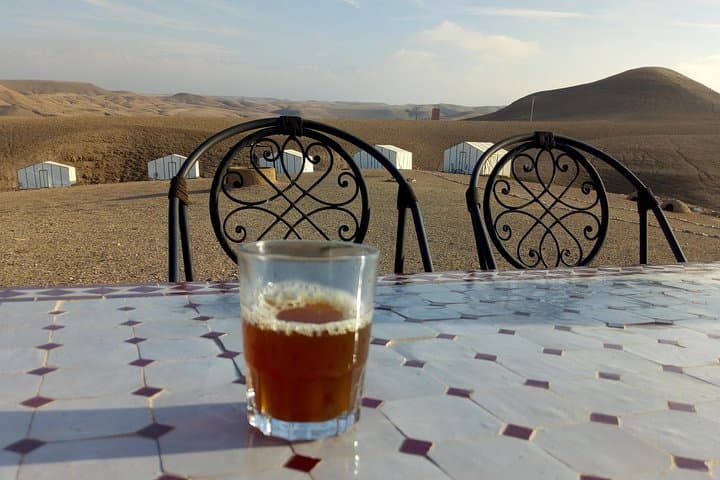
Geology here is immediate: the Agafay is a rocky, pebble-strewn reg plateau rather than the tall dunes of Erg Chebbi or Erg Chegga; its compacted stones and low plateaus were shaped by ancient rivers and the Atlas foothills’ erosion. Culturally, the area has long been a meeting place for Berber and Marrakech traders — tea is offered as a ritual of welcome, a practical pause and a social contract. Simple camp setups reflect that heritage: low blankets, mint tea brewed over coals, and musicians sometimes adding rhythm to the dusk.
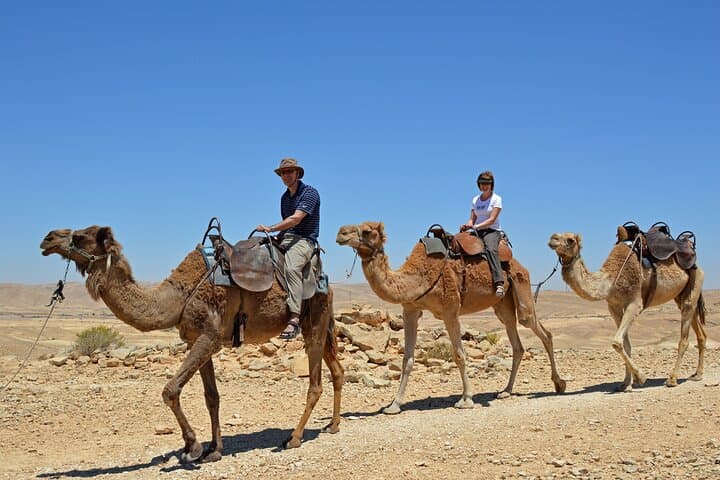
Expect an approximately one-hour camel outing framed by a 3-hour window that includes hotel pickup and drop-off. The ride is geared to all levels; camels are led by handlers and pace is steady rather than strenuous. Photographers will find broad skies and a warm palette at sunset; bring a lens with a mid-range zoom for compressed vistas.
Practical tips: schedule at least 90 minutes before sunset, wear closed-toe shoes and layers (desert night chills quickly), carry water and sun protection, and confirm pickup location when you book. This is an accessible way to taste desert light and local hospitality without overnight logistics — a compact, sensory introduction to Morocco’s hinterland.
easy.
3 hours.
Suitable for most fitness levels; participants should be comfortable mounting and sitting on a camel for about an hour.
The experience is scheduled as a 3-hour activity including hotel pickup and drop-off, with roughly one hour spent on camelback at sunset.
Children are welcome but most operators require them to ride with a parent or guardian; confirm age and seating rules when booking.
No prior experience is required — camels are led by handlers and the pace is steady and designed for novice riders.
Yes — hotel pickup and drop-off in Marrakech are typically included; confirm the pickup window and exact meeting point when you reserve.
The Agafay plateau has served as a seasonal corridor between Marrakech and southern trade routes; its rockiness made it a natural stopover long before modern tourism.
Stay on established paths and avoid feeding or approaching wildlife; camps typically use local guides — tip and support operators who minimize waste and respect vegetation.
Marvels Tours operates guided outdoor trips and adventures with an emphasis on safety, stewardship, and memorable experiences.
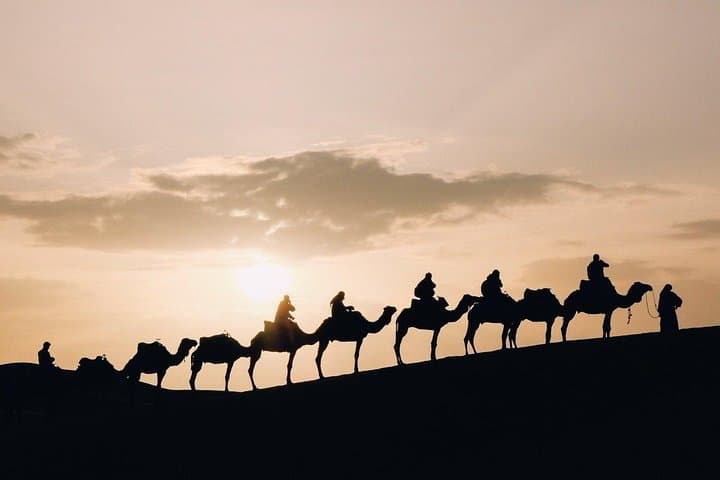
Late afternoon light throws the Agafay’s stone plains into long, cool shadows — camels step like slow metronomes against a horizon that reads more moon-scaped than sandy. You meet your guide in Marrakech, slide into a shuttle that climbs out of the city’s palms, and within 30–45 minutes the city noise thins to wind and open sky.
Late afternoon light throws the Agafay’s stone plains into long, cool shadows — camels step like slow metronomes against a horizon that reads more moon-scaped than sandy. You meet your guide in Marrakech, slide into a shuttle that climbs out of the city’s palms, and within 30–45 minutes the city noise thins to wind and open sky.
Geology here is immediate: the Agafay is a rocky, pebble-strewn reg plateau rather than the tall dunes of Erg Chebbi or Erg Chegga; its compacted stones and low plateaus were shaped by ancient rivers and the Atlas foothills’ erosion. Culturally, the area has long been a meeting place for Berber and Marrakech traders — tea is offered as a ritual of welcome, a practical pause and a social contract. Simple camp setups reflect that heritage: low blankets, mint tea brewed over coals, and musicians sometimes adding rhythm to the dusk.
Expect an approximately one-hour camel outing framed by a 3-hour window that includes hotel pickup and drop-off. The ride is geared to all levels; camels are led by handlers and pace is steady rather than strenuous. Photographers will find broad skies and a warm palette at sunset; bring a lens with a mid-range zoom for compressed vistas.
Practical tips: schedule at least 90 minutes before sunset, wear closed-toe shoes and layers (desert night chills quickly), carry water and sun protection, and confirm pickup location when you book. This is an accessible way to taste desert light and local hospitality without overnight logistics — a compact, sensory introduction to Morocco’s hinterland.