THE ADVENTURE COLLECTIVE® · Independent discovery and booking for outdoor travel

Trade Marrakech bustle for Agafay’s stone plains: ride a camel at sunset, dine around a campfire under a broad desert sky, and return the same night. Practical, short, and accessible for most travelers.
Trade Marrakech bustle for Agafay’s stone plains: ride a camel at sunset, dine around a campfire under a broad desert sky, and return the same night. Practical, short, and accessible for most travelers.
You arrive as the city loosens its grip and the road opens onto a hard, ochre plain. The sunset pushes color across low stone hills while the wind nudges sandalwood-scented smoke from the campfire; camels stand like patient silhouettes, waiting for the final light.
Verified experiences and guided adventures in the surrounding area.
Operated by Jalila Bourahmoun · Marrakech, Marrakech-Safi
You arrive as the city loosens its grip and the road opens onto a hard, ochre plain. The sunset pushes color across low stone hills while the wind nudges sandalwood-scented smoke from the campfire; camels stand like patient silhouettes, waiting for the final light.
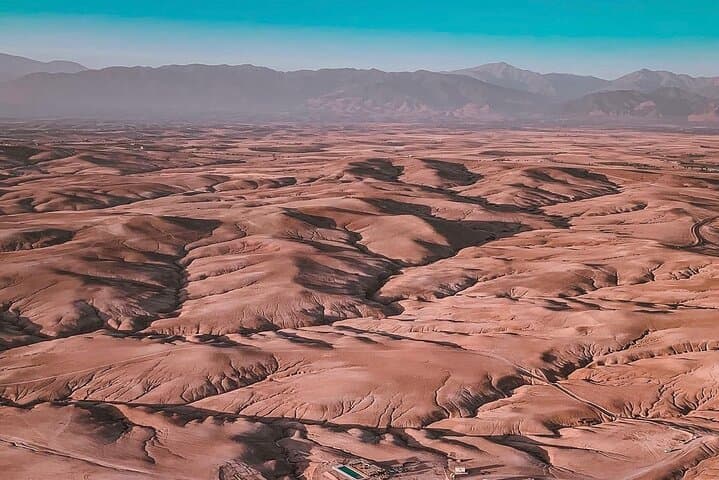
The Agafay is not sand-swept like the Sahara but a stony desert carved from Atlas foothills—flattened alluvium and weathered rocks that tell of ancient erosion and seasonal flash floods. Local Berber families have used these plains for generations; today small, respectful camps recreate elements of that hospitality with tagine, mint tea and a campfire chorus of quiet conversation and guitar.
Culturally the evening blends Moroccan rituals—welcome pastries and brewed mint tea—with practical desert life: simple tents, communal dining and the slow gait of camels that seem to resist hurry. Geologically the landscape rewards close attention: wind-polished stones, sparse scrub and long views toward the High Atlas where jagged summits hold winter snow.
Practically, expect a 40–50 minute transfer from central Marrakech, a roughly three-hour outing on site, and minimal walking—most of it flat. Dress in layers; nights get cool quickly. Dinner is traditional—soup, salads, beef and chicken tagines, fresh fruit—so notify operators of dietary needs ahead of time. Bring a headlamp or phone light and a camera with spare battery: stars are bright here and crowds are moderate, limited to keep the setting intimate.
This trip is about slowing down: the desert asks you to match its pace, to sit, eat and watch the sky shift from burnished orange to a ceiling of stars that seems close enough to touch.
easy.
4–5 hours.
Suitable for most fitness levels; minimal walking and no technical exertion required
Typical transfer time is about 40–50 minutes from central Marrakech depending on traffic and your pickup location.
Yes—this experience is listed as easy with minimal walking, but check camel comfort and request infant seats if needed for transfers.
Operators usually offer vegetarian options but you should state dietary restrictions at booking so the kitchen can prepare accordingly.
No—Agafay is a nearby rocky desert plateau approximately an hour from Marrakech; the experience is an evening excursion only.
Agafay’s stony plains are the result of erosion from the High Atlas; historically the area was used seasonally by Berber herding communities and remains tied to local pastoral traditions.
Freshwater is limited—choose operators that minimize bottled-plastic waste and follow leave-no-trace principles to protect fragile desert soils.
Jalila Bourahmoun operates guided outdoor trips and adventures with an emphasis on safety, stewardship, and memorable experiences.
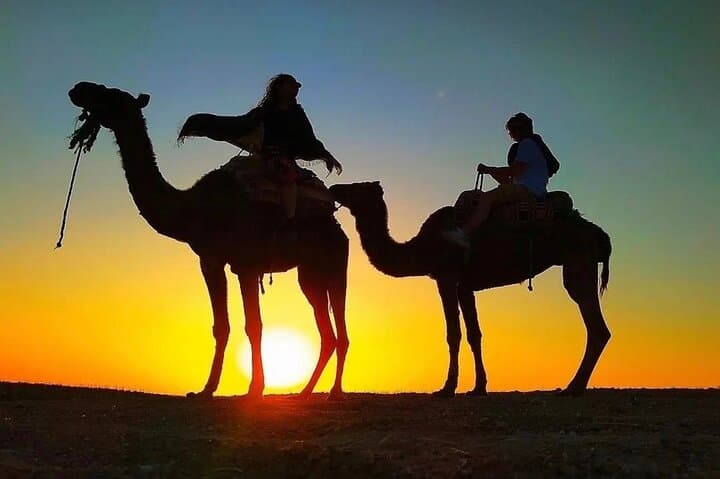
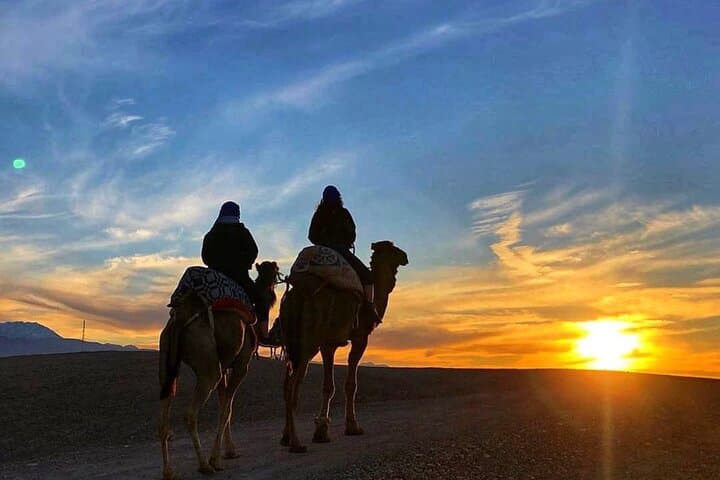
You arrive as the city loosens its grip and the road opens onto a hard, ochre plain. The sunset pushes color across low stone hills while the wind nudges sandalwood-scented smoke from the campfire; camels stand like patient silhouettes, waiting for the final light.
You arrive as the city loosens its grip and the road opens onto a hard, ochre plain. The sunset pushes color across low stone hills while the wind nudges sandalwood-scented smoke from the campfire; camels stand like patient silhouettes, waiting for the final light.
The Agafay is not sand-swept like the Sahara but a stony desert carved from Atlas foothills—flattened alluvium and weathered rocks that tell of ancient erosion and seasonal flash floods. Local Berber families have used these plains for generations; today small, respectful camps recreate elements of that hospitality with tagine, mint tea and a campfire chorus of quiet conversation and guitar.
Culturally the evening blends Moroccan rituals—welcome pastries and brewed mint tea—with practical desert life: simple tents, communal dining and the slow gait of camels that seem to resist hurry. Geologically the landscape rewards close attention: wind-polished stones, sparse scrub and long views toward the High Atlas where jagged summits hold winter snow.
Practically, expect a 40–50 minute transfer from central Marrakech, a roughly three-hour outing on site, and minimal walking—most of it flat. Dress in layers; nights get cool quickly. Dinner is traditional—soup, salads, beef and chicken tagines, fresh fruit—so notify operators of dietary needs ahead of time. Bring a headlamp or phone light and a camera with spare battery: stars are bright here and crowds are moderate, limited to keep the setting intimate.
This trip is about slowing down: the desert asks you to match its pace, to sit, eat and watch the sky shift from burnished orange to a ceiling of stars that seems close enough to touch.