THE ADVENTURE COLLECTIVE® · Independent discovery and booking for outdoor travel

Ride camels across the rocky Agafay Desert at sunset, then dine beneath lantern light while Berber musicians and fire performers set the evening’s tempo. This accessible small‑group outing blends gentle adventure with Moroccan culture.
Ride camels across the rocky Agafay Desert at sunset, then dine beneath lantern light while Berber musicians and fire performers set the evening’s tempo. This accessible small‑group outing blends gentle adventure with Moroccan culture.
The sun drops low over the Agafay’s stony dunes and the air cools; shadows stretch across a landscape of broken rock and short scrub. Travelers arrive from Marrakech by air‑conditioned van, stepping onto a plateau where camels wait to lead a slow, swaying procession toward the western horizon. The ride is gentle—desert wind pushing forward, the animals’ steady rhythm setting the pace for sunset photos and quiet reflection.
Verified experiences and guided adventures in the surrounding area.
Operated by Atlas Pathway Journeys · Marrakech, Marrakech-Safi
The sun drops low over the Agafay’s stony dunes and the air cools; shadows stretch across a landscape of broken rock and short scrub. Travelers arrive from Marrakech by air‑conditioned van, stepping onto a plateau where camels wait to lead a slow, swaying procession toward the western horizon. The ride is gentle—desert wind pushing forward, the animals’ steady rhythm setting the pace for sunset photos and quiet reflection.
Geologically, Agafay is a hamada: a hard, rocky desert formed by wind‑scoured limestone and volcanic scree rather than soft sand. Historically the area sat along trans‑Saharan trade approaches and today supports small argan cooperatives and sparse pastoralists. Cultural touches at the camp—mint tea, Berber drums, and a fire show—trace long‑standing North African traditions adapted for evening gatherings.
Expect an intimate small‑group camp under lantern light, a multi‑course Moroccan dinner, live music, and performances that shift from acoustic to kinetic as fire dancers take the ring. The experience is more social and sensory than physically demanding: minimal hiking, short camel saddles, and seated dining on rugs and low tables.
Practical guidance: bring closed shoes for uneven ground, a brimmed hat and sunscreen for daytime, and a light layer for after sunset when temperatures drop. Charge cameras and bring extra batteries—this is a photography trip as much as a cultural one. Confirm pickup details in Marrakech in advance and communicate any dietary restrictions; the host usually accommodates vegetarian options. Finally, respect local customs around photography and performers during the show.
easy.
5–6 hours.
Suitable for most fitness levels; involves short camel rides and standing or sitting at a camp.
Typical round‑trip transfers take about 45–60 minutes each way depending on traffic and the pickup point in Marrakech.
Yes—the camel ride is gentle and short; operators often provide assistance mounting and dismounting, but infants may need to sit on laps.
Most operators can accommodate common dietary needs (vegetarian, halal); communicate restrictions when booking so the kitchen can prepare accordingly.
Access can be uneven and involves sand/rock surfaces; some camps provide seating suitable for limited mobility but confirm pickup/dropoff logistics and accessibility in advance.
Agafay sits on a rocky plateau historically crossed by caravan routes and today supports pastoral life and small agricultural cooperatives like argan processors.
The area is fragile—stick to established paths, avoid disturbing vegetation, and use local guides who support sustainable camp practices and local cooperatives.
Atlas Pathway Journeys operates guided outdoor trips and adventures with an emphasis on safety, stewardship, and memorable experiences.
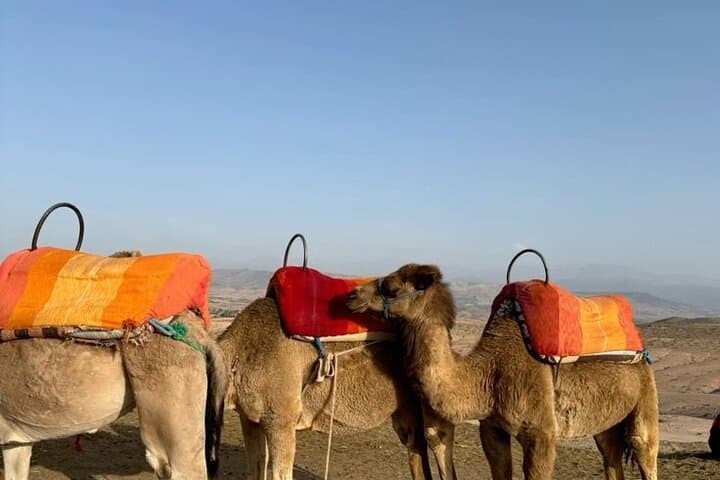
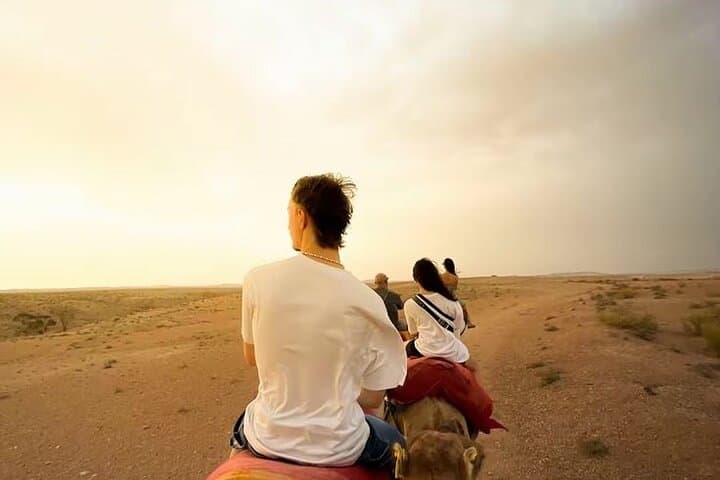
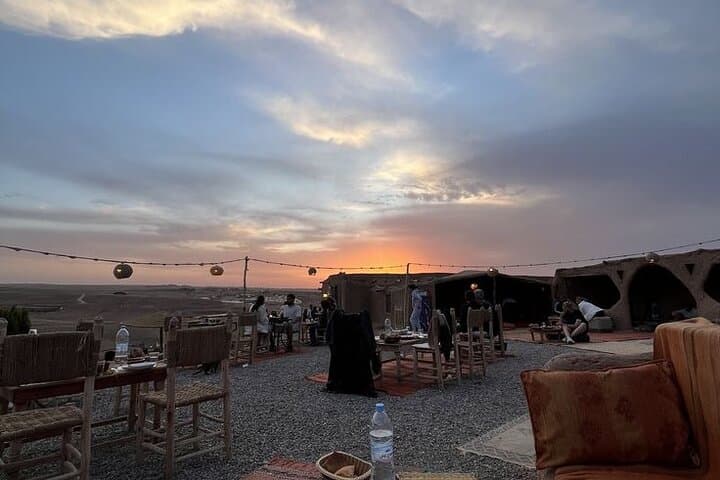
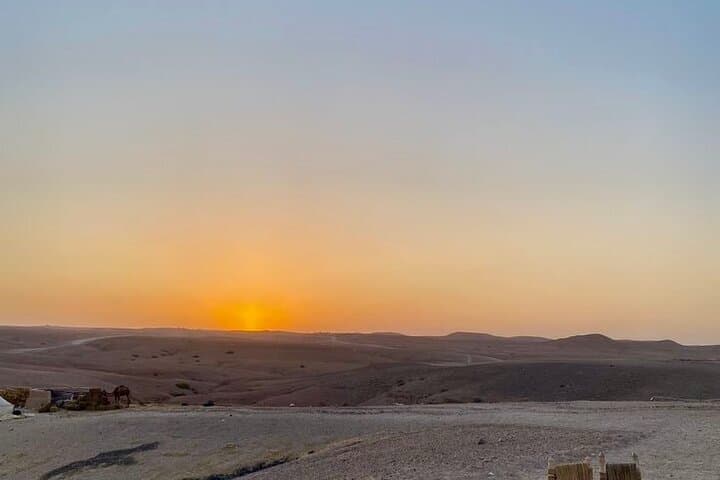
The sun drops low over the Agafay’s stony dunes and the air cools; shadows stretch across a landscape of broken rock and short scrub. Travelers arrive from Marrakech by air‑conditioned van, stepping onto a plateau where camels wait to lead a slow, swaying procession toward the western horizon. The ride is gentle—desert wind pushing forward, the animals’ steady rhythm setting the pace for sunset photos and quiet reflection.
The sun drops low over the Agafay’s stony dunes and the air cools; shadows stretch across a landscape of broken rock and short scrub. Travelers arrive from Marrakech by air‑conditioned van, stepping onto a plateau where camels wait to lead a slow, swaying procession toward the western horizon. The ride is gentle—desert wind pushing forward, the animals’ steady rhythm setting the pace for sunset photos and quiet reflection.
Geologically, Agafay is a hamada: a hard, rocky desert formed by wind‑scoured limestone and volcanic scree rather than soft sand. Historically the area sat along trans‑Saharan trade approaches and today supports small argan cooperatives and sparse pastoralists. Cultural touches at the camp—mint tea, Berber drums, and a fire show—trace long‑standing North African traditions adapted for evening gatherings.
Expect an intimate small‑group camp under lantern light, a multi‑course Moroccan dinner, live music, and performances that shift from acoustic to kinetic as fire dancers take the ring. The experience is more social and sensory than physically demanding: minimal hiking, short camel saddles, and seated dining on rugs and low tables.
Practical guidance: bring closed shoes for uneven ground, a brimmed hat and sunscreen for daytime, and a light layer for after sunset when temperatures drop. Charge cameras and bring extra batteries—this is a photography trip as much as a cultural one. Confirm pickup details in Marrakech in advance and communicate any dietary restrictions; the host usually accommodates vegetarian options. Finally, respect local customs around photography and performers during the show.