THE ADVENTURE COLLECTIVE® · Independent discovery and booking for outdoor travel

Race across the stony Agafay on a quad, swap the throttle for camelback at sunset, then settle into a Berber dinner and live show. This half-day excursion from Marrakech pairs high-energy riding with a rooted cultural evening.
Race across the stony Agafay on a quad, swap the throttle for camelback at sunset, then settle into a Berber dinner and live show. This half-day excursion from Marrakech pairs high-energy riding with a rooted cultural evening.
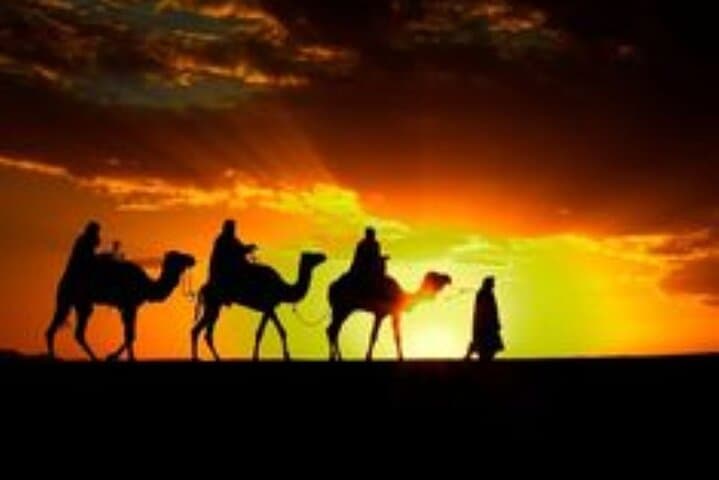
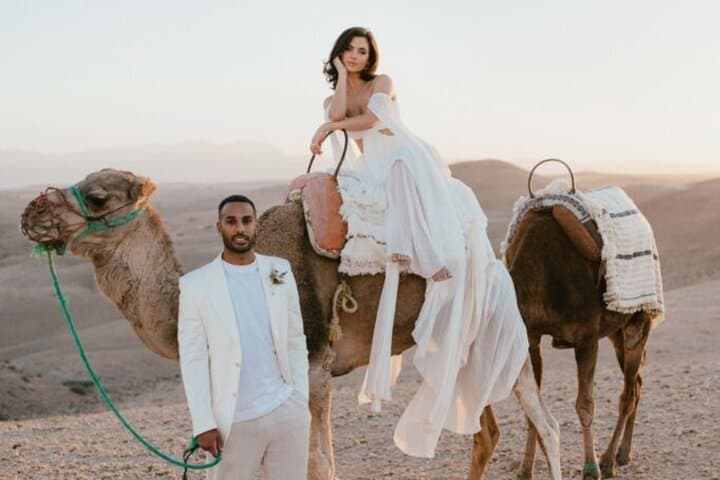
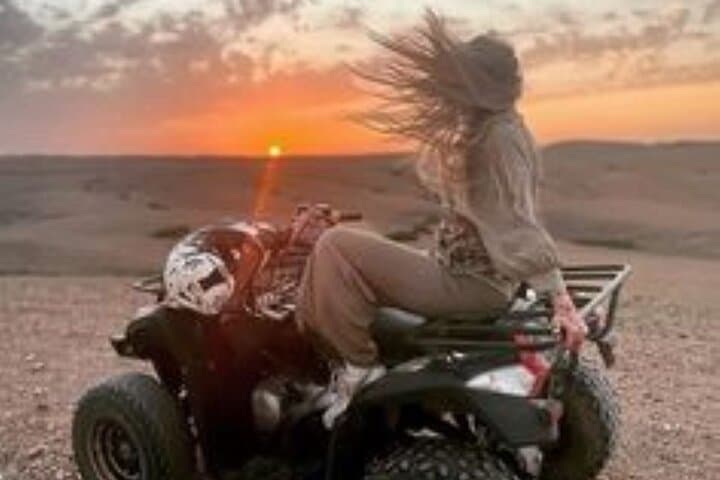
You arrive from Marrakech as the late afternoon light softens the Agafay’s stony plains — an expanse of hard-packed earth and low scrub that catches the sun like a warm coin. Quads rumble ahead, tires throwing up thin veils of dust; camels, patient and slow, carry small groups toward a low ridge where the sunset will spill orange into the hollows.
Verified experiences and guided adventures in the surrounding area.
Operated by Atlas Mountains · Marrakech, Marrakech-Safi
You arrive from Marrakech as the late afternoon light softens the Agafay’s stony plains — an expanse of hard-packed earth and low scrub that catches the sun like a warm coin. Quads rumble ahead, tires throwing up thin veils of dust; camels, patient and slow, carry small groups toward a low ridge where the sunset will spill orange into the hollows.
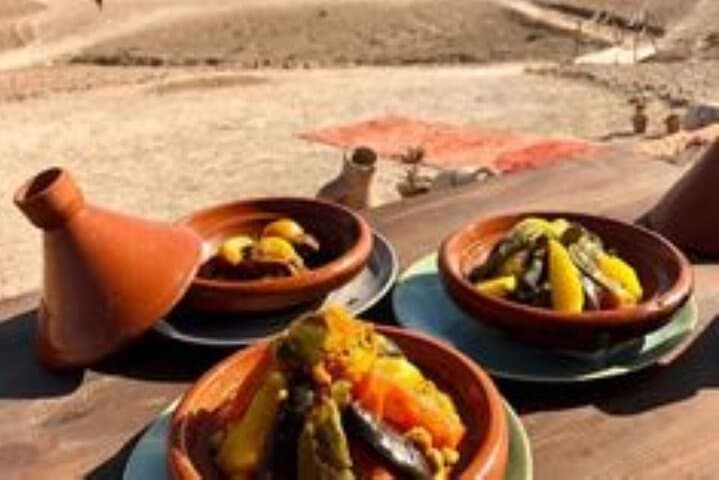
The Agafay is not a sand sea but a rocky desert formed by millennia of erosion from the High Atlas. Local Berber families and cooperatives have worked this land for generations, producing argan oil and hosting guests for desert meals. The evening’s Berber buffet and performance are as much cultural exchange as entertainment: traditional gnawa rhythms, tagine dishes, and songs that grew from village life on the mountain fringes.
Expect a roughly 4–5 hour outing: pickup in Marrakech, a supervised half-hour quad ride (two people per quad), a short camel trek timed for sunset, then dinner and a show under simple shelter. Guides provide basic instruction for quads and lead camel treks; protective helmets are standard. Bring sun protection and a light layer for cooling evenings. Photographers should arrive with charged batteries — the low sun sculpts the landscape quickly.
Practicalities: choose sturdy closed-toe shoes for quads, follow guide briefings, and hydrate — enamel cups of mint tea are common at the camp. This experience mixes adrenaline with cultural context: a fast run across stone, then the slow rhythm of camel steps and a communal meal that makes the desert feel human-scale.
moderate.
4–5 hours.
Suitable for most fitness levels; participants should be able to mount a camel and manage short bursts of physical balance on a quad.
No—guides provide a safety briefing and instruction; tours pair most quads for two riders and keep speeds moderate.
Policies vary; many operators allow children on camels and require that quads be shared by adults—confirm age and weight limits when booking.
Casual, modest clothing is appropriate; a light layer for cooler evenings and comfortable shoes for walking on uneven ground are recommended.
Yes—most tours include hotel pickup and drop-off in Marrakech; confirm your pickup point when you book.
The Agafay plain is a rocky desert formed by erosion from the High Atlas; nearby villages have long combined pastoralism with argan production and caravan hospitality.
Stick to designated tracks and avoid disturbing vegetation — the sparse desert soil is slow to recover from vehicle and foot traffic; support local cooperatives to keep benefits in the community.
Atlas Mountains operates guided outdoor trips and adventures with an emphasis on safety, stewardship, and memorable experiences.
You arrive from Marrakech as the late afternoon light softens the Agafay’s stony plains — an expanse of hard-packed earth and low scrub that catches the sun like a warm coin. Quads rumble ahead, tires throwing up thin veils of dust; camels, patient and slow, carry small groups toward a low ridge where the sunset will spill orange into the hollows.
You arrive from Marrakech as the late afternoon light softens the Agafay’s stony plains — an expanse of hard-packed earth and low scrub that catches the sun like a warm coin. Quads rumble ahead, tires throwing up thin veils of dust; camels, patient and slow, carry small groups toward a low ridge where the sunset will spill orange into the hollows.
The Agafay is not a sand sea but a rocky desert formed by millennia of erosion from the High Atlas. Local Berber families and cooperatives have worked this land for generations, producing argan oil and hosting guests for desert meals. The evening’s Berber buffet and performance are as much cultural exchange as entertainment: traditional gnawa rhythms, tagine dishes, and songs that grew from village life on the mountain fringes.
Expect a roughly 4–5 hour outing: pickup in Marrakech, a supervised half-hour quad ride (two people per quad), a short camel trek timed for sunset, then dinner and a show under simple shelter. Guides provide basic instruction for quads and lead camel treks; protective helmets are standard. Bring sun protection and a light layer for cooling evenings. Photographers should arrive with charged batteries — the low sun sculpts the landscape quickly.
Practicalities: choose sturdy closed-toe shoes for quads, follow guide briefings, and hydrate — enamel cups of mint tea are common at the camp. This experience mixes adrenaline with cultural context: a fast run across stone, then the slow rhythm of camel steps and a communal meal that makes the desert feel human-scale.