THE ADVENTURE COLLECTIVE® · Independent discovery and booking for outdoor travel

Spend an evening riding quads across the rocky Agafay plain, follow with a gentle camel trek through Berber villages, then dine under the stars with Gnawa music and a fire show. Practical for all fitness levels and convenient with private transfers from Marrakech.
Spend an evening riding quads across the rocky Agafay plain, follow with a gentle camel trek through Berber villages, then dine under the stars with Gnawa music and a fire show. Practical for all fitness levels and convenient with private transfers from Marrakech.
As the sun slips west of the Atlas, the Agafay plain goes from white stone to a warm hush; dust and wind take shape like an audience watching the riders. Guests leave Marrakech behind and arrive to a landscape that feels more sculpted than sandy—stony plateaus, low dunes, and scrub that keeps the horizon honest. The quad engines growl, then fall into rhythm with the terrain, and later the camel caravan moves with a steady, deliberate patience as evening cools.
Verified experiences and guided adventures in the surrounding area.
Operated by Awsen · Marrakech, Marrakesh-Safi
As the sun slips west of the Atlas, the Agafay plain goes from white stone to a warm hush; dust and wind take shape like an audience watching the riders. Guests leave Marrakech behind and arrive to a landscape that feels more sculpted than sandy—stony plateaus, low dunes, and scrub that keeps the horizon honest. The quad engines growl, then fall into rhythm with the terrain, and later the camel caravan moves with a steady, deliberate patience as evening cools.
Geologically, Agafay is a rocky desert formed from ancient alluvial deposits, not the wind-blown sands of the Sahara, and its stony ridges frame views of the High Atlas. Culturally this region sits in the shadow of Berber life: scattered villages, woven traditions, and Gnawa music that links sub-Saharan and Moroccan rhythms. The evening’s meal and fire show draw on those traditions—live music, mint tea, and communal plates that are as much social ritual as dinner.
Practically: expect 4–8 hours including transfer time; the terrain alternates between compact gravel, loose shale and short sandy sections. Riders should wear closed-toe shoes, bring a light jacket for post-sunset chill, and carry water. Operators usually provide helmets and basic instructions; prior ATV experience helps but is not required. Photography is best in the last hour of daylight when contrast is strongest. Respect local guides, give livestock and villages wide berth, and plan for an 8pm return to Marrakech. The Agafay evening balances a pulse-quick quad ride with a slow, cultural interlude—adventure with a clear practical rhythm.
moderate.
8 hours.
Suitable for most fitness levels; some mobility needed to mount camels and handle quad controls.
Quad time is typically about 60 minutes (shared quads are common); camel treks are short, roughly 20 minutes, designed for a scenic cultural experience rather than long-distance travel.
No—operators provide basic instruction and helmets; however, some confidence with throttle control helps on loose or rocky sections.
Yes—this experience includes private round-trip transport from Marrakech, a traditional Moroccan dinner, and live entertainment as described.
Children can participate but infants must sit on an adult's lap for transportation; check operator age and weight limits for quad and camel rides.
Agafay is a rocky plateau formed by ancient alluvial and erosional processes and has long been a grazing and transit area for Berber communities connecting Marrakech to more arid regions.
The area is vulnerable to off-track vehicle erosion and littering; choose operators that practice minimal-impact driving and pack out waste.
Awsen operates guided outdoor trips and adventures with an emphasis on safety, stewardship, and memorable experiences.
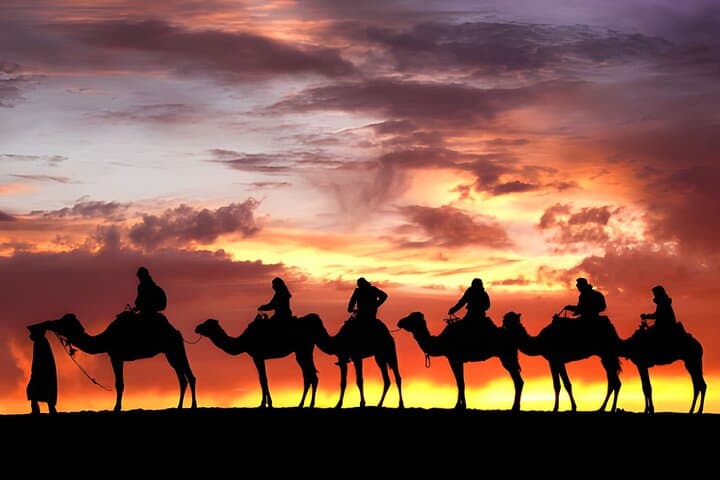
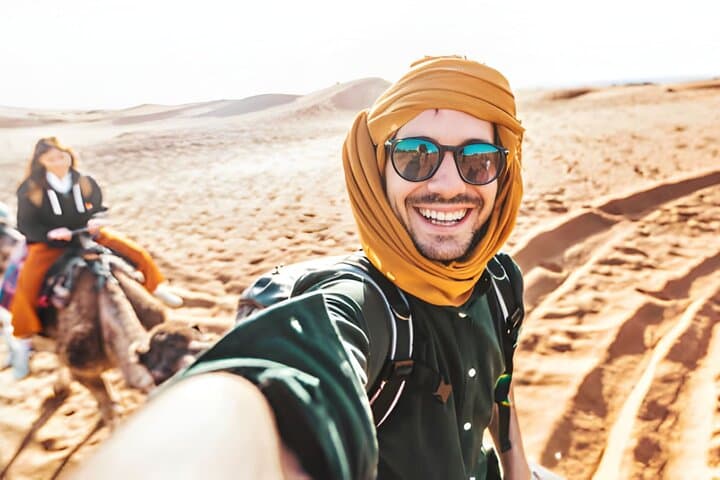
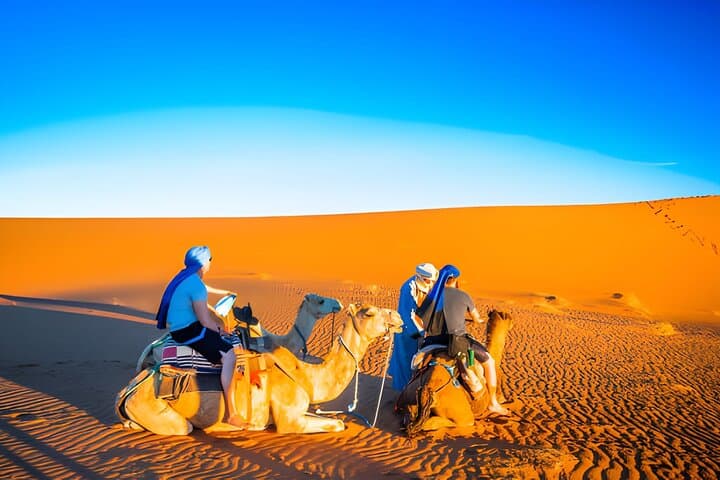
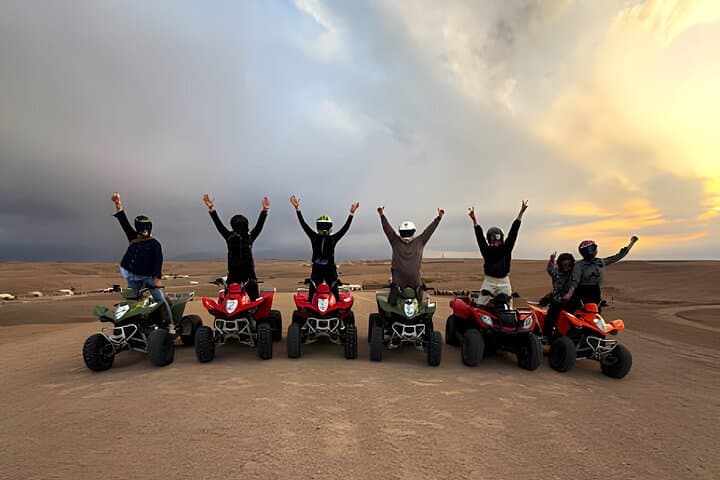
As the sun slips west of the Atlas, the Agafay plain goes from white stone to a warm hush; dust and wind take shape like an audience watching the riders. Guests leave Marrakech behind and arrive to a landscape that feels more sculpted than sandy—stony plateaus, low dunes, and scrub that keeps the horizon honest. The quad engines growl, then fall into rhythm with the terrain, and later the camel caravan moves with a steady, deliberate patience as evening cools.
As the sun slips west of the Atlas, the Agafay plain goes from white stone to a warm hush; dust and wind take shape like an audience watching the riders. Guests leave Marrakech behind and arrive to a landscape that feels more sculpted than sandy—stony plateaus, low dunes, and scrub that keeps the horizon honest. The quad engines growl, then fall into rhythm with the terrain, and later the camel caravan moves with a steady, deliberate patience as evening cools.
Geologically, Agafay is a rocky desert formed from ancient alluvial deposits, not the wind-blown sands of the Sahara, and its stony ridges frame views of the High Atlas. Culturally this region sits in the shadow of Berber life: scattered villages, woven traditions, and Gnawa music that links sub-Saharan and Moroccan rhythms. The evening’s meal and fire show draw on those traditions—live music, mint tea, and communal plates that are as much social ritual as dinner.
Practically: expect 4–8 hours including transfer time; the terrain alternates between compact gravel, loose shale and short sandy sections. Riders should wear closed-toe shoes, bring a light jacket for post-sunset chill, and carry water. Operators usually provide helmets and basic instructions; prior ATV experience helps but is not required. Photography is best in the last hour of daylight when contrast is strongest. Respect local guides, give livestock and villages wide berth, and plan for an 8pm return to Marrakech. The Agafay evening balances a pulse-quick quad ride with a slow, cultural interlude—adventure with a clear practical rhythm.