THE ADVENTURE COLLECTIVE® · Independent discovery and booking for outdoor travel

Race across the stony plains of Agafay on a quad, then trade speed for sway on a camel with Atlas Mountain views. This 4–6 hour combo pairs high-adrenaline riding with a calm, traditional desert trek—ideal for travelers who want both excitement and atmosphere.
Race across the stony plains of Agafay on a quad, then trade speed for sway on a camel with Atlas Mountain views. This 4–6 hour combo pairs high-adrenaline riding with a calm, traditional desert trek—ideal for travelers who want both excitement and atmosphere.
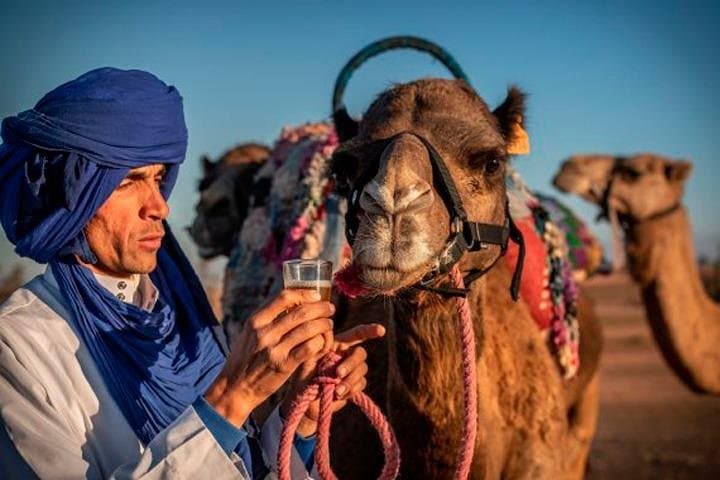
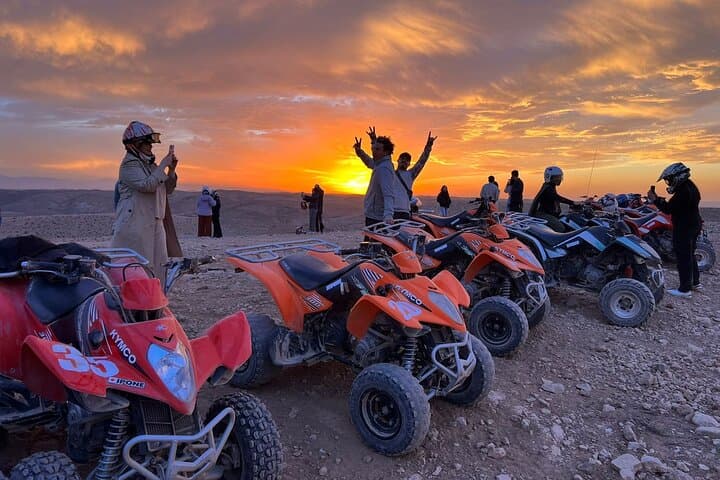
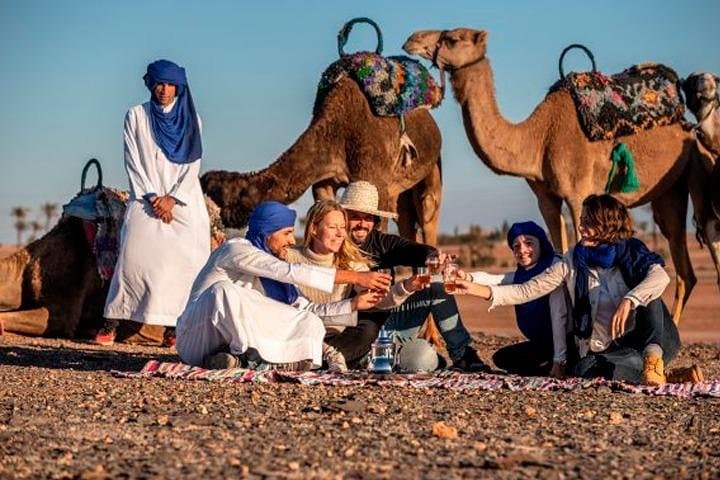
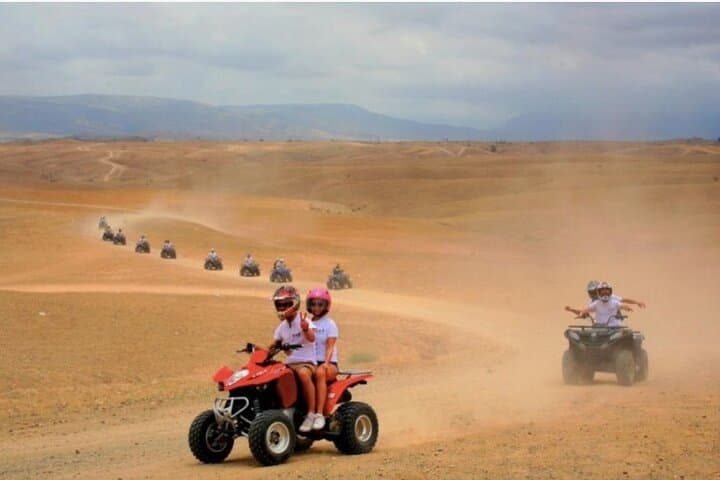
The sun sits low over hard-packed stone and scrub as your quad rumbles away from the trailhead, throwing up a fine dust that the plateau carries toward the Atlas Mountains. Wind bites at your cheeks, the quad answers with a low growl, and for a few intense minutes the Agafay Desert dares you to push harder. Later, the pace softens: you climb onto a camel, feel its sway, and watch the silhouette of the Mountains widen into a slow, patient panorama.
Verified experiences and guided adventures in the surrounding area.
Operated by Marrakech day Trip · Marrakech, Marrakech-Safi
The sun sits low over hard-packed stone and scrub as your quad rumbles away from the trailhead, throwing up a fine dust that the plateau carries toward the Atlas Mountains. Wind bites at your cheeks, the quad answers with a low growl, and for a few intense minutes the Agafay Desert dares you to push harder. Later, the pace softens: you climb onto a camel, feel its sway, and watch the silhouette of the Mountains widen into a slow, patient panorama.
Agafay is not a sea of dunes but a stony desert plain formed by ancient riverbeds and alluvial deposits at roughly 600 m above sea level. The area has long been used by Berber shepherds and, more recently, as a scenic outcrop for Marrakech visitors seeking quick access to open desert terrain. Expect short stretches of packed gravel, scattered boulders, and occasional clay flats; quad routes typically cover roughly 10–20 km of varied terrain while camel treks are gentler—around 2–5 km—measured more by time than distance.
Practical guidance: book late afternoon for cooler temps and better light; bring at least 1–1.5 liters of water per person, close-toed shoes with good tread, and sunglasses or a buff to block grit. Operators usually include hotel pickup, safety briefing, helmets for ATVs, and a short camel-handling orientation. Physical demand is moderate—drivers should be comfortable handling an ATV on uneven ground; riders on camels need basic balance and patience.
This combo delivers adrenaline and cultural pace in one visit: fast track the desert’s raw edges, then slow down and listen to a camel’s measured rhythm as the Atlas keeps watch.
moderate.
6 hours.
Suitable for people in average fitness: able to mount/dismount a camel, stand on quad footrests, and manage short bursts of uneven terrain.
No formal experience is required; operators give a safety briefing and basic handling instructions, though confident throttle control helps on uneven sections.
Policies vary—many operators allow children on camels and may provide child seats; quads typically have age or height minimums, so check with the provider beforehand.
Most tours include air-conditioned vehicle pickup from central Marrakech—confirm pickup point and time when booking.
Tipping is customary in Morocco; for combined tours, plan to tip guides and handlers separately (small amounts, adjusted for service quality).
The Agafay plateau has long been grazing land for Berber shepherds and was formed from ancient alluvial deposits; today it provides a quick desert contrast to Marrakech without long travel to the Sahara.
Stay on established tracks to avoid damaging cryptic desert vegetation and fragile soil crusts; support operators who care for camels humanely and pack out all trash.
Marrakech day Trip operates guided outdoor trips and adventures with an emphasis on safety, stewardship, and memorable experiences.
The sun sits low over hard-packed stone and scrub as your quad rumbles away from the trailhead, throwing up a fine dust that the plateau carries toward the Atlas Mountains. Wind bites at your cheeks, the quad answers with a low growl, and for a few intense minutes the Agafay Desert dares you to push harder. Later, the pace softens: you climb onto a camel, feel its sway, and watch the silhouette of the Mountains widen into a slow, patient panorama.
The sun sits low over hard-packed stone and scrub as your quad rumbles away from the trailhead, throwing up a fine dust that the plateau carries toward the Atlas Mountains. Wind bites at your cheeks, the quad answers with a low growl, and for a few intense minutes the Agafay Desert dares you to push harder. Later, the pace softens: you climb onto a camel, feel its sway, and watch the silhouette of the Mountains widen into a slow, patient panorama.
Agafay is not a sea of dunes but a stony desert plain formed by ancient riverbeds and alluvial deposits at roughly 600 m above sea level. The area has long been used by Berber shepherds and, more recently, as a scenic outcrop for Marrakech visitors seeking quick access to open desert terrain. Expect short stretches of packed gravel, scattered boulders, and occasional clay flats; quad routes typically cover roughly 10–20 km of varied terrain while camel treks are gentler—around 2–5 km—measured more by time than distance.
Practical guidance: book late afternoon for cooler temps and better light; bring at least 1–1.5 liters of water per person, close-toed shoes with good tread, and sunglasses or a buff to block grit. Operators usually include hotel pickup, safety briefing, helmets for ATVs, and a short camel-handling orientation. Physical demand is moderate—drivers should be comfortable handling an ATV on uneven ground; riders on camels need basic balance and patience.
This combo delivers adrenaline and cultural pace in one visit: fast track the desert’s raw edges, then slow down and listen to a camel’s measured rhythm as the Atlas keeps watch.