THE ADVENTURE COLLECTIVE® · Independent discovery and booking for outdoor travel

A late‑afternoon escape from Marrakech to the Agafay stone desert and Palmeraie: quad over rocky plains, ride a camel at sunset, and finish with mint tea and a Berber tent show. Practical, short, and best timed for golden hour.
A late‑afternoon escape from Marrakech to the Agafay stone desert and Palmeraie: quad over rocky plains, ride a camel at sunset, and finish with mint tea and a Berber tent show. Practical, short, and best timed for golden hour.
You meet in the old city's chaos—Jemaa el-Fna’s clamor and scent of spice—then the road opens and the palms thin until the land becomes a wide, stone-strewn plain. The quad revs; dust rises like a boundary the desert dares you to cross. Later, atop a camel, the horizon stretches low and copper as the sun slips behind the high Atlas foothills. In the tents, mint tea steams and a small show of drums and song marks the evening.
Verified experiences and guided adventures in the surrounding area.
Operated by Marrakech day Trip · Marrakech, Marrakech-Safi
You meet in the old city's chaos—Jemaa el-Fna’s clamor and scent of spice—then the road opens and the palms thin until the land becomes a wide, stone-strewn plain. The quad revs; dust rises like a boundary the desert dares you to cross. Later, atop a camel, the horizon stretches low and copper as the sun slips behind the high Atlas foothills. In the tents, mint tea steams and a small show of drums and song marks the evening.
The ride crosses two local landscapes: the Palmeraie’s irrigated pocket of palms on Marrakech’s edge and the nearby Agafay “stone desert,” an expanse of weathered rock and gravel created from Atlas erosion rather than Saharan dunes. The region is home to Berber villages where pastoral life and hospitality remain prominent—hosts often offer tea and conversation as a routine welcome.
Expect roughly a 3‑hour loop: a vehicle transfer from the city, a guided quad section over rocky plains (typically 8–15 km of riding with minimal elevation change), a short camel circuit through palms, and a tea stop or tented dinner with local music. Terrain is largely flat to rolling, dusty, and can be uneven under quad tires.
Practical tips: schedule the trip to arrive before sunset for the best light; wear closed-toe shoes, UV protection, and a light wind layer as temperatures swing quickly; bring at least 1–2 liters of water and a face covering for dust. Follow staff briefings on quad and camel safety, and carry small local currency for tips or souvenirs.
easy.
3 hours.
Suitable for most fitness levels; you should be comfortable mounting a camel and handling a low‑power quad for short bursts.
Transfer times vary by pickup point but typically take 30–45 minutes each way depending on traffic and your riad’s location.
No formal experience is required; instructors provide a brief safety demo and supervise riders on gentle routes.
Children can ride but may need to sit on an adult’s lap; pregnant travelers should check with their doctor—camel mounting involves movement and height.
Many operators include mint tea and a simple tented dinner or snack with a short cultural show—confirm specifics when booking.
The Palmeraie was expanded historically as an irrigated oasis supporting Marrakech’s outskirts; the Agafay plain is erosional debris from the Atlas Mountains rather than true sand dunes.
Operators are increasingly conscientious about limiting off-track quad routes and minimizing tent camp waste—choose companies that use established tracks and pack out litter.
Marrakech day Trip operates guided outdoor trips and adventures with an emphasis on safety, stewardship, and memorable experiences.
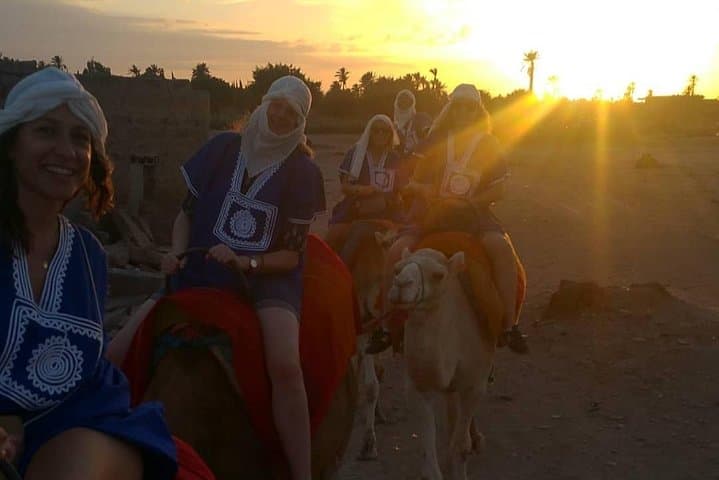
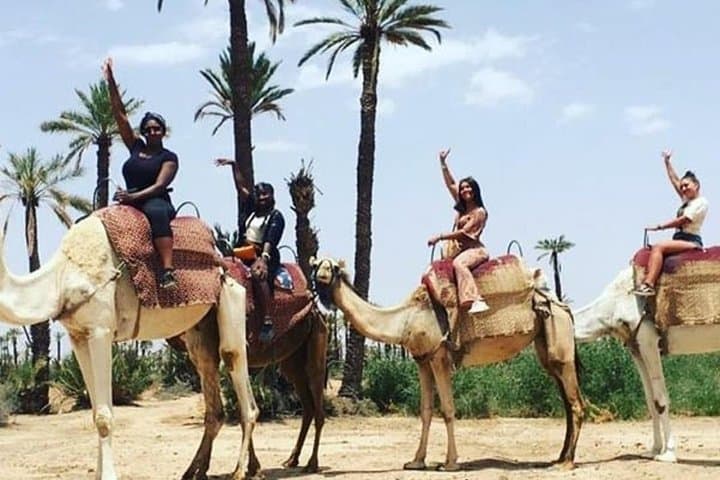
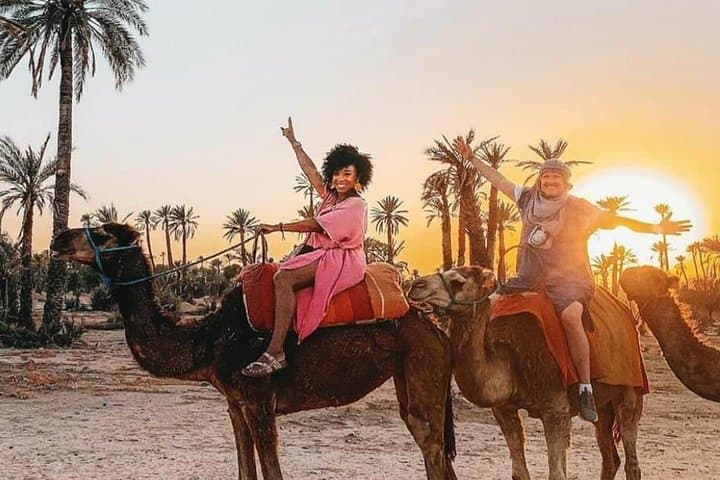
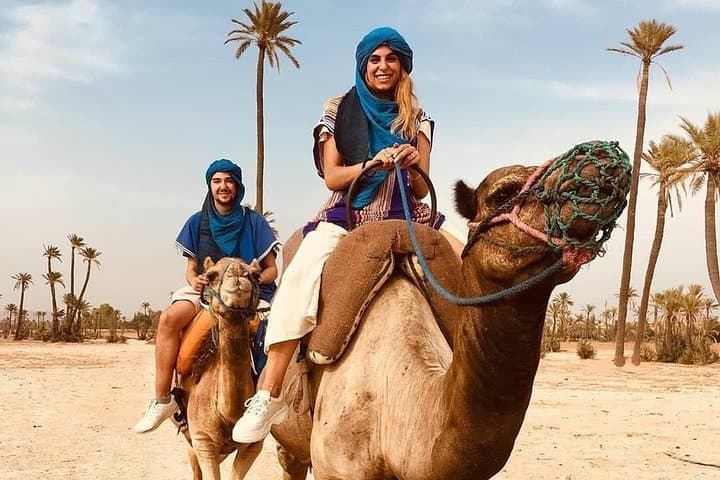
You meet in the old city's chaos—Jemaa el-Fna’s clamor and scent of spice—then the road opens and the palms thin until the land becomes a wide, stone-strewn plain. The quad revs; dust rises like a boundary the desert dares you to cross. Later, atop a camel, the horizon stretches low and copper as the sun slips behind the high Atlas foothills. In the tents, mint tea steams and a small show of drums and song marks the evening.
You meet in the old city's chaos—Jemaa el-Fna’s clamor and scent of spice—then the road opens and the palms thin until the land becomes a wide, stone-strewn plain. The quad revs; dust rises like a boundary the desert dares you to cross. Later, atop a camel, the horizon stretches low and copper as the sun slips behind the high Atlas foothills. In the tents, mint tea steams and a small show of drums and song marks the evening.
The ride crosses two local landscapes: the Palmeraie’s irrigated pocket of palms on Marrakech’s edge and the nearby Agafay “stone desert,” an expanse of weathered rock and gravel created from Atlas erosion rather than Saharan dunes. The region is home to Berber villages where pastoral life and hospitality remain prominent—hosts often offer tea and conversation as a routine welcome.
Expect roughly a 3‑hour loop: a vehicle transfer from the city, a guided quad section over rocky plains (typically 8–15 km of riding with minimal elevation change), a short camel circuit through palms, and a tea stop or tented dinner with local music. Terrain is largely flat to rolling, dusty, and can be uneven under quad tires.
Practical tips: schedule the trip to arrive before sunset for the best light; wear closed-toe shoes, UV protection, and a light wind layer as temperatures swing quickly; bring at least 1–2 liters of water and a face covering for dust. Follow staff briefings on quad and camel safety, and carry small local currency for tips or souvenirs.