THE ADVENTURE COLLECTIVE® · Independent discovery and booking for outdoor travel

Spend a private day from Marrakech into the High Atlas and the stony Agafay desert—walk Berber villages, sip tea with a local family, photograph waterfalls and take a sunset camel ride. This accessible trip mixes culture, light walking and sweeping mountain views.
Spend a private day from Marrakech into the High Atlas and the stony Agafay desert—walk Berber villages, sip tea with a local family, photograph waterfalls and take a sunset camel ride. This accessible trip mixes culture, light walking and sweeping mountain views.
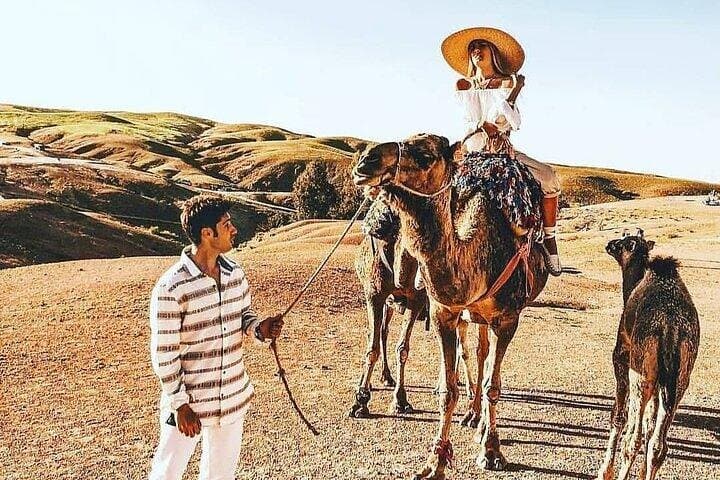
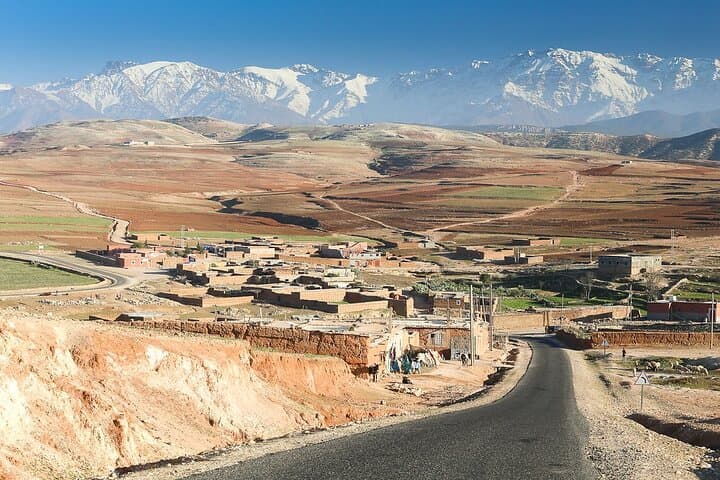
You step into the day with Marrakech slipping behind you and the High Atlas rising like a series of patient guardians ahead. The road climbs through Asni Valley, windows framing terraced slopes and the clay-and-stone roofs of small Berber villages; later the landscape opens to the stony sweep of the Agafay desert where camels shadow the late-afternoon sun.
Verified experiences and guided adventures in the surrounding area.
Operated by Marrakesh Travel Guide · Marrakech, Marrakesh-Safi
You step into the day with Marrakech slipping behind you and the High Atlas rising like a series of patient guardians ahead. The road climbs through Asni Valley, windows framing terraced slopes and the clay-and-stone roofs of small Berber villages; later the landscape opens to the stony sweep of the Agafay desert where camels shadow the late-afternoon sun.
The route threads living history: Azrou is one of the region’s older Berber settlements, Imlil sits at roughly 1,800 m with links to traditional mountain agriculture, and the Kik plateau shows houses built in earth and stone centuries-old techniques. Geologically, the High Atlas are young, uplifted by tectonic collisions, their valleys carved by streams that still push at the rock; Agafay is not dunes but a lunar, reg-rock plateau shaped by erosion and occasional flash runoff.
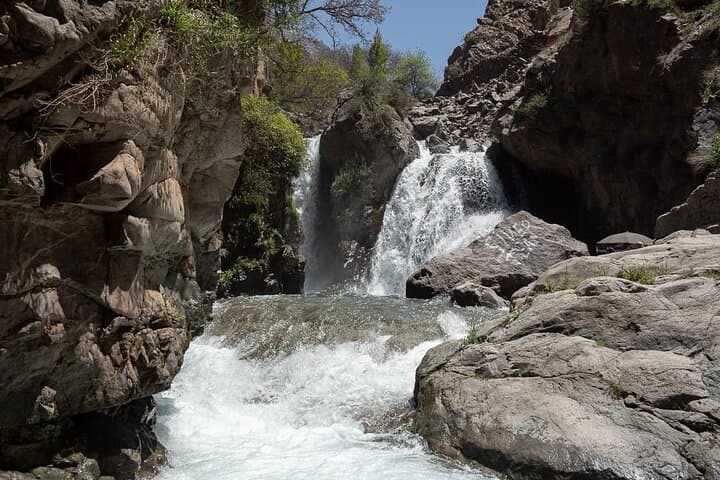
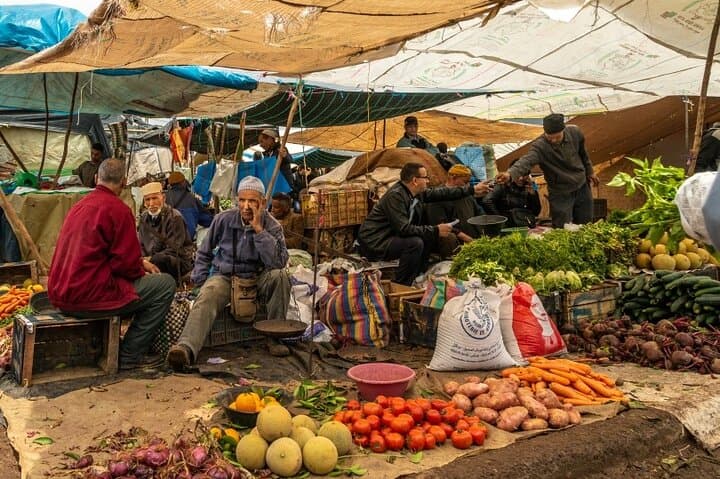
Culturally the day blends small-scale hospitality—tea with a Berber family, visits to cooperatives and weekly markets—with outdoor moments: a short village walk, a waterfall photo stop, and a camel ride as the desert sky softens. The pace is relaxed; the effort is light, but altitude and sun matter.
Practical guidance: start early, carry a reusable water bottle, and wear sturdy shoes for village tracks. Layer for temperature swings between Marrakech and Imlil, and bring cash for small purchases at cooperatives. Expect a full 6–7 hour outing with private transport, a guide, lunch, bottled water and a camel ride included—an accessible, compact exposure to Atlas geology, Berber culture and Agafay’s austere beauty.
easy.
6–7 hours.
Suitable for most travelers who can board vehicle transfers and walk short unpaved village paths; no long sustained hikes required.
The tour begins in Marrakech—your guide will confirm a pickup point—and returns to Marrakech the same day, typically late afternoon or early evening.
Yes; the Agafay camel ride is short and guided, suitable for first-timers, but let the operator know if you have mobility concerns.
Imlil sits around 1,800 m; most travelers experience no serious issues, but if you are sensitive to altitude move slowly, stay hydrated and mention any concerns to your guide.
Lunch and bottled water are included; bringing snacks is optional and carrying a reusable bottle is recommended to refill as needed.
The High Atlas has long been home to Amazigh (Berber) communities; villages along the route preserve vernacular earth-and-stone building and centuries of mountain agriculture and trade.
Water is scarce across this region—minimize plastic, stick to established paths, and support local cooperatives to ensure tourism benefits communities while limiting environmental impact.
Marrakesh Travel Guide operates guided outdoor trips and adventures with an emphasis on safety, stewardship, and memorable experiences.
You step into the day with Marrakech slipping behind you and the High Atlas rising like a series of patient guardians ahead. The road climbs through Asni Valley, windows framing terraced slopes and the clay-and-stone roofs of small Berber villages; later the landscape opens to the stony sweep of the Agafay desert where camels shadow the late-afternoon sun.
You step into the day with Marrakech slipping behind you and the High Atlas rising like a series of patient guardians ahead. The road climbs through Asni Valley, windows framing terraced slopes and the clay-and-stone roofs of small Berber villages; later the landscape opens to the stony sweep of the Agafay desert where camels shadow the late-afternoon sun.
The route threads living history: Azrou is one of the region’s older Berber settlements, Imlil sits at roughly 1,800 m with links to traditional mountain agriculture, and the Kik plateau shows houses built in earth and stone centuries-old techniques. Geologically, the High Atlas are young, uplifted by tectonic collisions, their valleys carved by streams that still push at the rock; Agafay is not dunes but a lunar, reg-rock plateau shaped by erosion and occasional flash runoff.
Culturally the day blends small-scale hospitality—tea with a Berber family, visits to cooperatives and weekly markets—with outdoor moments: a short village walk, a waterfall photo stop, and a camel ride as the desert sky softens. The pace is relaxed; the effort is light, but altitude and sun matter.
Practical guidance: start early, carry a reusable water bottle, and wear sturdy shoes for village tracks. Layer for temperature swings between Marrakech and Imlil, and bring cash for small purchases at cooperatives. Expect a full 6–7 hour outing with private transport, a guide, lunch, bottled water and a camel ride included—an accessible, compact exposure to Atlas geology, Berber culture and Agafay’s austere beauty.