THE ADVENTURE COLLECTIVE® · Independent discovery and booking for outdoor travel

Trade Marrakech’s red city for the pale, stony plains of Agafay on a half-day trip that pairs a short camel ride or walk with a countryside lunch and Atlas Mountain views. Ideal for travelers who want an easy outdoors taste of Morocco without an overnight.
Trade Marrakech’s red city for the pale, stony plains of Agafay on a half-day trip that pairs a short camel ride or walk with a countryside lunch and Atlas Mountain views. Ideal for travelers who want an easy outdoors taste of Morocco without an overnight.
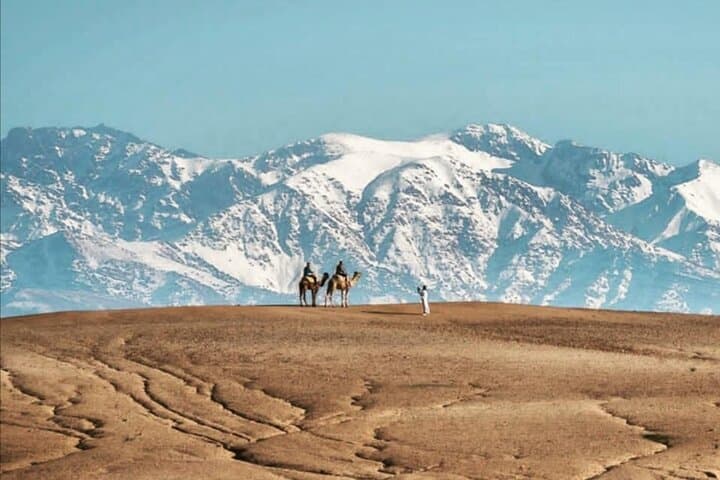
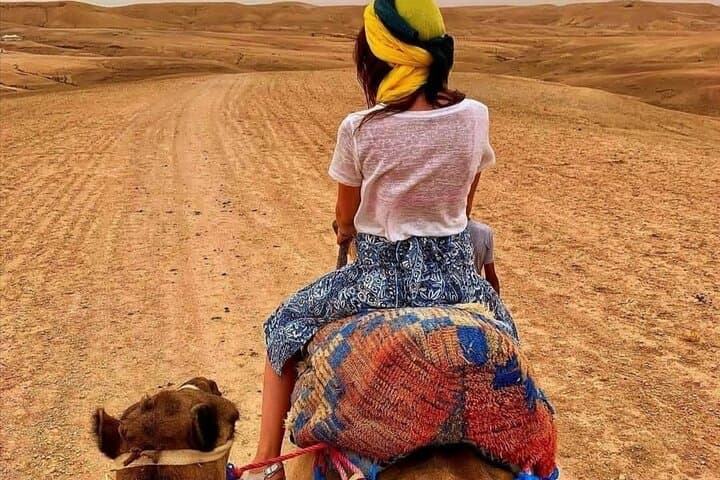
A warm wind strips the city’s bustle from your shoulders as the minivan slides out of Marrakech and into a low, pale landscape. Within 40 minutes the city roofs fall away and you are standing on the stony plains of the Agafay Desert, the sky wide and the High Atlas carving a distant silhouette. A steaming pot of mint tea greets you; camels low and patient, or a shaded walking route, waits for the first slow steps across small, wind-sculpted hummocks.
Verified experiences and guided adventures in the surrounding area.
Operated by Trekking in Morocco · Marrakech, Marrakech-Safi
A warm wind strips the city’s bustle from your shoulders as the minivan slides out of Marrakech and into a low, pale landscape. Within 40 minutes the city roofs fall away and you are standing on the stony plains of the Agafay Desert, the sky wide and the High Atlas carving a distant silhouette. A steaming pot of mint tea greets you; camels low and patient, or a shaded walking route, waits for the first slow steps across small, wind-sculpted hummocks.
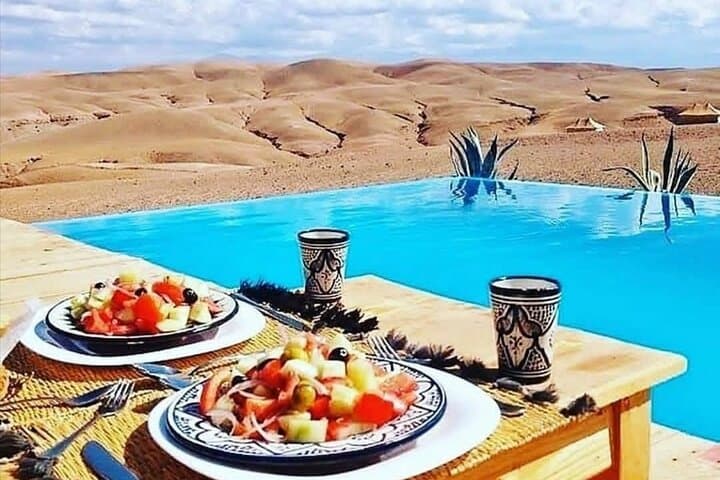
Geology here is not sand dunes but a moonlike expanse of compacted pebbles and weathered limestone—the result of millennia of erosion from the Atlas foothills. The region has long been part of transhumant routes and today supports scattered Berber hamlets and ranch-style camps that host day visitors. Cultural touches arrive in the meal: slow-cooked tagine, strong coffee and sweet mint tea served under a temporary awning with mountain views.
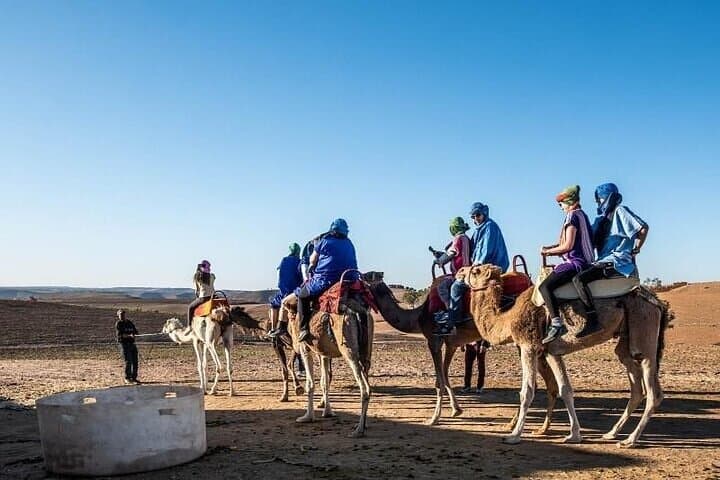
Expect gentle terrain—mostly flat with short, uneven sections—and basic camel rides or guided walks of roughly 30–60 minutes. The full excursion is about six hours including transit; vehicles are air-conditioned and tours typically include tea on arrival and a cooked lunch. Weather dictates rhythm: mornings and late afternoons are cool and forgiving, midday can be hot.
Practical: wear closed shoes for the rocky ground, bring sun protection and at least 1–2 liters of water, and allow time to dry off if you use the camp pool. This trip is low technical demand but high on landscape and local flavor—an accessible way to trade Marrakech’s red streets for open sky and Atlas panoramas.
easy.
5–6 hours.
Suitable for most fitness levels; involves short walking and a seated camel ride option so minimal exertion required.
Rides or guided walks are typically short—about 30–60 minutes—designed for photos and easy terrain, not long treks.
No; Agafay is a rocky, stony desert (a reg) rather than soft Sahara sands—expect compacted stones and low hummocks.
Yes—lunch is included, commonly a Moroccan tagine with salad, bread, coffee/tea and bottled water; vegetarian options can be requested.
The site is roughly a 35–45 minute drive from central Marrakech and most tours include air-conditioned round-trip transport.
Agafay has historically been a seasonal grazing and transit area at the edge of the Atlas; its current visitor camps draw on local Berber hospitality traditions.
Visitors should avoid leaving litter and stick to established tracks; the fragile desert soil and sparse vegetation recover slowly from disturbance.
Trekking in Morocco operates guided outdoor trips and adventures with an emphasis on safety, stewardship, and memorable experiences.
A warm wind strips the city’s bustle from your shoulders as the minivan slides out of Marrakech and into a low, pale landscape. Within 40 minutes the city roofs fall away and you are standing on the stony plains of the Agafay Desert, the sky wide and the High Atlas carving a distant silhouette. A steaming pot of mint tea greets you; camels low and patient, or a shaded walking route, waits for the first slow steps across small, wind-sculpted hummocks.
A warm wind strips the city’s bustle from your shoulders as the minivan slides out of Marrakech and into a low, pale landscape. Within 40 minutes the city roofs fall away and you are standing on the stony plains of the Agafay Desert, the sky wide and the High Atlas carving a distant silhouette. A steaming pot of mint tea greets you; camels low and patient, or a shaded walking route, waits for the first slow steps across small, wind-sculpted hummocks.
Geology here is not sand dunes but a moonlike expanse of compacted pebbles and weathered limestone—the result of millennia of erosion from the Atlas foothills. The region has long been part of transhumant routes and today supports scattered Berber hamlets and ranch-style camps that host day visitors. Cultural touches arrive in the meal: slow-cooked tagine, strong coffee and sweet mint tea served under a temporary awning with mountain views.
Expect gentle terrain—mostly flat with short, uneven sections—and basic camel rides or guided walks of roughly 30–60 minutes. The full excursion is about six hours including transit; vehicles are air-conditioned and tours typically include tea on arrival and a cooked lunch. Weather dictates rhythm: mornings and late afternoons are cool and forgiving, midday can be hot.
Practical: wear closed shoes for the rocky ground, bring sun protection and at least 1–2 liters of water, and allow time to dry off if you use the camp pool. This trip is low technical demand but high on landscape and local flavor—an accessible way to trade Marrakech’s red streets for open sky and Atlas panoramas.